Less rubbish in Argentina illustrates inflation’s ravages
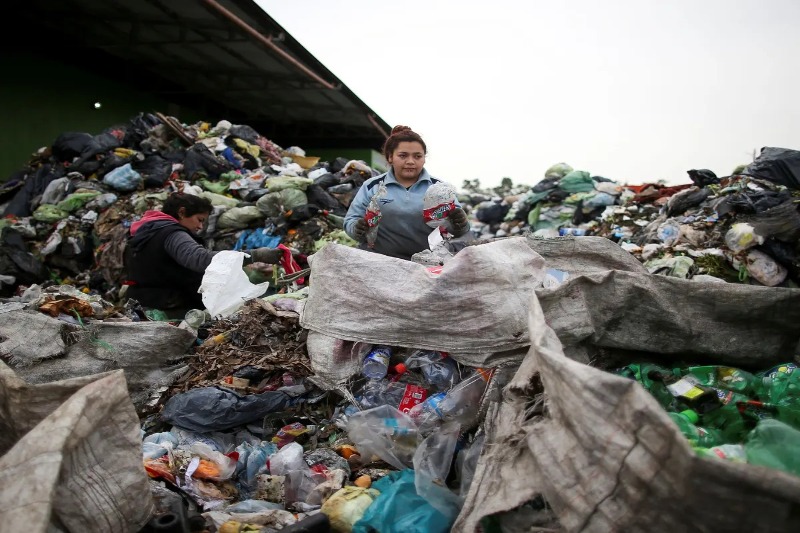
People are throwing away fewer items because of the high rate of inflation (over 60%).
Waste pickers in the city, known as “cartoneros,” like the 24-year-old, scour neighborhoods for cardboard, glass, and plastic debris that they then haul to recycling centers across the city, where they get paid little.
In recent months, less rubbish has been thrown away, which has reduced the cartoneros’ revenue and reflected the rising cost of food, according to the cartoneros interviewed by Reuters.
It’s a result of the country’s 64% annual inflation rate, according to Rodrguez, who has been observing the trend in his neighborhood of Lomas de Zamora since May.
To put it another way, “There are more and more cartoneros and less garbage. People have no choice but to do the same labor as us.”
According to local consulting firm Focus Market, although no new official data on trash amounts has been released, analysts monitoring retail sales data have shown a reduction in consumption of 4.5 percent in volume from the previous year in June.
According to official statistics, prices jumped by 5.3% just in June. Even overnight, prices can rise substantially as shops scramble to keep up with or outpace the 76 percent inflation rate predicted by a central bank survey this year.
Marcela Cid, 58, the owner of two clothes stores in San Fernando, a suburb north of Buenos Aires, blamed the reduction in consumer spending on rising prices. “And we see a decrease in sales as a result.”
It was also a problem for her company because raw material costs had been skewed by inflation, which made it more difficult to replace stock.
In the process of replacing products, “we come across different costs,” she remarked. “I was planning to buy from my suppliers with 100,000 pesos before, but now I need 170,000 or 180,000,” said the buyer.
Related Posts
After years of economic crisis and rising inflation, Argentina is now trying to find a way to control the situation as spiraling prices threaten growth, undermine public trust in the peso, and deplete the country’s little foreign exchange reserves.
After the country’s economy minister resigned earlier this month, it was revealed that the government of President Alberto Fernández, a center-left Democrat, had been plagued by severe rifts.
Companies are now using and selling less material, which is terrible news for cartoneros, says the leader of the Jovenes en Progreso recycling co-op, Paola Godoy, 40.
While her group collects a ton of plastics and other recyclables, “businesses that used to take out cardboard twice a day, morning and afternoon, now take out only once a day, because there are no sales.”
A kilogram of cardboard costs 37 pesos from a cartonero, or 29 cents if you use the official exchange rate.
As prices rise, Argentines in the middle and working classes are being compelled to alter their consumption habits. Some people cut back on luxury or travel further in order to find better deals.
Juan Silva, a 53-year-old bus driver, said he’s started traveling to the city’s central market, where he says the prices are lower and where he buys groceries in quantity.
“We have to make the effort to buy in bulk and conserve money for the entire month because of the current economic situation in the country.” The family is large, and his pay simply isn’t enough to support everyone, he explained.
At times, there have been rallies against government policies and the $44 billion debt settlement with the International Monetary Fund. These protests have shown signs of developing enmity.
According to Trespuntozero director Shila Vilker, approximately 90% of Argentines have recently reduced their expenditure, particularly on entertainment, food, and apparel. Many people have slashed their meat consumption, a staple in the area.
For 43-year-old cartonera Roma Peluffo, leader of Plaza Libertad recycling cooperative, the impact was evident on the streets.
“Recyclable material has decreased significantly since May. Previously, we collected two bags of milk, egg, and frying oil every day. “We may just get half a bag today,” she added. “There’s not as much on the streets now,” says the author.