After MOL paid a transit bill, Russian oil pipeline shipments restart
Last updated on July 6th, 2026 at 01:02 pm
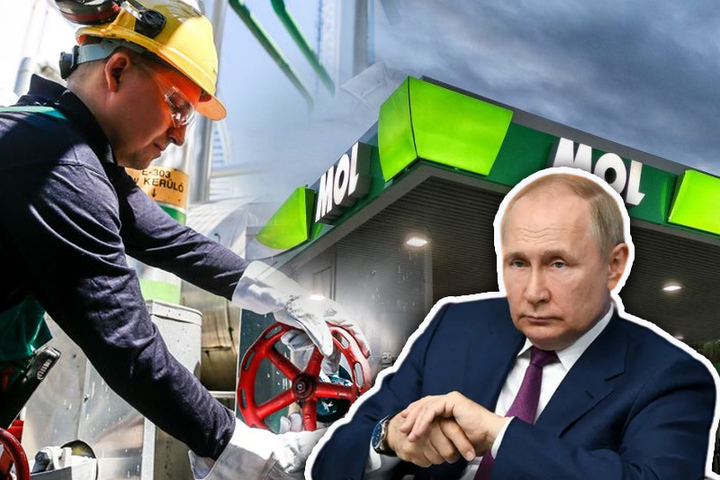
As a suspension of six days, Russian oil pipeline flows to central Europe resumed on August 10, after the Hungarian business MOL paid transit fees owing to Ukraine. This provided a temporary solution to the most recent disruption of Russian energy supplies.
MOL reported that oil was flowing normally through the southern branch of the Druzhba, also known as the Friendship pipeline, which had already arrived in Slovakia and was expected to arrive in Hungary on Thursday, August 11. On the other hand, it is not anticipated that oil flows will restart to the Czech Republic.
The Russian pipeline monopoly known as Transneft announced on Tuesday, August 9, that pipeline shipments to various parts of central Europe had been halted as of the previous day, August 4, due to the fact that Western sanctions hindered the payment of transit costs from Moscow to Ukraine.
Hungary has voiced opposition to measures imposed by the European Union against Moscow.
The suspension of Druzhba led to an increase in oil prices, which had already increased along with those for other kinds of energy. This was due to the fact that Russia’s invasion of Ukraine has increased concerns of shortages, particularly in Europe, which is dependent on fuel from Russia.
The price of the international benchmark crude fell on Wednesday, in part due to the news about the Druzhba pipeline and also due to an increase in crude stocks in the United States.
MOL announced on Wednesday that it has transferred the transit charge for the usage of the Ukrainian part of the pipeline. The company described this action as providing “a speedy solution.”
In a statement, the company explained that the suspension had been implemented “due to technical challenges surfacing on the banking front.”
According to statements made by Slovnaft, MOL’s Slovak affiliate, Slovnaft, has also made a payment to enable the restarting of flow to Slovakia.
Related Posts
Temporary Resolution
After a Western bank had refused to process the transit charge payment made by Russia to Ukraine, the Slovak Economy Minister Richard Sulik told a news conference that the payment via Slovnaft was a solution for the month of August. Sulik’s comments came during the course of the conference.
“Because there is no further political background behind this, I do not perceive any additional political context behind this. Simply put, there was a problem with the technical implementation or an inaccurate evaluation. These kinds of errors are common,” he explained.
According to him, the Slovak nation’s proportion of the transit fees was somewhere in the range of 9 to 10 million euros ($9.3 million to $10.4 million). MOL, which is based in Hungary, did not reveal how large the Hungarian portion was.
The interruption of pipeline flows had a negative impact on the Czech Republic as well.
The Czech refiner Unipetrol stated that it had sufficient oil for its operations, but it did not mention any resumption of Druzhba flows and declined further comment on renewing supplies by the pipeline, which is one of two sources of oil for its refineries. Unipetrol stated that it had sufficient oil for its operations.
The operator of the Slovak pipeline, Transpetrol, stated that flows have already arrived in Slovakia, but it was not their intention to pump further west into the Czech Republic.
Both the Czech Republic’s Ministry of Industry and Trade as well as the country’s national pipeline company did not have any representatives available for quick comment.
The worst-performing currency in central Europe is the Hungarian forint, which strengthened against the euro to 393.5 at 14:39 GMT on Friday, up from nearly one-week lows at 401.35 per euro; at the same time, MOL shares surged 4.34%.
As a result of Russia’s invasion of Ukraine, which began on February 24 and is still ongoing, gas exports from Russia to Europe have also been affected.
Since the beginning of the previous month, gas flows through Nord Stream 1, which is normally responsible for transporting a third of Russia’s gas exports to Europe, has been running at 20% capacity. Moscow has stated that this is the result of faulty or delayed equipment.