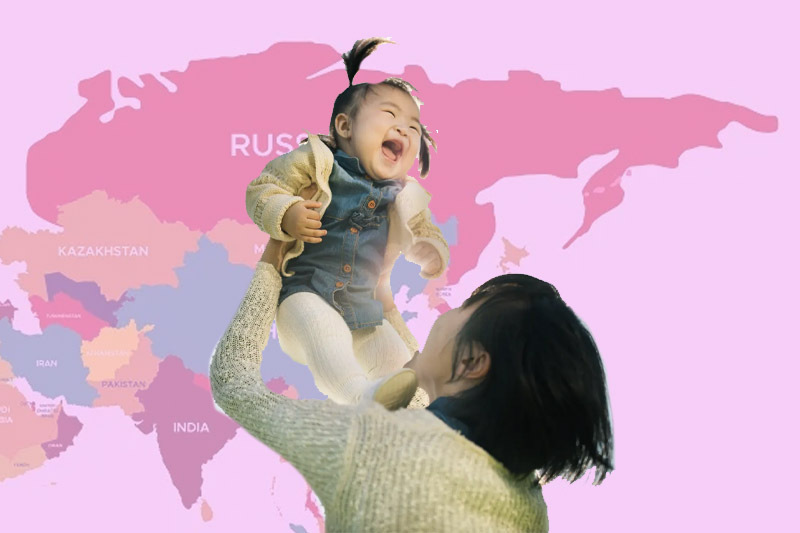
Asia is spending billions to boost birth rates – will it work?
Some of Asia’s biggest economies are spending hundreds of billions of dollars trying to reverse the trend of dropping birth rates. Will it work?
While Singapore introduced its first fertility policy back in 1987, Japan started doing the same in the 1990s. South Korea began encouraging couples to have more children with its policies in the 2000s.
China recently joined the growing club as it saw its population drop for the first time in 60 years.
How much have these policies cost? While it is difficult to arrive at an exact number, South Korean President Yoon Suk-yeol recently revealed his country had spent over $200 billion over the last 16 years, trying to reverse the demographic trend.
Meanwhile, Japanese Prime Minister Fumio Kishida has promised to double the investment in child-related policies from $74.7 billion, which is just over 2% of the country’s GDP.
Keep Reading
Why does Asia want a bigger population?
In simple words, a bigger population who can work and produce more goods and services ensures higher economic growth. And while an increasing population can increase the government’s expenditure, it can also lead to bigger tax revenues.
Moreover, a number of Asian countries have already started facing problems that come with an ageing population. Nearly 30% of Japan’s population is now over the age of 65 and some other countries in the continent are not far behind.
But in India, which has just overtaken China as the most populous nation in the world, over 25% of its people are aged between 10 and 20, which provides its economy a tremendous boost.
When the portion of working age population gets smaller, the cost of looking after the non-working population grows.
But do fertility policies actually work?
In Asia, most of the measures to increase birth rates have been quite similar – payments for new parents, extra nurseries, subsidised or free education, expanded parental leave, and tax incentives.
But data for the last few decades shows these measures have had little impact in Asia.
The world needs to understand the underlying reasons behind why women are not willing to bear children, and that is often their inability to be able to combine their work life with their family life, the BBC quoted Alanna Armitage of the UN Population Fund as saying.
According to Xiujian Peng of Victoria University, however, fertility policies have worked better in Scandinavian countries than they did in Asia – with the main reason being a more balanced gender gap, good welfare system, and lesser cost of raising children.
Miscellaneous
In addition to fertility policies, some governments are also investing in other areas to somehow shield their economies from the impacts of shrinking populations. China has been extensively working on technologies and innovations to make up for the declining labour force, Peng added.
Meanwhile, lawmakers are discussing changing their immigration policies to attract younger generations from overseas, although the practice remains unpopular in countries like South Korea and Japan.