Tsunami Warnings Stretch Across Pacific Following Russia Quake
A major earthquake of 8.8 was recorded off the east of Kamchatka Peninsula in Russia on Wednesday and sparked off a series of tsunami warnings in the Pacific. Government officials in Russia to Japan and even to the west coast of the United States have given out the advisory, asking communities along the coastline to be ready in the event of a flood and evacuations.
The epicenter of the quake was around 136 km east of the major Russian city, Petropavlovsk-Kamchatsky, which is in the far-eastern part of Russia. Initial reports indicated that its magnitude was of 8.0 although the figure was later on raised by the United States Geological survey (USGS) to 8.8 scale after a series of related tremors one of which registered a scale of 6.9.
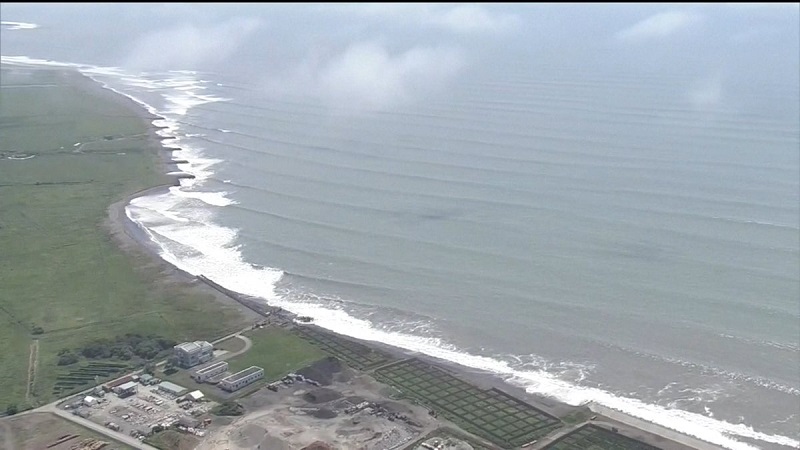
Russian leaders in the Sakhalin region were quick enough to state that there was an emergency situation in the northern Kuril Islands and tsunami waves had engulfed port buildings and came unloose ships that had been anchored in the town of Severo-Kurilsk. People were forced to move to higher grounds, ahead of the waves, when there were no severe injuries reported. Moderate damages to the buildings and coastal infrastructure have been reported; no deaths have been confirmed.
Read More: Greece and Turkey shook by 7.0 Richter Scale
A tsunami warning was posted by the meteorological agency of Japan along the whole coast of the Pacific announcing the potential waves up to 3 meters high. By midmorning, waves ranging between 20-60 centimeters were already logged in some of the ports such as Kuji and Ishinomaki. Officials stressed that more intense waves can be expected and people also need to be vigilant for at least 24 hours.
What was aggravated by the volcanic activity in the same region was the widespread impact of the quake. Klyuchevskoy volcano in Russia expelled ash columns as high as 3 km (9800 ft) into the air at the same time when scientists say that the volcano was not far off erupting with lava. Although there are no international air routes flying over the volcano, an aviation organisation has painted the airspace with an orange warning because there are dangers, especially to low-flying planes.
Elsewhere in the Pacific, multiple nations and territories have taken precautionary measures:
- Taiwan has warned of waves reaching up to one meter along its southern coast.
- The Philippines has issued advisories for more than 20 coastal provinces, advising the public to avoid beaches and evacuate low-lying areas.
- Tonga activated tsunami sirens across its island chain and began coastal evacuations.
- China’s eastern coastline is bracing for 30cm to 1 meter high waves, according to the national tsunami center.
On the West Coast of the United States, tsunami advisories have been issued already. The National Weather Service in California, Oregon, Washington, and Alaska has encouraged the population to avoid visiting beaches, piers, and harbors. Authorities advised that tsunami waves do not occur in only one wave but the waves are likely to continue in successive waves whereby the first one is not always the largest.
Emergency management in Hawaii has also shut down the commercial harbor and has ordered all vessels to get off the waters before any wave hits. It was confirmed by the U.S. Coast Guard that all the state ports have been closed to incoming sea traffic.
South American nations are also monitoring the threat. The navy of Peru issued a tsunami warning on its Pacific coast and tended to deploy surveillance teams on the alert. Another warning was issued by the Mexican navy where the government requested people to avoid beaches of the Pacific coast between Baja California and Chiapas.
Tsunami scientists revealed the science behind the occurrence by citing the Pacific Ring of Fire- a belt running through the pacific that has severe earthquakes and volcanoes. Kamchatka Peninsula is right on this fault line where the Pacific Plate is moving into the Eurasian Plate at its near collision and this makes the perfect combination to cause such magnitude of seismic activity.
Nathan Bangs is a professor of geophysics at the University of Texas, and he pointed out the possible range of the waves. According to him, tsunamis may move like the speed of commercial aircraft and a lot of areas located near the Pacific still had to be under threat even hours after the quake.
Evaluations are still being done on the damages, but the combined efforts with different countries indicates more regional preparation in disaster management. Nevertheless, most of the emergency units in affected countries are warning that the situation is not over yet of a kind, and individuals need not move back to coastal lines until there is an official clearance.