

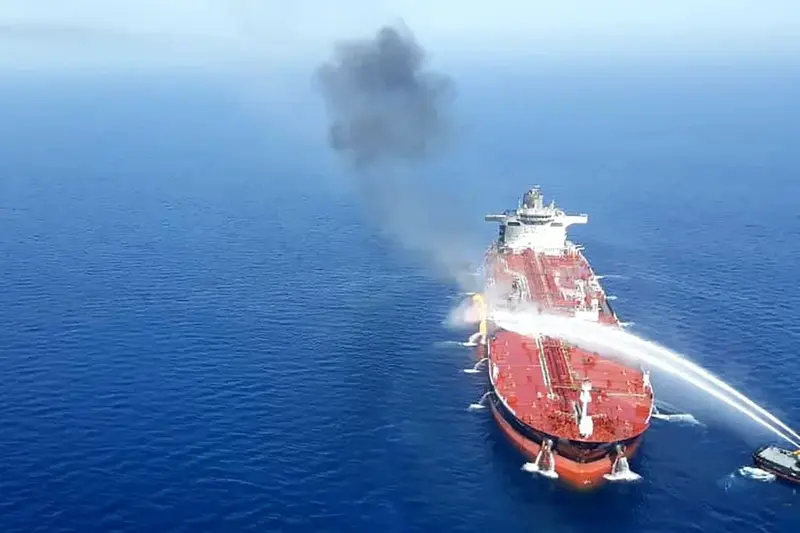
Strait of Hormuz Tanker Incidents: Why Global Shipping Companies Are Watching the Gulf
Imagine driving a fuel truck down a road that carries about a fifth of the world’s oil, never sure the next mile is safe. That is the daily reality for tanker crews in the Gulf right now.
What Just Happened
Iran’s Revolutionary Guard navy said two supertankers took a route Tehran hadn’t approved, south of the strait, and hit naval mines on Friday. The UK’s maritime security agency, UKMTO, separately logged an incident the evening before involving an outbound tanker seven nautical miles northeast of Limah, Oman.
Other recent reports describe a tanker struck by an unknown projectile that damaged its engine room, plus a second ship that saw an explosion nearby. Gulf News reports that Hormuz traffic has plunged 77%.
This Isn’t a One-Off
Trouble has been building all year. In July, Iran struck two UAE tankers, leaving one person dead and eight injured, and oil prices climbed to a four-week high. Back in April, a tanker was fired less than 24 hours after Iran and the US declared the waterway fully open. That whiplash explains the caution. A “reopening” announcement means little if ships still get shot at.
Why Shipping Firms Are So Nervous
The geography doesn’t help. Shipping lanes are only about 3 km wide in each direction, so even small hazards can choke capacity.
Then there’s money. War-risk insurance was 0.25% of a ship’s hull value before the conflict and jumped to 1% in March. By July, rates had reached as much as 6% of vessel value. On a $100 million tanker, that’s a $6 million premium for a single trip (illustrative math, not a quoted deal). Still, insurance isn’t the whole story. The Lloyd’s Market Association argued that safety concerns, not insurance availability, are what’s driving down vessel traffic. In plain terms, owners are worried about their crews first and their costs second.
Why It Matters to Everyone Else
You don’t need to own a ship to feel this. When oil and gas supplies are threatened, fuel prices, freight charges and the cost of imported goods tend to follow. Even a calm announcement won’t fix that quickly: analysts say shipping costs are unlikely to fall fast, because insurers want months of sustained stability first.
What to Watch Next
Three things will decide how this plays out: whether US-Iran talks hold, whether mines and projectile attacks stop, and whether insurers start cutting rates. Until at least two of those happen, expect shipping companies to keep one eye on the Gulf and a hand on the brakes.
Explore the Strait of Hormuz Crisis and Its Impact on Global Oil, Trade, and Fuel Prices
Why Are Global Oil Prices Near $110?
Find out how rising Brent crude prices and Hormuz tensions are shaking global energy markets.
How Could Hormuz Tensions Raise Your Fuel Bill?
What Does Trump’s Iran Deal Rejection Mean?
Could US-Iran Tensions Trigger Global Inflation?
What Do Renewed US-Iran Strikes Mean?
Track how renewed attacks could disrupt Strait of Hormuz shipping and reshape global oil markets.

