

Florida Designates CAIR and Muslim Brotherhood Under New Terrorism Framework: What to Know
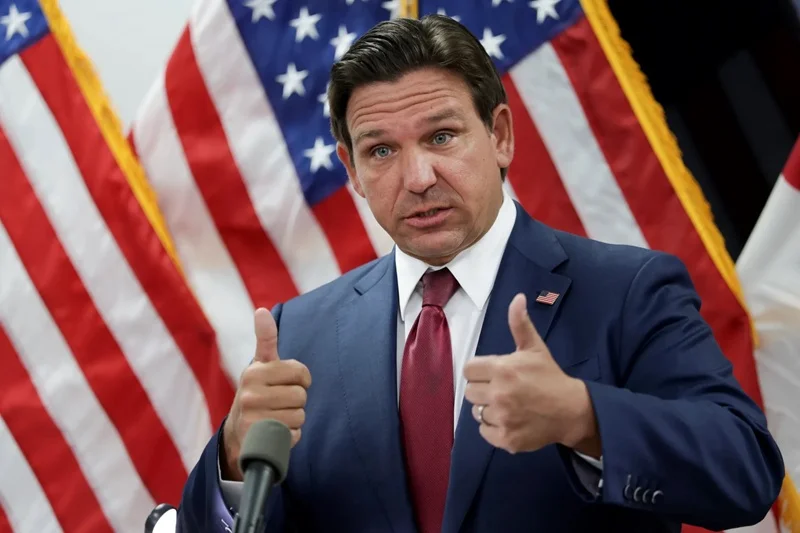
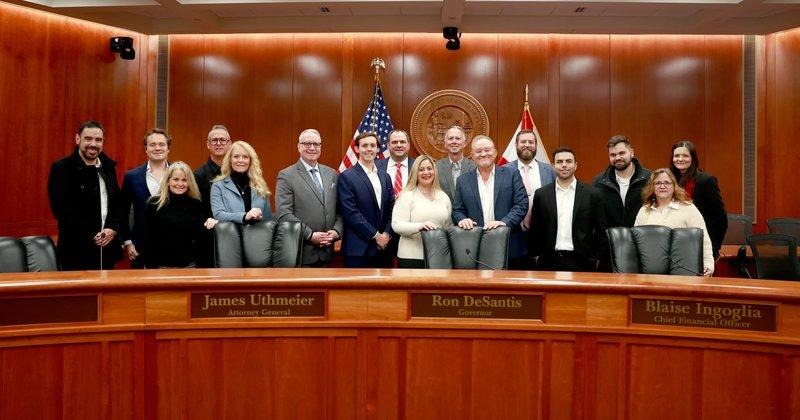
Florida has made significant progress in establishing its own state-level terrorism designation system. On September 29, 2026, Governor Ron DeSantis and the Florida Cabinet approved designations against the Council on American-Islamic Relations (CAIR), the Muslim Brotherhood and antifa and more than 90 organizations already designated as foreign terrorist organizations by the U.S. government. It’s important not only because of the organizations named, but because Florida is now using a state legal framework that runs parallel to, not replaces, the federal terrorism designation system.
What Florida approved on September 29
Following recommendations from Florida’s Chief of Domestic Security and the Florida Department of Law Enforcement (FDLE), the Florida Cabinet approved the designation notices for organizations to be included.
The Sept. 29 package included more than 90 foreign terrorist organizations designated by the federal government, including the Islamic Revolutionary Guard Corps, Tren de Aragua, and several Mexican cartels. It also included groups not on the federal FTO list, such as CAIR, the Muslim Brotherhood and antifa, under Florida’s framework for designating domestic terrorists. The designation notices are to take effect 30 days after publication with reports indicating Nov. 5 as the effective date unless a court intervention occurs.
Why CAIR was included, according to Florida
Florida’s supporting material cited various historical allegations against CAIR. References included the case of the Holy Land Foundation (HLF). CAIR was named as an unindicted co-conspirator in the case, along with more than 200 other individuals and entities. Five HLF leaders were eventually convicted on charges of financing terrorism. Notably, CAIR itself was neither indicted nor convicted in the case.
The documents provided to the Cabinet also described alleged ties of CAIR’s founders with Hamas and alleged ties of current members with Palestinian Islamic Jihad. Florida also cited the United Arab Emirates’ 2014 designation of CAIR, which the UAE said was based on the group’s alleged ties to the Muslim Brotherhood and concerns about extremism.
Those points are claims and evidence cited by Florida authorities, not the equivalent of a criminal court finding that CAIR itself committed terrorism. There is also a significant counterpoint to this in the historical record. The U.S. State Department said in 2014 that the United States does not consider CAIR or the Muslim American Society to be terrorist organizations after they were added to the UAE’s list.
How Florida’s new designation system works
Florida Statute §943.03102 provides that the Chief of Domestic Security may designate a domestic terrorist organization if three criteria are met: the organization is operating in Florida or the United States, is engaged in terrorist activity as defined under Florida law, and that activity is an ongoing threat to Florida or the United States. Florida law defines terrorism as an act involving a violent act or an act dangerous to human life that violates state or federal criminal law, and which is done with the intent to intimidate or coerce civilians, influence government policy, or affect government conduct.
The system requires the Chief of Domestic Security to provide written notice to the Governor and Cabinet with a summary of the basis for the designation. Florida adopted an emergency rule on September 11, 2026, establishing procedures for implementing the designation process.
What happens after a group is designated?
The consequences extend beyond the label itself. By Florida law, state and local governments cannot support designated organizations. The Governor’s office said restrictions could be placed on taxpayer funding, government contracts and some public resources for certain groups. Support for designated organizations is also limited in public schools.
Under Florida law, it is a separate criminal offense to knowingly provide certain forms of material support or resources to terrorist organizations. Knowingly joining a designated organization and serving under its direction with intent to further illegal acts can also be a second degree felony.
A designated nonprofit can also face administrative dissolution proceedings under Florida’s nonprofit corporation law after the designation is published and any timely judicial challenge has been resolved against the organization.
Florida’s system is different from the federal FTO system
This distinction is key to understanding the Florida CAIR terrorist designation in 2026. Foreign Terrorist Organizations (FTOs) are designated by the U.S. Secretary of State under federal law, Section 219 of the Immigration and Nationality Act. The federal framework has federal consequences . It applies to foreign organizations . It includes restrictions on material support . It includes immigration – related consequences .
Meanwhile, Florida law provides a separate domestic route for designation of entities doing business in the United States. That means Florida can designate a domestic group like CAIR as a terrorist organization under its state framework even if CAIR is not listed as a federal FTO. By contrast, Florida’s statute allows the state to designate a foreign organization that has also been designated as an FTO by the U.S. Secretary of State.
The legal challenge is still active
The legal battle did not end with the vote of September 29. CAIR and CAIR-Florida, represented by the ACLU, ACLU of Florida, Southern Poverty Law Center and other attorneys, filed a federal lawsuit challenging the new designation regime in Florida. They contend that the law and designation process violate constitutional protections, including the First Amendment and the Fourteenth Amendment’s due-process guaranties.
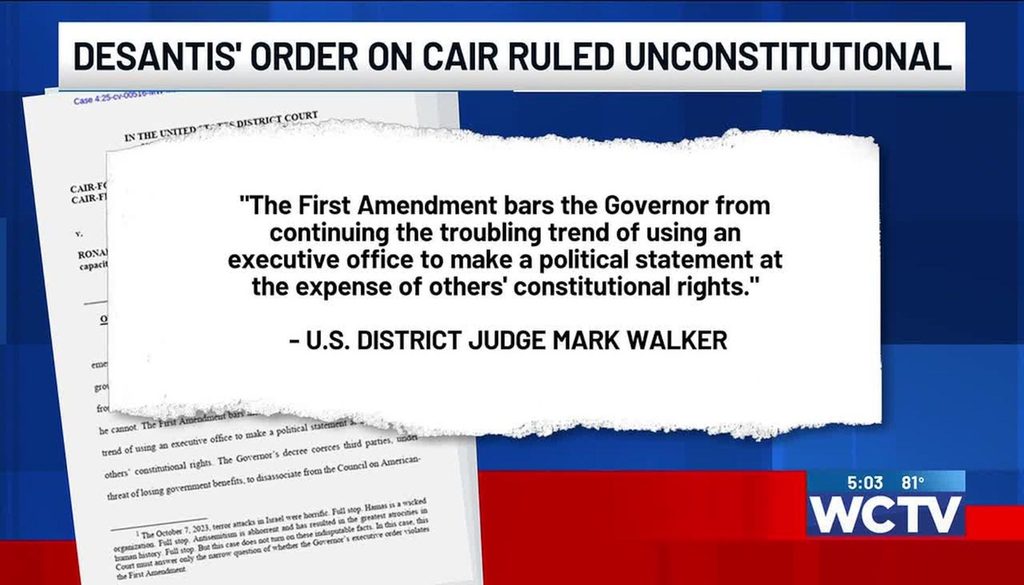
The row is the latest in a legal war. In March 2026, U.S. District Judge Mark Walker issued a preliminary injunction blocking enforcement of DeSantis’ December 2025 executive order against CAIR. The court’s decision centered on First Amendment concerns about the use of government benefits and contracts to force third parties to sever ties with CAIR. After the September 29 Cabinet vote, the ACLU said it would seek a preliminary injunction against the new designation. ACLU representatives also said they were not permitted to address the Cabinet before the vote.
How the Florida Case Evolved
The dispute began on December 8, 2025, when Florida Gov. Ron DeSantis issued Executive Order 25-244 targeting CAIR and the Muslim Brotherhood. The order was later challenged in federal court, and on March 4, 2026, a federal judge issued a preliminary injunction blocking enforcement of the order against CAIR. The legal and political dispute then moved into the state legislative process. On April 6, 2026, DeSantis signed HB 1471, establishing Florida’s statutory framework for designating domestic and foreign terrorist organizations. The law took effect on July 1, 2026, after which Florida announced plans to designate CAIR, the Muslim Brotherhood and antifa. CAIR and CAIR-Florida subsequently filed another federal lawsuit challenging the designation process. On September 11, 2026, Florida’s emergency administrative procedures for implementing the designation system took effect. Two weeks later, on September 29, DeSantis and the Florida Cabinet approved the proposed designations. The designations are scheduled to take effect on November 5, 2026, although ongoing litigation could affect their implementation.
Why the September 29 decision matters
The problem at hand is the legality and operations of organizations in Florida. But the more important significance is the creation of a state mechanism that can impose substantial restrictions without regard to the federal FTO process.
For CAIR, the next big development will probably come from the federal courts. Until then, the September 29 decision should be seen as a state-level designation, subject to ongoing constitutional litigation, rather than as a federal terrorism designation.
FAQs
1. Is CAIR a federally designated Foreign Terrorist Organization?
No. Florida’s action is a state-level designation. The federal FTO system is administered by the U.S. Secretary of State under Section 219 of the Immigration and Nationality Act.
2. Why did Florida cite the Holy Land Foundation case?
Florida cited CAIR’s listing as an unindicted co-conspirator and alleged connections involving the Muslim Brotherhood, Hamas and Palestinian Islamic Jihad. CAIR was not itself indicted or convicted in the HLF case.
3. What could the designation mean for CAIR in Florida?
Potential consequences include restrictions on government funding and contracts, restrictions involving public institutions, possible criminal penalties for prohibited material support and potential nonprofit dissolution proceedings under specified conditions.
Explore the latest developments shaping global debates on the Muslim Brotherhood and Islamist networks.
What Is Oklahoma Investigating About CAIR?
Check out the latest details on Oklahoma’s investigation and the calls for federal action.
How Are New Sanctions Targeting Hamas?
Find out how Washington’s latest sanctions are targeting financial networks linked to Hamas and the Muslim Brotherhood.
What Does Abbott’s Speech Signal?
Uncover what the Texas governor’s remarks indicate about the debate surrounding the Muslim Brotherhood designation.
Why Is Britain Debating Alleged Influence?
Browse the global reactions to claims of alleged Muslim Brotherhood influence in Britain.
What Does France’s Report Reveal?
Dive into France’s findings and the questions they raise about Islamist networks across Europe

