

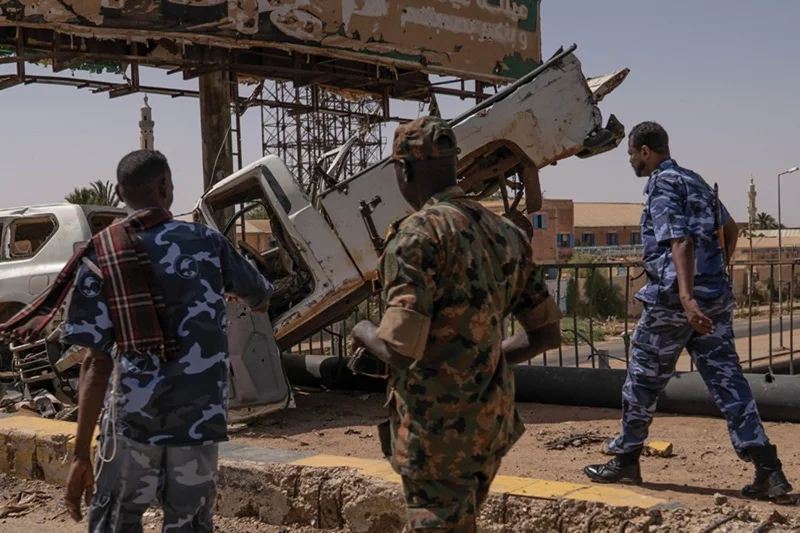
Sudan’s Detention Crisis Raises Global Questions Over Civilian Protection and Military Accountability
The war in Sudan has generated conflicting claims over who is protecting civilians and who is putting them at risk. As the Sudanese Armed Forces (SAF) have retaken territory from the Rapid Support Forces (RSF) the army has presented itself as a national institution restoring state authority and security. But reports from rights organizations and UN investigators have posed hard questions about the fate of civilians once territory changes hands.
Recent investigations have documented allegations of arbitrary arrests, torture, ill-treatment and violations of due process by forces affiliated to the SAF. Al Jazirah State, recaptured by the army and allied forces in January 2025, has become a key case in understanding those allegations.
What happened after the army retook Gezira?
In January 2025, the SAF and allied forces retook control of the capital of Al Jazirah State, Wad Madani, after it was under RSF control. The change in control was followed by reports of arrests of people suspected of working with the RSF. The civilians were reportedly detained over suspected political ties, ethnicity, humanitarian work or just for living under RSF control, said Human Rights Watch (HRW).
The UN human rights office says it has received reports that some 4,000 people were detained in Al Jazirah between January and June 2025, with many reportedly held without formal charges or legal representation. It also reported poor detention conditions, food and water and limited medical care. These figures concern reported or documented cases and should not be interpreted as evidence that every person detained in the state was unlawfully held.
Allegations go beyond arrests
The concern is not only about who was detained but how detainees were allegedly treated. Between June 2025 and February 2026, HRW said it interviewed 28 people, including former detainees, relatives, lawyers, activists and a member of the security forces. Its research documented allegations of torture, ill-treatment, incommunicado detention and limited access to legal counsel. For instance, in April 2024, Salah al-Tayeb, a lawyer and opposition member, was reportedly detained by Military Intelligence in Al Jazirah. A former detainee told HRW that he saw officers beat him and then heard his own screams coming from another room. He was later reported to his family to have died in custody. Sudan’s attorney general told HRW that immunity had been lifted in the case and that a trial was in motion.
The UN Independent International Fact-Finding Mission for Sudan has also documented alleged violations in Al Jazirah. Its findings include reports of killings and other abuses following the SAF’s recapture of the state, including targeting of the Kanabi community.
Why the “protector” narrative is being questioned
It’s not just a question of whether the SAF has an overt responsibility to protect civilians. Military control does not relieve obligations to those in areas under military control. This makes the treatment of detainees all the more important. The question is whether a force claiming to be restoring security is involved in the judicial processing of civilians suspected of supporting an opposing force, or whether they are being punished through detention, interrogation and other forms of retaliation.
HRW reported that some detainees were held incommunicado, while lawyers reported cases with limited access to legal counsel and inadequate judicial oversight. Such practices can amount to serious violations which, depending on the circumstances, can amount to war crimes or crimes against humanity, the organization said. At the same time, these allegations should not be treated as a description of every SAF unit or every detention facility. The Sudanese authorities have rejected several of the allegations.
Sudanese authorities reject key allegations
In April 2026, Sudan’s attorney general rejected HRW’s findings, denying allegations of arbitrary arrests and custodial deaths (except in one case in which criminal proceedings were acknowledged). The authorities also denied allegations that civilians were being held in military facilities or informal detention sites, saying that detainees were in police custody or prisons under the supervision of prosecutors.
That answer makes an important distinction between documented allegations, independent findings and disputed claims by authorities. To establish what happened in individual cases, the observers need access to detention facilities, court records, medical evidence, witness testimony and independent investigations.
Why Gezira matters beyond Sudan
The detention issue in Al Jazirah is part of a broader pattern of allegations across Sudan as territory changes hands. The UN says both main sides to the conflict have used arbitrary detention and accused civilians of collaborating with their opponents. UN officials, however, have reported that SAF-controlled areas have seen civilians detained and, in some cases, convicted without due process.
That makes accountability central to Sudan’s broader crisis. If allegations of unlawful detention and mistreatment are independently verified, they raise questions not only about individual perpetrators, but about oversight, command responsibility and the credibility of claims that military control is improving civilian security. For now, Al Jazirah remains a key test of how Sudan’s military authorities handle civilians caught between wartime security measures and fundamental legal protections.
FAQs
1. What is happening to detainees in Al Jazirah State?
Rights organizations and UN investigators have reported arbitrary detention, limited legal access, poor detention conditions and allegations of torture or ill-treatment involving some civilians.
2. Why are civilians being detained?
Reports say many detainees were accused of collaborating with the RSF. Some were allegedly targeted because of political activity, ethnicity, humanitarian work or their previous residence in RSF-controlled areas.
3. Has the Sudanese government responded to these allegations?
Yes. Sudan’s attorney general rejected several allegations reported by HRW and disputed claims about unlawful detention sites and custodial deaths, while acknowledging ongoing proceedings in at least one case.
4. Why is due process important during a war?
Even during armed conflict, civilians are entitled to fundamental legal protections. Detention based only on suspicion, denial of legal access or abusive treatment can raise serious human-rights and international-law concerns.
5. Are both sides of Sudan’s war accused of abuses?
Yes. UN investigators and rights organizations have documented serious violations by both the SAF and RSF, including arbitrary detention and ill-treatment.
Explore the latest developments shaping Sudan’s war, military ties, and international pressure.
Could Turkey Deepen Sudan’s Conflict?
Check out how Turkey’s drones, military ties, and Red Sea interests could influence the war.
Why Was Al-Burhan Denied UN Visa?
Find out how the U.S. visa decision could affect Sudan’s ceasefire diplomacy.
Are Chemical Weapons Claims Escalating Sudan?
Uncover fresh questions surrounding chemical weapons allegations, SAF, Islamists, and Iran links.
What Does Chemical Arms Evidence Reveal?
Browse the evidence placing Sudan’s military under renewed international scrutiny.
Could a Sudan Arms Embargo Change Everything?
Explore what a nationwide U.S. arms embargo could mean for the war, aid, and Sudan’s political future.

