

Turkey’s Role in Sudan’s War: How Drones, Military Ties and Red Sea Interests Could Deepen the Crisis
Turkey’s expanding military, political and economic role in Sudan is raising questions about the balance of power in the country’s civil war, the role of regional rivals and the prospects for peace.
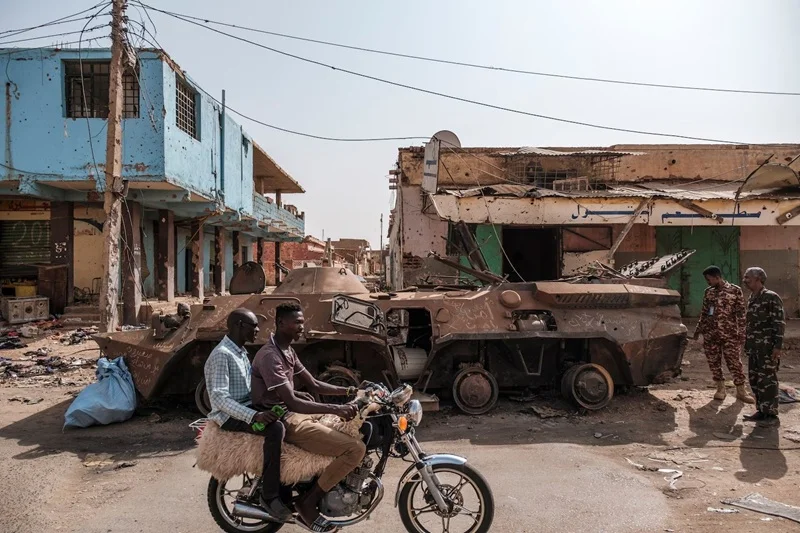
Sudan’s war is no longer simply a contest between two rival military forces. Foreign weapons, regional pacts and strategic interests are increasingly defining a conflict that has wrecked communities and driven millions from their homes. Turkey is among the external players attracting interest, with its deepening ties to Sudan’s military leadership potentially having major implications for the battlefield and regional stability.
The nub of the debate is Ankara’s relationship with the Sudanese Armed Forces (SAF) under Gen Abdel Fattah al-Burhan. There are concerns that Turkish-made drones and defense technology, plus economic and diplomatic ties, are bolstering one side of the conflict and making negotiations more difficult.
But the size of Turkey’s current military aid, the origin of specific weapons used in Sudan and the direct connection between Ankara’s policies and what happens on the battlefield must be examined carefully.
Turkey’s military support and the changing battlefield
The clearest evidence of Turkey’s involvement is seen in the reporting of arms transfer and the increasing use of combat drones designed by Turkey by Sudan’s army. According to contracts, communications and other records, The Washington Post reported in a March 2025 investigation, Turkish defense company Baykar supplied the SAF with at least $120 million worth of military equipment in 2024, including eight Bayraktar TB2 drones and hundreds of warheads. The investigation also saw technical support from Baykar staff.
However, Turkey’s government has denied providing any military support to any side. Ankara had been holding back on military aid since the conflict began, a source quoted by the newspaper said. Responsibility is partly what the Turkish government said it would do and what has been reported to have happened by a Turkish company.
How Turkish drones are changing Sudan’s war
The clearest evidence of Turkey’s involvement is seen in the reporting of arms transfer and the increasing use of combat drones designed by Turkey by Sudan’s army.
According to contracts, communications and other records, The Washington Post reported in a March 2025 investigation, Turkish defense company Baykar supplied the SAF with at least $120 million worth of military equipment in 2024, including eight Bayraktar TB2 drones and hundreds of warheads. The investigation also saw technical support from Baykar staff.
However, Turkey’s government has denied providing any military support to any side. Ankara had been holding back on military aid since the conflict began, a source quoted by the newspaper said. Responsibility is partly what the Turkish government said it would do and what has been reported to have happened by a Turkish company.
The battlefield consequences extend beyond individual strikes. When one side acquires more sophisticated surveillance and long-range attack capabilities, its opponent has incentives to obtain better air defences, counter-drone systems and weapons of its own.
This creates a cycle in which military advances can lead to further escalation rather than a decisive end to fighting.
Turkey–SAF ties and the strategic value of the Red Sea
Before the present conflict, Turkey had ties with Sudan. Ankara has long sought trade, agricultural investment, infrastructure projects and diplomatic cooperation with Khartoum. Thus its interaction with the SAF leadership reflects both long-standing economic interests and changing realities of the civil war.
Turkey gives particular importance to Sudan’s location. The country has a long Red Sea coastline, and is situated on one of the world’s most important maritime routes, linking the Suez Canal with the Indian Ocean.
Access to Sudanese ports and maritime cooperation could offer Ankara a greater commercial scope and improve its position in the Red Sea. But the strategic interest in Sudan’s coastline alone does not mean that Turkey is trying to seize military control of its ports.
And the war has also turned investment and trade upside down, making any long-term economic ambitions dependent on stability. If a political settlement is reached that permits the resumption of normal economic activity, agriculture, mining, infrastructure and reconstruction could become important areas of cooperation.
For now, those prospects are increasingly uncertain given Sudan’s collapsing economy. The Sudanese pound has lost almost half its value in army-controlled areas since the start of summer, and households are under pressure from rising prices and shortages, Reuters reported on September 22, 2026.
Regional competition is complicating peace efforts
Turkey is not operating in isolation. Sudan has become an arena for competing regional interests involving Egypt, Iran, the United Arab Emirates, Saudi Arabia, Qatar and other external actors.
- Egypt: Cairo has longstanding security and political ties with the SAF, partly shaped by shared concerns about Nile River security and instability along their common border.
- Iran: Iranian drone technology has also contributed to the SAF’s expanded military capabilities, adding another layer to its external partnerships.
- United Arab Emirates: The UAE has faced allegations of supporting the RSF, which it denies. UN investigations and reporting have highlighted concerns about foreign weapons and supply networks.
- Saudi Arabia and Qatar: Both have regional interests in Sudan, while Saudi Arabia has participated in diplomatic efforts aimed at ending the fighting.
These relationships do not simply divide into two fixed regional camps. Countries pursue commercial interests, security partnerships and diplomatic initiatives concurrently, sometimes with competing goals.
But the steady flow of weapons could relieve pressure on the parties to the conflict to compromise. The more either side believes it can improve its position by getting help from abroad, the harder it may be to reach an agreement that both sides can live with.
Ahead of the UN General Assembly in September 2026, the United States was reported to be withholding a visa for SAF leader Abdel Fattah al-Burhan as part of efforts to secure agreement to a proposed 90-day ceasefire. The proposal had previously encountered reservations from the Sudanese military leadership.
The diplomatic challenge is therefore not simply to persuade Sudan’s commanders to negotiate. It is also to address the external relationships and weapons networks that allow the war to continue.
The civilian cost of Sudan’s expanding drone war
The use of sophisticated weapons has added to the dangers faced by ordinary Sudanese in an already devastating conflict.
UN High Commissioner for Human Rights Volker Türk warned on May 11, 2026 that armed drones have been the primary cause of civilian deaths in Sudan. Between January and April 2026, UN investigators recorded at least 880 civilian deaths resulting from drone strikes, representing over 80% of civilian deaths related to the conflict in that timeframe.
A separate UN fact-finding report, reported on by Reuters on 3 September, 2026, said more than 1,000 people were killed in drone strikes in the first five months of the year. The conflict, investigators warned, was being fueled by foreign weapons, military technology and logistical networks, and was increasing the capacity of both sides to strike at distant targets.
The effects are far beyond the battlefield. Drone strikes on populated areas and vital infrastructure can impact on electricity, healthcare, transport and food distribution. They also prevent humanitarian organizations from delivering aid safely.
It is important to distinguish the use of Turkish-designed equipment from proof that Turkey directed particular attacks or intended civilian harm. Responsibility for individual violations depends on the circumstances of each strike, including who conducted it, what was targeted and whether international humanitarian law was respected.
Can Turkey help bring Sudan’s war to an end?
The growing power of Turkey is a key dilemma for international diplomacy. Ankara’s military and political relations provide possible channels of communication with the Sudanese military leadership. But those same ties raise questions about whether continued military cooperation could embolden the SAF’s appetite for a military solution.
Sustainable peace would entail more than a cessation of hostilities between the SAF and RSF. It would also require meaningful engagement with outside suppliers, stronger enforcement of arms restrictions and assurances that humanitarian assistance can reach civilians.
Ankara is assessing defense and commercial stakes against the diplomatic price of a prolonged conflict in a strategically significant African nation.
Ultimately, Turkish drones are one part of a much wider internationalised war. Their significance lies in how they interact with foreign supply networks, regional competition and the decisions of Sudan’s own military leaders.
Without coordinated efforts to restrict weapons flows and support negotiations, advanced technology risks extending the reach of the war while leaving Sudan’s civilians to bear its heaviest costs.
Explore the latest developments shaping Sudan’s war, weapons allegations, and international response.
Why Was Al-Burhan Denied a UN Visa?
Check out how the visa dispute is testing global diplomacy over Sudan.
What Do Sudan Chemical Arms Claims Reveal?
Find the latest questions surrounding SAF, Islamists, and alleged Iran links.
Why Are Sudan’s Military Forces Under Watch?
Uncover how chemical weapons evidence has renewed international scrutiny of Sudan’s military.
What Could a Sudan Arms Embargo Change?
Browse the potential impact on Sudan’s war, humanitarian aid, and political future.
How Is the World Responding to Sudan?
See how the US, UN, EU, and international community are addressing the allegations.

