

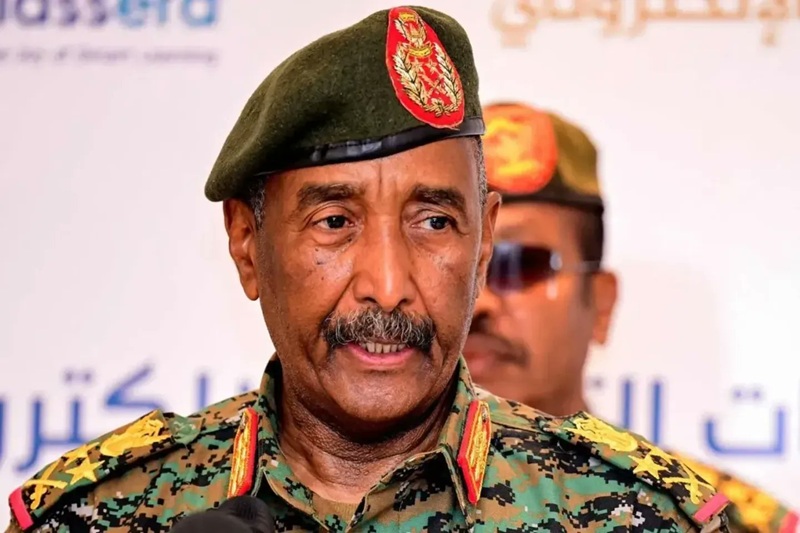
Sudan Chemical Weapons Allegations: How the US, UN, EU and International Community Are Responding
Accusations that the Sudanese Armed Forces (SAF) used chemical weapons have shifted from the battlefield to the international diplomatic arena. Washington has imposed the most severe sanctions to date but Sudan has denied the allegations and asked for evidence. At the international level, this focus on verification, accountability and protection of civilians continues. The issue is of particular importance since Sudan is a party to the Chemical Weapons Convention, which bans the development, production, stockpiling and use of chemical weapons. Sudan acceded to the convention in 1999.
US Takes the Strongest Position
The US has gone furthest in treating the allegations as a matter of settled policy. In April 2025, Washington concluded that the Government of Sudan had used chemical weapons in violation of international law. That finding triggered sanctions under the U.S. Chemical and Biological Weapons Control and Warfare Elimination Act. Then in June 2026 the pressure increased. The U.S. decided to impose further sanctions after determining that Sudan had not met conditions needed to avoid additional measures. New restrictions took effect on July 20.
The US position was also restated at the international level. Washington reiterated its assertion that Sudan used chemical weapons in 2024 and was not in compliance with its obligations at the July meeting of the Organization for the Prohibition of Chemical Weapons (OPCW) Executive Council.
For Washington, therefore, the issue is no longer simply about allegations made during Sudan’s civil war. It has become part of a broader sanctions and non-proliferation policy.
Sudan Rejects the Allegations
The US assessment was firmly rejected by Sudan’s military-backed government. In June 2026, at a Security Council meeting, Sudan’s UN ambassador dismissed the chemical-weapons claim, saying Washington had not presented enough evidence, considering that investigations had been going on for more than a year. Sudanese officials, meanwhile, have challenged the US sanctions and have made the demand for independently verifiable evidence a central feature of their response.
That disagreement matters because there is an unusually high evidentiary threshold for allegations of chemical weapons. It is one thing to show that a chemical agent was used, but quite another to prove who used it, where it came from and whether the incident can be independently attributed to a particular military force.
What Is the UN’s Position?
In the wider context of the conflict in Sudan, the United Nations has kept a very sharp focus on civilian protection, accountability and independent investigation. Recent UN reporting has documented widespread civilian suffering and alleged violations by multiple armed actors. For example, a September 2026 UN fact-finding report cited foreign military assistance and drone strikes that have escalated the conflict and led to massive civilian deaths. But the wider UN reporting should not be mistaken as an independent UN verification of the particular chemical-weapons allegations against the SAF. And that’s an important difference.” The US government has made a formal determination, but the question of independent international verification remains central to the debate.
OPCW Remains Crucial to Verification
The OPCW will likely remain one of the most important institutions to watch. The organization has a proven investigative methodology that uses scientific evidence, including interviews, biomedical and environmental samples, medical records, physical evidence and laboratory analysis. Its dedicated laboratories operate independently to determine the presence of banned toxic chemicals.
The OPCW’s work in July 2026 also demonstrated the increasing importance of chemical forensics in the investigation of alleged chemical-weapons incidents. The organization said that while identifying a chemical is one part of an investigation, forensic evidence can also help determine how a substance was made and whether separate samples are connected.
So far, publicly available OPCW material does not provide the same kind of independent finding on Sudan that the organisation has issued in some other chemical-weapons investigations, including Syria. That makes evidence preservation and access particularly important in the Sudan case.
Europe Responds, But Not Through a Chemical-Weapons Finding
Also, European governments have maintained pressure on actors in the Sudan war but their latest measures should not be automatically labeled as sanctions specifically prompted by the chemical-weapons allegations.
In July, the European Union expanded its sanctions regime against Sudan to include the conflict economy. The measures included sanctions on Sudanese gold and prohibitions on the supply of mercury and cyanide for gold mining and exploitation. The EU said the measures are intended to restrict financial resources to sustain the conflict.
The UK also expanded its Sudan sanctions regime in July, with 11 new designations under the Sudan sanctions framework.
These steps demonstrate growing international pressure on Sudan, but they should be kept separate from the specific US chemical-weapons determination unless governments explicitly establish a direct connection.
Why the International Reaction Matters
If credible independent evidence emerges that chemical weapons are being used, the international response could become more significant.
If proven, the find could add fuel to diplomatic pressure, bolster the case for more sanctions and raise calls for global responsibility. It may also have implications for discussions about arms transfers, military assistance, and the protection of civilians.
At the same time, there are risks of unverified allegations. Making accusations as if they were facts before they are independently verified may impede legitimate investigations and make an already polarized conflict even more difficult to evaluate.
So the most important question is not who is making the accusation, but what evidence can be independently verified?
What Happens Next?
The international community is likely to watch several developments closely: further US sanctions, congressional action, statements from the UN and OPCW, possible independent investigations, and any new evidence from alleged incident sites.
For observers, the clearest approach is to maintain two parallel records: what governments and organizations have alleged, and what independent investigations have actually established.
That distinction will be critical as the Sudan chemical weapons allegations continue to shape international debate.
Frequently Asked Questions
1. What are the allegations against Sudan’s Armed Forces?
The US government has determined that the Government of Sudan used chemical weapons in violation of international law. Sudan has rejected the accusation and disputed the evidence.
2. Has the US imposed sanctions on Sudan over the allegations?
Yes. The United States imposed sanctions following its 2025 determination and introduced additional measures in 2026 after concluding that Sudan had not met required conditions.
3. Has the OPCW independently confirmed the allegations?
Publicly available OPCW material reviewed for this article does not establish an independent OPCW finding confirming the specific allegations against the SAF.
4. What is Sudan’s response?
Sudanese officials have rejected the accusations and argued that Washington has not provided sufficient evidence to substantiate its claims.
5. Why is independent verification important?
Chemical-weapons investigations require scientific evidence and careful attribution. Independent sampling, laboratory analysis, witness testimony and forensic investigation can help distinguish an allegation from a verified finding.
Curious stories worth exploring next?
Where Can Solo Travellers Feel Safest?
Check out 15 tourist destinations ideal for safe and memorable solo travel for those aged 50 and above.
How Is UAE Becoming A Tech Hub?
Dive into the UAE’s AI investment strategy and discover how the Gulf is building its global technology future.
What Caused Japan’s Deadly Floods?
Uncover the record-breaking rainfall, deadly flooding and disruption that stranded thousands at Narita Airport.
Where Can You See Basking Sharks?
Explore Ireland’s best spots for an unforgettable close-up encounter with giant basking sharks in the wild.
How Did Bali’s Ferry Catch Fire?
Find the latest details on the ferry fire, rescue operation and the 172 passengers who survived.

