

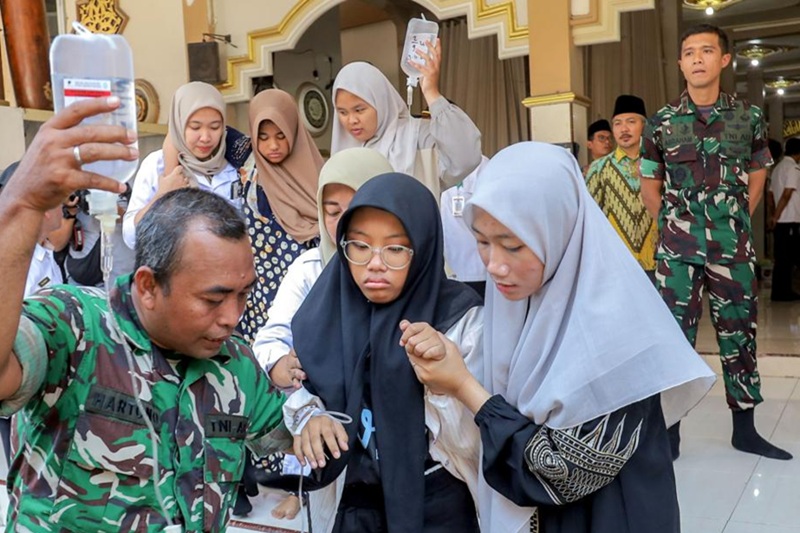
Why Did 2,000 People Fall Ill in Indonesia After Eating Free School Meals? What We Know
A programme meant to put a healthy lunch in front of Indonesian schoolkids has instead sent thousands of them home sick this week. Roughly 2,000 students and teachers across the country came down with vomiting, diarrhoea and stomach cramps after eating meals handed out through the government’s free school meals scheme, known as Makan Bergizi Gratis (MBG) Free Nutritious Meals. The timing is awkward for President Prabowo Subianto, whose signature welfare programme is still in the middle of a nationwide rollout when it’s supposed to be building trust, not losing it.
Where It Happened
The sick-outs weren’t confined to one town. Cases turned up in Central Java, East Java, West Sumatra and South Sulawesi over the course of the week. The worst-hit spot was Lasem, in Central Java, where 752 students and 25 teachers fell ill after eating a school lunch that included grilled chicken. The school’s own principal admitted that some of the chicken had looked “slimy” during a pre-distribution check, not exactly a reassuring detail. Making matters worse, the kitchen that prepared the food reportedly cooked it around 3 a.m., but it didn’t actually reach students until midday. That’s roughly nine hours between stove and plate, plenty of time for anything already going wrong to get worse. Fifteen people ended up in hospital; the rest were sent home to recover. Lasem wasn’t an isolated case, either. It came right on the heels of a bigger outbreak in Sidoarjo, East Java, where hundreds more students got sick. Officials moved quickly to suspend the kitchen tied to that incident while they investigated. Nganjuk and Agam added still more suspected cases to an already grim weekly tally.
So What’s Actually Causing This?
Nobody’s pinned a single, confirmed cause on all of these outbreaks that takes lab work, and it’s still underway. But the pattern investigators keep circling back to is basic food safety: meals cooked too early, held too long, or stored at temperatures where bacteria can multiply happily before anyone notices. That nine-hour gap in Lasem is exactly the kind of window food safety experts worry about. And it’s not the first time this has come up; earlier outbreaks tied to the same programme turned up E. coli, Salmonella, Campylobacter and Staph in lab tests. That history doesn’t prove what caused this week’s illnesses, but it does suggest a pattern worth taking seriously rather than writing off as bad luck.
A Program Under Pressure
MBG was built to tackle malnutrition and give kids, especially from families who can’t easily afford nutritious food a reliable, healthy meal. It’s become one of the government’s flagship social programmes, which also means it’s grown fast. And that’s part of the problem: feeding millions of children every day across an archipelago of thousands of islands is an enormous logistical undertaking, and every extra link in that chain cooking, packing, transport, serving is another place for something to go wrong. The National Nutrition Agency, which runs the programme, says it’s treating the latest incidents seriously and has already suspended some of the kitchens involved. Indonesia’s National Human Rights Commission has gone further, calling on police to investigate and pushing for the responsible kitchens to be shut down.
Why This Matters Beyond the Headlines
This isn’t just about a bad batch of chicken. A programme like MBG only works if parents and schools trust it and repeated poisoning incidents chip away at that trust fast. There’s a financial angle too: every outbreak means medical bills, missed school days, and likely costly fixes to kitchens, transport and inspection systems down the line. Scaling up the programme was always going to be the easy part, politically. Keeping every single meal safe on the way from the kitchen to the classroom is turning out to be the much harder job and the one that actually determines whether MBG succeeds or becomes a liability.
Curious stories worth exploring next?
Where Can Solo Travellers Feel Safest?
Check out 15 tourist destinations ideal for safe and memorable solo travel for those aged 50 and above.
How Is UAE Becoming A Tech Hub?
Dive into the UAE’s AI investment strategy and discover how the Gulf is building its global technology future.
What Caused Japan’s Deadly Floods?
Uncover the record-breaking rainfall, deadly flooding and disruption that stranded thousands at Narita Airport.
Where Can You See Basking Sharks?
Explore Ireland’s best spots for an unforgettable close-up encounter with giant basking sharks in the wild.
How Did Bali’s Ferry Catch Fire?
Find the latest details on the ferry fire, rescue operation and the 172 passengers who survived.
What Happens From Here
Investigators are still testing food samples and digging into how the affected kitchens operate. For now, the priority is straightforward: treat the kids and teachers who got sick. Beyond that, expect much closer scrutiny of cooking times, storage temperatures, transport logistics and kitchen inspections, the unglamorous stuff that, this week, turned out to matter enormously. For Indonesian families, the task is pretty simple: a meal meant to help their kids grow and learn shouldn’t be the thing that lands them in a hospital bed.
FAQ
How many people got sick?
Around 2,000 students and teachers were affected across the outbreaks this week.
What were the symptoms?
Diarrhoea, vomiting, stomach pain and nausea with some cases serious enough to require hospitalisation.
What caused it?
Still unconfirmed. Investigators are looking at delayed food handling, poor storage, and possible bacterial contamination.
What is MBG?
Makan Bergizi Gratis is President Prabowo Subianto’s national programme providing free nutritious meals to children and other vulnerable groups.
Is the programme being shut down?
No nationwide suspension so far, just individual kitchens linked to specific outbreaks.

