

China’s New Taiwan Message Raises Fresh Questions About the Future of US-China Relations and Cross-Strait Tensions
The red carpet was real. So was the warning underneath it. When Xi Jinping flew home from Washington last week, he had the pomp of a state visit and a warm welcome from Trump. What he didn’t have was a Taiwan deal. That gap says a lot about where US-China relations and cross-strait tensions are heading.
What Happened in Washington
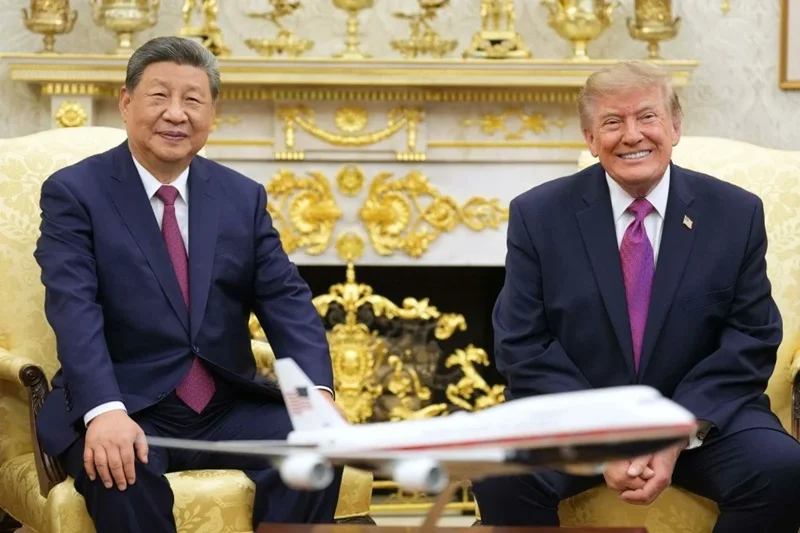
Xi spent September 23-25 at the White House, the first Chinese state visit to the United States in eleven years. Trump greeted him on the tarmac, and the visit included a state dinner and a long Oval Office meeting. The substance was thinner. Xi urged Trump to handle Taiwan with prudence, but secured no commitments from the White House. Taiwanese officials were visibly relieved. Details are scarce. The visit was heavily televised in China but not in the US, because the broadcast press pool lapsed after Trump barred three news outlets.
Why Beijing Keeps Raising the Stakes
This message isn’t new. In May, at the Beijing summit, Xi called Taiwan the most important issue in China-US relations and warned that mishandling it could put the whole relationship in jeopardy. Chinese state media also quoted him warning of possible conflict. Beijing claims Taiwan as its territory. Taiwan’s elected government rejects that. Washington sits in between: its “One China” policy acknowledges Beijing’s position without endorsing it. Arms sales are a flashpoint. The administration has approved an $11 billion package for Taiwan but hasn’t started delivering it. Chinese officials have reportedly pressed Washington to hold off on new sales before Xi’s trip.
Is a Military Move Coming?
Probably not soon. According to the Council on Foreign Relations, US officials increasingly judge an invasion unlikely before 2028. One reason is Xi’s purge of senior officers, which has damaged the command trust and competence a complex invasion would need. That doesn’t mean calm. Analysts expect heavier pressure instead of a sudden assault. In June, Chinese coast guard vessels questioned commercial ships east of Taiwan, a so-called gray zone tactic that falls short of open war.
Expert Take: Stability, With Strings
Brookings scholar Ryan Hass argues Xi got what he wanted: space and time to strengthen China at home, and relief from US pressure. He also notes that Beijing’s “constructive strategic stability” slogan signals to US allies that Washington values calm with China over their concerns. Beijing’s side frames it differently. A Chinese professor told CNBC the main achievement was a bottom line of competing intensely without military conflict.
Why It Matters to Ordinary People
For most of us, the effect shows up in prices and supply chains. Hass expects the trade truce to hold because each side still depends on the other for critical inputs, like US reliance on Chinese rare earths. A rupture over Taiwan would hit electronics, shipping, and markets worldwide. For Taiwan’s 23 million people, the worry is quieter: being treated as a bargaining chip.
FAQs
What was China’s latest message on Taiwan?
Xi pressed Trump to handle the issue with prudence and has repeatedly called it the most important issue in the relationship.
Did the US change its Taiwan policy?
After the May summit, Secretary of State Rubio said US policy toward Taiwan was “unchanged”. The September visit produced no announced shift.
Is a Chinese invasion of Taiwan likely soon?
US officials reportedly see it as unlikely before 2028, though gray-zone pressure continues.
How could this affect the global economy?
Mainly through trade and technology supply chains. Both countries still rely on each other, which is one reason analysts expect the truce to hold.
Explore the latest developments shaping global debates on the Muslim Brotherhood and Islamist networks.
What Is Oklahoma Investigating About CAIR?
Check out the latest details on Oklahoma’s investigation and the calls for federal action.
How Are New Sanctions Targeting Hamas?
Find out how Washington’s latest sanctions are targeting financial networks linked to Hamas and the Muslim Brotherhood.
What Does Abbott’s Speech Signal?
Uncover what the Texas governor’s remarks indicate about the debate surrounding the Muslim Brotherhood designation.
Why Is Britain Debating Alleged Influence?
Browse the global reactions to claims of alleged Muslim Brotherhood influence in Britain.
What Does France’s Report Reveal?
Dive into France’s findings and the questions they raise about Islamist networks across Europe

