

Texas and the Muslim Brotherhood Designation: What Abbott’s Speech Signals
Governor Greg Abbott’s latest remarks place Texas at the centre of a wider U.S. debate over how governments should respond to organisations they associate with Islamist movements and national-security concerns.
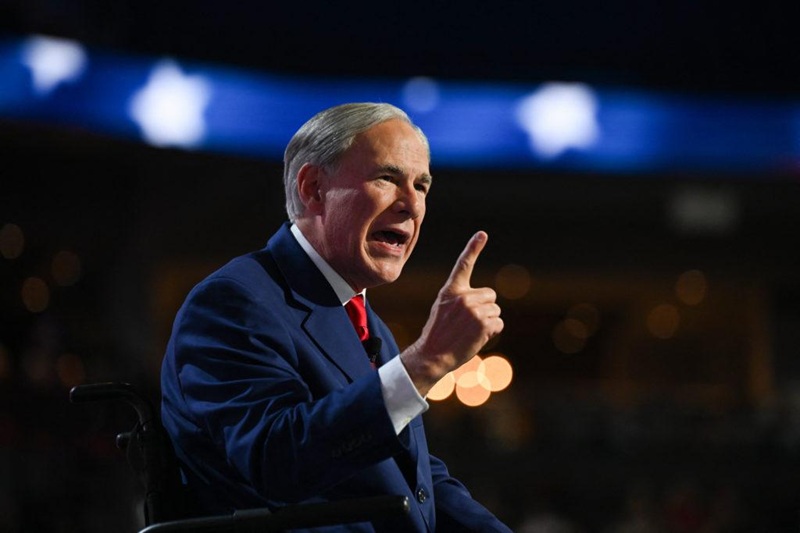
At the Republican Party’s 2026 midterm convention in Dallas, Abbott highlighted Texas’ previous designation of the Muslim Brotherhood and CAIR and emphasised that the state had acted rather than waiting for federal authorities. The remarks came after Texas had already taken formal action in November 2025.
That distinction matters. Texas’ action is a state-level legal designation, while federal terrorist designations operate under separate federal statutes and procedures. In November 2025, the White House also initiated a federal process concerning certain Muslim Brotherhood chapters, demonstrating that the issue was being addressed at both state and federal levels through different mechanisms.
What Texas Actually Designated
On November 18, 2025, Abbott issued a proclamation designating the Muslim Brotherhood and CAIR as foreign terrorist organisations and transnational criminal organisations under Texas law. The proclamation also classified them as proscribed entities under the Texas Property Code.
One immediate consequence was a restriction on the organisations, their affiliates and members acquiring interests in real property in Texas under the cited provisions of state law. Abbott subsequently directed the Texas Department of Public Safety to investigate the organisations for potential violations of state and federal law.
The state’s position is that the measures are intended to address what the governor describes as terrorism, intimidation, criminal activity and attempts to undermine Texas law.
However, these are claims and legal determinations made by Texas authorities, rather than uncontested findings accepted by all parties.
The Sharia Law Debate
Abbott has also connected his policy to concerns about Sharia law and the possibility of religious legal systems operating in conflict with Texas law.
In November 2025, the governor’s office said DPS investigations would include alleged efforts to establish or promote Sharia courts in violation of Texas law.
The broader legal question is more specific than whether Muslims may follow religious principles in their private lives. Religious communities in the United States retain constitutional protections, while courts and governments can regulate conduct that violates generally applicable laws.
The debate therefore centres on where authorities draw the line between protected religious practice and conduct that allegedly attempts to replace or circumvent state law.
State vs Federal Action
Texas’ approach has raised a separate question about the relationship between state and federal authority.
Federal law provides the principal framework for formal U.S. Foreign Terrorist Organisation designations. In November 2025, President Donald Trump issued an executive order initiating a process to consider certain Muslim Brotherhood chapters for federal designation.
Texas, meanwhile, relied on state statutes to impose its own designation and related consequences.
That creates a significant legal and policy distinction: a state government can use its own statutory powers, but those powers do not automatically carry the same nationwide consequences as a federal designation.
National Security and Organisational Networks
The Abbott administration has presented the issue primarily through a national-security lens.
Following the November 2025 proclamation, Abbott directed Texas DPS to investigate the Muslim Brotherhood and CAIR, with DPS special agents working alongside local and federal law-enforcement partners, including FBI Joint Terrorism Task Forces.
Texas officials have argued that investigating organisational relationships and financial or operational networks is necessary to identify potential criminal activity.
At the same time, CAIR has rejected the state’s characterization. Its Texas chapters challenged Abbott’s designation in federal court, arguing that the proclamation violated their rights and lacked a sufficient legal and factual basis.
The competing positions make the legal proceedings particularly important because they provide a mechanism for testing the scope and consequences of the state’s action.
A Wider U.S. Debate
Abbott’s speech comes amid a broader national debate about Islamist organisations, terrorism designations, religious freedom and government authority.
The issue is no longer limited to Texas. Federal authorities have pursued their own process concerning Muslim Brotherhood chapters, while other governments and U.S. states have taken different positions toward organisations associated with the movement.
For Texas, Abbott’s approach represents an effort to use state-level powers against organisations his administration considers security threats. For opponents, the designations raise questions about due process, constitutional protections and the potential consequences for Muslim civil-society organisations.
What Comes Next
The next stage is likely to depend heavily on law, enforcement and court proceedings, rather than political speeches alone.
The key questions include how Texas courts and federal courts interpret the state’s authority, how investigations develop, and whether additional state or federal measures follow.
Abbott’s latest remarks therefore serve less as the beginning of Texas’ policy than as a renewed public presentation of an approach already established in 2025.
The debate now extends across several overlapping issues: state authority, federal counterterrorism policy, religious freedom, organisational accountability and national security. How those interests are balanced will determine the longer-term significance of Texas’ unprecedented action
Related Articles You May Find Interesting
Why Did Crypto Clarity Act Fail?
Check out the key reasons the cryptocurrency bill failed to advance in the US Senate.
Who Are Trump’s New Envoy Picks?
Find out about Wesley Hunt and Kimberly Greenwood’s new diplomatic appointments.
Why Did US Expand Iran Sanctions?
Uncover the networks targeted by the latest US sanctions over alleged support for Hezbollah and Iraqi militias.
How Could Financial Power Shape Markets?
Explore Scott Bessent’s views on using financial power as a foreign policy tool and its global impact.
What Happened in Turmus Ayya?
Dive into the US ambassador’s West Bank visit amid rising settler violence in Turmus Ayya.

