

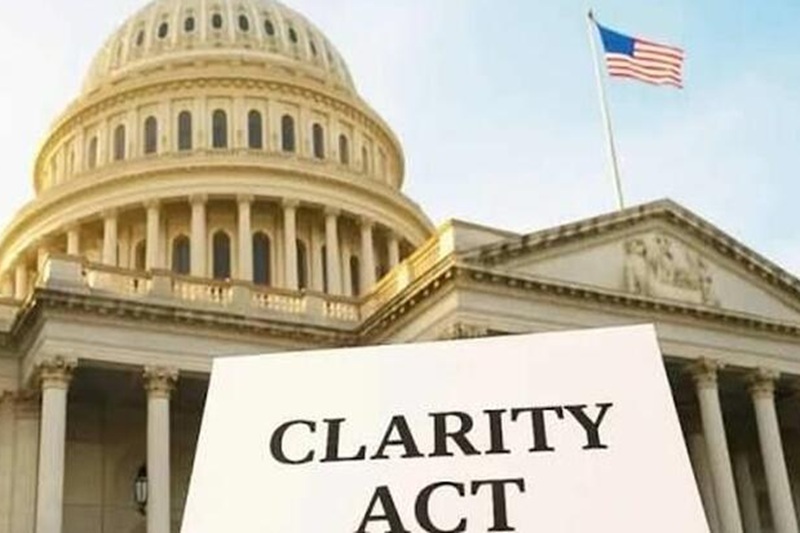
US Senate Blocks Crypto Clarity Act: Why the Sweeping Cryptocurrency Bill Failed to Advance
For years, the cryptocurrency industry has been pushing Washington for one thing above all else: clear rules. On Monday, that effort hit a wall.
The Senate failed to advance the Crypto Clarity Act on September 15, 2026, coming up short in a procedural vote that ended 49-50 eleven votes shy of the 60 needed to move forward. It’s a real blow to an industry that has poured enormous time and money into getting this exact kind of legislation across the finish line.
What the bill was actually trying to do
Officially called the Digital Asset Market Clarity Act, the bill’s main job was to settle a question that has dogged crypto companies for years: who’s actually in charge of regulating this stuff? The SEC and the CFTC have long had overlapping and sometimes contradictory claims over digital assets, leaving companies guessing about whether a given token counted as a security, a commodity, or something else entirely. Supporters said fixing that ambiguity would give businesses the confidence to build in the U.S. rather than move offshore, and would open the door to more investment.
So why did it stall?
The politics here go well beyond crypto policy itself. Democrats raised pointed concerns about President Trump’s own substantial financial stake in the crypto industry, arguing the bill simply didn’t do enough to guard against conflicts of interest for federal officials trading in digital assets. Republicans tried to head this off a revised version of the bill, released just before the vote, added new ethics provisions, consumer protections, and language addressing the role of state attorneys general. It wasn’t enough to win over Democrats.
And it wasn’t just a party-line breakdown, either. Four Republican senators broke ranks and voted against moving the bill forward, a sign that the GOP itself isn’t fully unified on what the final legislation should look like.
Where that leaves things
Nothing changes for people who already hold or trade crypto; this was a procedural vote, not a ban or a new rule. But it does mean the bigger question of how the U.S. regulates digital assets remains unsettled. In the absence of new legislation, the SEC and CFTC will keep leaning on their existing authority to police the space case by case, which is exactly the patchwork approach the industry has been trying to escape.
Markets didn’t wait around to react. Bitcoin dropped below $76,000 shortly after the vote, and crypto-adjacent stocks slid too, as investors priced in another stretch of regulatory limbo.
What Else Is Making Headlines?
What Made Diana’s Dress So Iconic?
Check out the story behind Princess Diana’s famous Revenge Dress and its upcoming Sotheby’s auction.
Why Is California Restricting Social Media?
Find out how California’s new law targets addictive social media features for children under 16.
Why Does UN Reform Matter at BRICS?
Uncover why António Guterres is highlighting Security Council reform and multilateralism at BRICS 2026.
How Is BRICS Reshaping Global Trade?
Explore how the expanded 11-nation BRICS bloc is transforming global trade and economic cooperation.
Why Is Britain Obsessed With Bayeux?
Experience the Bayeux Tapestry exhibition in London as renewed public fascination sweeps across Britain.
Whether the bill comes back for another attempt is an open question. Technically, nothing stops lawmakers from revising it and trying again. Practically, the calendar isn’t on their side, the midterms are approaching in November, and Congress’s remaining legislative window is tight. For now, the takeaway for anyone in the crypto world is pretty unglamorous: the comprehensive federal rulebook the industry has been waiting for still doesn’t exist.
FAQs
1. What is the Crypto Clarity Act?
It is legislation designed to establish a comprehensive U.S. regulatory framework for digital assets and clarify the roles of federal regulators.
2. Why did the Senate block the bill?
The bill failed to secure the 60 votes required to advance. Disagreements over ethics rules, President Trump’s crypto interests and other regulatory provisions contributed to the opposition.
3. Does the failed vote ban cryptocurrency in the U.S.?
No. The vote does not ban Bitcoin or other cryptocurrencies. It means the proposed comprehensive regulatory framework did not advance.

