

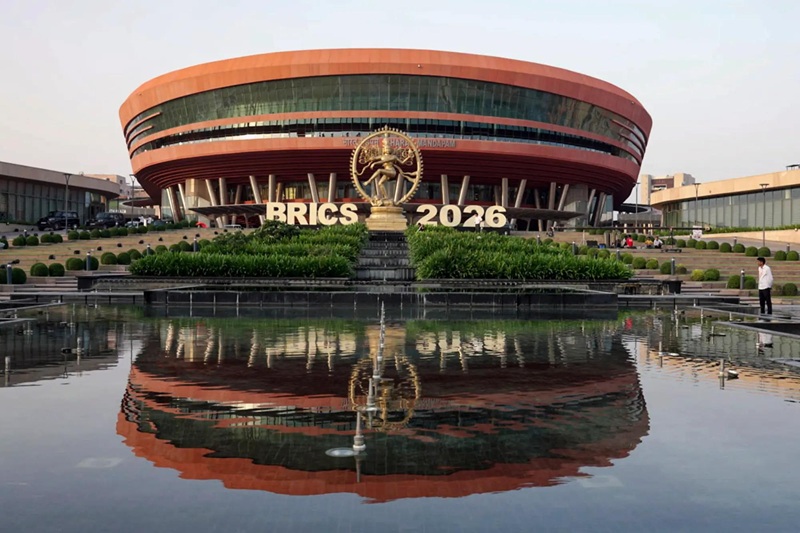
BRICS 2026 Summit in India: How the Expanded 11-Nation Bloc Is Reshaping Global Trade and Economic Cooperation
New Delhi is about to host a summit that would have looked almost unrecognizable a decade ago. When leaders gather on September 12–13 for the 18th BRICS Summit, they won’t just be representing the original four founding countries plus South Africa, they’ll be speaking for eleven nations spanning Asia, Africa, the Middle East and Latin America. That’s a lot of ground to cover, and a lot of competing interests to manage.
India is hosting under the banner “Building for Resilience, Innovation, Cooperation and Sustainability” a mouthful, sure, but one that captures what this summit is really trying to do: turn a group that’s grown fast into one that actually functions.
From Five Countries to Eleven
BRICS started simple enough Brazil, Russia, India, China, and then South Africa joined in 2010. But the last couple of years have changed math considerably. Egypt, Ethiopia, Iran, the UAE and Saudi Arabia have all come aboard, and Indonesia rounded things out as the eleventh member back in January 2025. Put together, that’s a bloc India’s government pegs at roughly half the world’s population, 40% of global GDP, and a quarter of all global trade. Numbers like that are hard to ignore, whether you’re talking about finance, energy, or supply chains.
The Real Work Is on Trade
Here’s the thing about BRICS: historically it’s been better at holding meetings than making things happen. India seems intent on changing that this time around. Back in August, trade ministers meeting in Jaipur pushed forward on what’s being called the BRICS Economic Partnership Strategy 2030, along with some groundwork on getting small businesses better access to finance closing what’s often referred to as the trade-finance gap.
There’s also a bigger, quieter goal running underneath all of this: making global supply chains less fragile. After years of watching shipping routes get disrupted and manufacturing bottlenecks pile up, there’s an obvious appeal to countries diversifying who they buy from and sell to, rather than leaning too heavily on any one partner.
Can This Group Actually Rival the West?
This is the question everyone keeps circling back to, and the honest answer is: not really, not yet, and maybe not ever in the way people imagine. BRICS isn’t built like the EU. There’s no shared currency ambition, no unified legal framework, nothing binding these countries together beyond a loose sense of common cause. India and China are sitting at the same table while remaining genuine strategic rivals in plenty of other arenas. And the ongoing tension around Iran and the broader Middle East isn’t making things easier. Reuters has reported that the conflict has disrupted energy flows through the Strait of Hormuz, which adds yet another wrinkle to an already complicated gathering.
So while BRICS talks a lot about reforming global institutions and giving developing economies more of a voice, it’s still far from being a coherent alternative to something like the WTO or IMF.
What’s Making Headlines You Can’t Miss?
Could Hoekstra Face Expulsion From Canada?
Check out why thousands of Canadians are demanding action against the US ambassador.
Who Is Martina Strong, Really?
Uncover the diplomat’s UAE appointment and the political delays surrounding her confirmation.
Why Did Clancy’s Jury Deadlock?
Find out what led to the mistrial and why the jury couldn’t reach a verdict.
Why Is Lake Ontario Renamed?
Browse what Apple Maps’ surprising “Lake America” change means and why it happened.
Which Haunted Hotels Should You Visit?
Experience five spooky American hotels known for paranormal encounters and eerie stays.
What Might Actually Come Out of This
Don’t expect a single headline-grabbing announcement to define this summit. If anything changes, it’ll be gradual small shifts in how these countries trade, invest, and move money between each other. India has clearly put in the legwork. Its year as BRICS chair has involved more than 350 meetings spread across over 25 cities, with a deliberate emphasis on practical cooperation rather than symbolic statements. For developing economies, a more functional BRICS could mean real gains, better access to markets, more investment options, alternative financing routes that don’t run through traditional Western channels. For everyone else, it’s another signal that global trade is drifting toward a more multipolar arrangement, whether or not that’s a comfortable shift.
The real test for India will be keeping eleven countries with wildly different priorities rowing in roughly the same direction. If New Delhi can land practical agreements on trade, supply chains and finance, this summit might end up being remembered as the moment BRICS’ size finally translated into real influence.
FAQs
1. When is the BRICS 2026 Summit in India?
The 18th BRICS Summit will be held on September 12–13, 2026, in New Delhi at Bharat Mandapam.
2. How many countries are members of BRICS in 2026?
BRICS currently has 11 members: Brazil, China, Egypt, Ethiopia, India, Indonesia, Iran, Russia, Saudi Arabia, South Africa and the UAE.
3. Why is BRICS important for global trade?
The expanded grouping represents a large share of the world’s population, economic output and trade, giving its members a significant platform for economic cooperation.
4. What is India focusing on during its 2026 BRICS presidency?
India is focusing on resilience, innovation, cooperation and sustainability, with priorities including trade, finance, technology, development and stronger cooperation among emerging economies.
5. Is BRICS becoming an alternative to Western economic institutions?
BRICS is seeking greater representation for emerging economies and reforms in global institutions, but it is not currently a unified alternative to systems such as the WTO or IMF. Its members also have significant differences in economic and geopolitical priorities.

