

Liz Truss Show Sparks Global Debate Over Alleged Muslim Brotherhood Influence in Britain
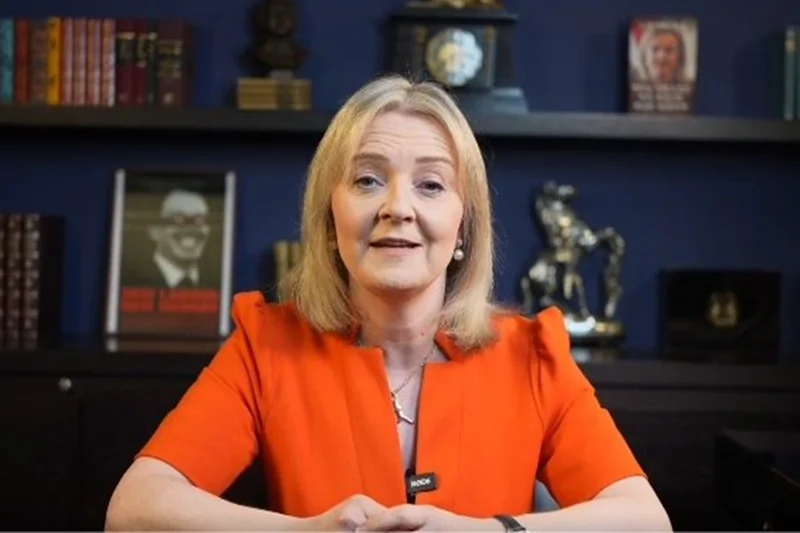
The issue of alleged Muslim Brotherhood influence in Britain has been back in the spotlight with a new episode of The Liz Truss Show that raises a wider debate about political networks, Islamism, national security and whether the organization should face proscription in the UK. Former British Prime Minister Liz Truss interviews political analyst Ghanem Nuseibeh in an episode called “Has the Muslim Brotherhood Infiltrated Britain?” The discussion focused on alleged links between Islamist organizations and British political and civil-society networks, and the country’s approach to extremism and political engagement. The program, published on YouTube in September 2026, presents Nuseibeh’s views and allegations, rather than establishing them as matters of fact. The discussion also stressed the distinction between Islam as a religion and Islamism as a political ideology.
What Did Liz Truss and Ghanem Nuseibeh Discuss?
In the interview, Nuseibeh, chairman of Muslims Against Antisemitism, argued that the Muslim Brotherhood has become quite powerful in Britain and Europe. He spoke of what he called networks reaching into areas such as politics, mosques, media and civil society. He also claimed that some political actors had dealt with organizations close to Islamism for electoral or political interests. Those assertions are part of a larger and disputed political discussion. The program itself is not independent proof that each organization or person named is involved with the Muslim Brotherhood. The interview also touched on the relationship between Islamist political movements and wider issues of Hamas, antisemitism, radicalization and Britain’s foreign policy.
Why Is the Muslim Brotherhood Proscription Debate Important?
One of the main issues raised by the program was whether the Muslim Brotherhood should be banned in the UK. Under the UK’s Terrorism Act 2000, an organization can be proscribed if the Home Secretary considers it concerned in terrorism and that proscription is proportionate. This includes organizations that engage in, prepare, promote or incite terrorism.
The Muslim Brotherhood is not listed as a proscribed terrorist organization in the UK. But the government’s 2015 review looked at the movement’s ideology, international structure and activities in Britain. It said some Brotherhood-associated or influenced groups in the UK had exercised significant influence over national organizations, charities and mosques at times. The government would keep the question of proscription under review, it added.
That distinction is important. Alleged ideological or political influence does not automatically meet the legal threshold required for proscription under British law.
Islamism Is Not the Same as Islam
The discussion also brings up the important issue of language. Islam is a religion practiced by millions of people around the world and is a large and diverse community in Britain. By contrast, Islamism usually refers to political movements or ideologies that aim to organize political and social life in accordance with particular interpretations of Islam.
The danger in treating them as interchangeable is that a debate about political organizations becomes a debate about a whole religious community. The episode also discussed the difference, and Muslims who oppose Islamist organizations and publicly question extremist ideas.
Britain’s Changing Approach to Extremist Organisations
The debate comes after an extension of some of Britain’s national-security powers. In July 2026 the UK government introduced new powers under the National Security (State Threats) Act 2026 to allow certain bodies to be designated as being involved in foreign-state threat activity. The government said the new framework was designed to target organizations engaged in hostile activity on behalf of foreign states. Therefore the government’s approach includes a range of legal mechanisms, such as terrorism proscription, sanctions and newer national-security designations. These mechanisms have different legal tests and effects.
Why the debate matters beyond Britain
London is still a major hub for international political, financial, media and civil society networks and the UK’s approach could have implications beyond its borders. The debate also raises a broader question for the world: how to balance political participation, freedom of religion and freedom of expression with the need for democracies to respond to transnational ideological movements?
Some governments have opted for surveillance and restrictions, others have banned them altogether. The British debate therefore matters not only for UK domestic politics but also for European security policy, Middle Eastern politics and discussions about political Islam worldwide. The Liz Truss program has re-opened these questions for public debate. Whether its allegations will ultimately lead to policy change is a matter for evidence, government review and democratic scrutiny.
FAQs
1. What did Liz Truss discuss about the Muslim Brotherhood?
Liz Truss interviewed Ghanem Nuseibeh about alleged Muslim Brotherhood influence in Britain, Islamist political networks, free speech, national security and whether the organisation should be proscribed.
2. Is the Muslim Brotherhood banned in Britain?
The Muslim Brotherhood itself is not currently listed on the UK’s official list of proscribed terrorist organisations. Britain has, however, proscribed several other Islamist organisations, including Hamas and Hizb ut-Tahrir.
3. What is the difference between Islam and Islamism?
Islam is a religion. Islamism generally refers to political movements seeking to shape government or society according to particular interpretations of Islam. The terms should not be treated as interchangeable.
Explore the Latest Muslim Brotherhood Developments
What Signals Abbott’s Texas Speech?
Check out what Abbott’s speech signals about the Muslim Brotherhood designation.
How Is Washington Targeting Financial Networks?
Find how new sanctions target Muslim Brotherhood and Hamas financial networks.
Why Is Oklahoma Launching an Investigation?
Uncover why Governor Stitt ordered an investigation and called for federal action.
What Does France’s Report Reveal?
Browse the report’s findings and the questions surrounding Islamist networks in Europe.
Why Is El-Ebiary Under US Focus?
Look into how the focus signals a broader push against financial networks.

