

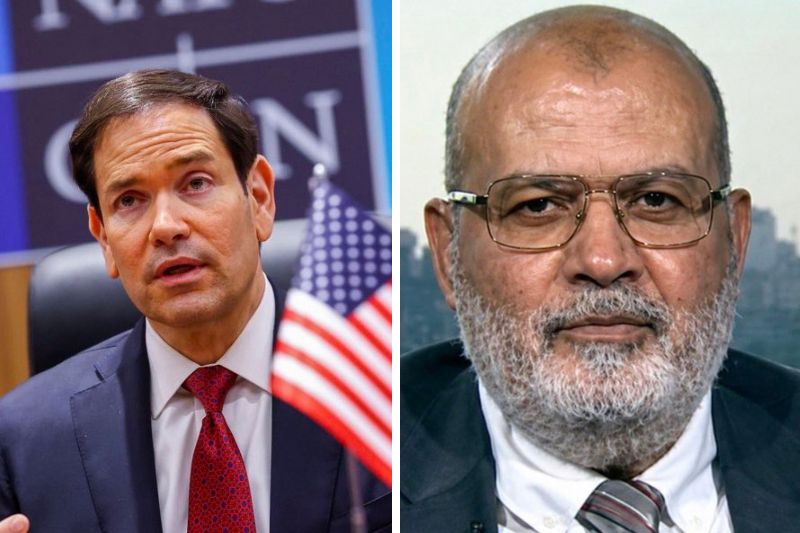
US Focus on Mahmoud El-Ebiary Signals Broader Push Against Muslim Brotherhood Financial Networks
The United States’ latest sanctions on Mahmoud El-Ebiary are seen by many analysts as more than a strike against one man. Instead, the action is part of a broader counterterrorism strategy designed to disrupt financial and organizational networks that U.S. authorities say support designated terrorist groups. Experts say the bigger message is aimed at the infrastructure for international fundraising and financial operations, not an individual, even though the sanctions are targeted specifically at El-Ebiary. The decision comes as Washington has stepped up legal and financial measures against several branches and organizations of the Muslim Brotherhood it says have supported Hamas.
A Shift From Political Debate to Financial Enforcement
For years, the debate surrounding the Muslim Brotherhood has been mostly ideological and political. The recent U.S. moves point to a shift towards following financial trails instead. “Recent sanctions and terrorist designations are designed to disrupt funding mechanisms that allegedly allow terrorist organizations to operate,” the U.S. Treasury and State Department said. Officials have warned that charities, businesses and financial intermediaries will be targeted if they are found to be facilitating prohibited activity. This is part of this larger approach from Mahmoud El-Ebiary’s label. He has been accused by U.S. authorities of raising funds for groups they say support Hamas, and they have frozen his assets and imposed other sanctions.
Why Mahmoud El-Ebiary Matters
Security analysts say El-Ebiary has been identified in a number of reports as a key figure in the international Muslim Brotherhood structure. Instead of viewing the sanctions as a standalone enforcement action, observers say Washington is trying to demonstrate that leadership figures responsible for financial coordination can also be enforcement targets. This is part of a broader policy of considering organizational structures, financial relationships and international fundraising networks alongside individual behavior.
Redefining the Organization in U.S. Policy
The changing legal characterization adopted by Washington is one of the most important developments. The Trump administration had already issued an executive order that began the process of designating some Muslim Brotherhood chapters as terrorist organizations. Since then, U.S. counterterrorism authorities have formally designated several national branches. This development indicates that U.S. policymakers are increasingly pondering whether certain branches or entities are providing material support to terrorist organizations as opposed to simply viewing the movement as a political or religious organization.
Pressure Beyond the Middle East
Another important aspect is the international scope of the latest measures. U.S. officials have repeatedly said that financial support for Hamas may come through networks outside conflict zones. The Treasury stressed that groups that function as charities or commercial entities are not immune from sanctions if they are found to have violated U.S. counterterrorism laws. Analysts say it’s a warning to companies operating across Europe, Africa and elsewhere that financial dealings with sanctioned groups could face greater regulatory scrutiny.
Possible Implications for Other Countries
The new sanctions could also affect talks on international policy. For countries that already have designated parts of the Muslim Brotherhood as terrorist organizations, the U.S. decision could reinforce their own legal positions. For governments that haven’t taken similar steps, there could be a renewed debate over whether more scrutiny is required. But the approaches of the western governments remain very different. For example, the United Kingdom has historically failed to designate the Muslim Brotherhood as a terrorist organization, citing ongoing policy differences amongst allies.
Keep Reading: Discover More Expert Insights, Health Breakthroughs & Inspiring Stories
1. What Drives Your Best Performance?
Discover your motivation type and learn practical ways to boost productivity, career growth, and long-term success.
2. Could Insulin Pills Change Diabetes?
Explore the latest research on insulin pills and what doctors say about the future of Type 1 diabetes treatment.
3. How Did She Lose Weight?
Check out how this influencer lost 15 kg, maintained it for five years, and still enjoyed pizza and burgers.
4. Why Is Vikram-1 Historic?
Explore how Skyroot’s Vikram-1 launch marked a major milestone in India’s private space journey.
5. Are You Protecting Your Hearing?
Discover simple daily habits that can help prevent hearing loss and support better hearing for years to come.
Why This Matters
Now financial sanctions are one of Washington’s main weapons in the fight against terrorism.
Governments are looking at ways to freeze assets, limit international financial transactions and cut organizations out of the global banking system, rather than rely solely on criminal prosecutions. The U.S. authorities may impose more sanctions on individuals, companies or organizations if they continue to expand investigations into alleged funding networks. In the past, Treasury officials have described recent moves as part of a “ongoing” effort, not a concluding step.
FAQs
1. Who is Mahmoud El-Ebiary?
Mahmoud El-Ebiary is an individual sanctioned by the U.S. government over allegations related to fundraising and financial activities linked to organizations accused of supporting Hamas.
2. Why did the United States impose sanctions?
According to the U.S. Treasury, the sanctions are intended to disrupt financial networks that allegedly provide material support to designated terrorist organizations.
3. Does this mean the entire Muslim Brotherhood is designated as a terrorist organization?
No. U.S. policy has designated certain branches and individuals under specific legal authorities, rather than the movement as a whole.
4. Could more sanctions follow?
U.S. officials have indicated that recent actions are part of a continuing counterterrorism strategy, making additional designations possible.
5. How might this affect international organizations?
Organizations operating internationally may face increased scrutiny if authorities suspect financial links to sanctioned entities or terrorist financing.

