

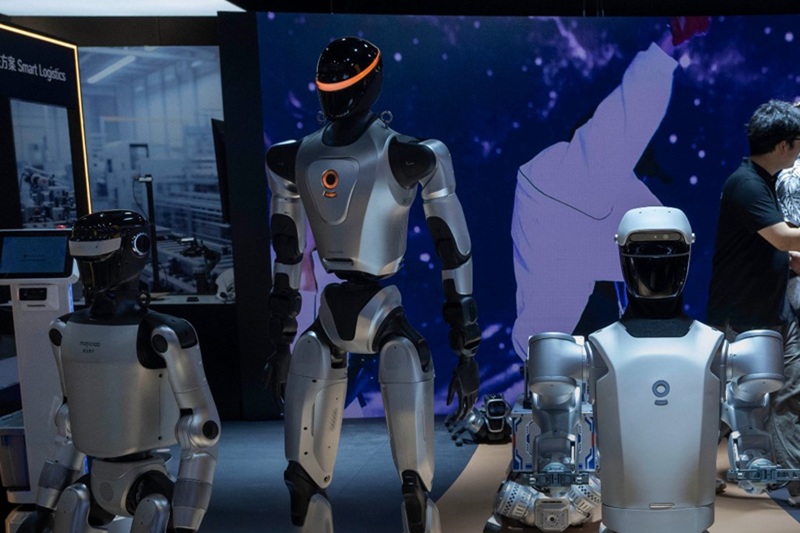
FCC Announces Ban on Humanoid Robots From China: What Businesses and Consumers Need to Know
Another dramatic twist in the race to dominate the future of artificial intelligence has emerged, The U.S. Federal Communications Commission (FCC) prohibited the import of new humanoid robots from China due to national security and potential cybersecurity risks. The move is one of the most aggressive steps so far in Washington’s broader campaign to reduce dependence on Chinese technology. The move is mainly aimed at companies importing sophisticated robotics, but it may also change the outlook for AI-powered machines in factories, research labs, warehouses and even homes.
Why Has the FCC Banned Chinese Humanoid Robots?
The FCC said it has banned humanoid robots from China after finding that advanced connected robots could pose what it called “unacceptable national security risks. U.S. officials say the robots could be used to collect sensitive information using cameras, microphones, sensors and internet connectivity. Authorities are concerned that such information could be compromised or exploited by foreign governments or bad actors. The restrictions also include connected power inverters used in renewable energy systems and data centers, amid broader concerns about critical infrastructure security. The ban would mainly affect new robot models that are seeking approval to be sold in the U.S. But the FCC has said it has the authority to review, or rescind approvals for, products that have already been authorized if need be.
What Does the Ban Mean for Businesses?
For many companies, the announcement creates instant uncertainty. Chinese manufacturers have emerged as major suppliers of low-cost humanoid and quadruped robots for use in:
- Automation of manufacturing
- University research Warehouse operations
- Development of AI
- Inspection and logistics services
Companies that want to buy new Chinese-made robotic systems may now have to look elsewhere, potentially raising costs and slowing the uptake of AI. Analysts also say the decision could spur more investment in U.S. robotics firms and domestic manufacturing.
Will Consumers Be Affected?
It won’t be instantaneous for most consumers. Humanoid robots are not yet a common household product and are in the early stages of commercial adoption. But the ban could affect how available and how expensive personal robots that use AI will be in the future for use in homes to help with tasks, education or elder care. The connected devices will be better able to gather personal information, and consumers can therefore expect renewed discussion on privacy, data protection and cybersecurity too.
Keep Reading: Discover More Expert Insights, Health Breakthroughs & Inspiring Stories
1. What Drives Your Best Performance?
Discover your motivation type and learn practical ways to boost productivity, career growth, and long-term success.
2. Could Insulin Pills Change Diabetes?
Explore the latest research on insulin pills and what doctors say about the future of Type 1 diabetes treatment.
3. How Did She Lose Weight?
Check out how this influencer lost 15 kg, maintained it for five years, and still enjoyed pizza and burgers.
4. Why Is Vikram-1 Historic?
Explore how Skyroot’s Vikram-1 launch marked a major milestone in India’s private space journey.
5. Are You Protecting Your Hearing?
Discover simple daily habits that can help prevent hearing loss and support better hearing for years to come.
A Growing U.S.-China Technology Divide
The move is the latest in a wave of technology restrictions between the United States and China. In recent years, Washington has taken action against telecommunications equipment, drones, semiconductor technology and AI-related products. The new robotics restrictions extend that strategy into one of the fastest growing sectors of artificial intelligence. China has criticized the decision, saying it unfairly targets Chinese companies and could harm global technology cooperation. Chinese officials have warned they could take countermeasures.
FAQs
1. Why did the FCC prohibit Chinese humanoid robots?
The FCC said the ban is meant to blunt national security and cybersecurity threats posed by advanced connected robotic devices.
2. Does the ban include robots already in use?
The restrictions mainly apply to new models, but regulators said they could also review products they have already approved.
3. Will there be an immediate change for the consumer?
Likely not. Humanoid robots are still a niche consumer product, so most people will not feel the effect immediately.
4. What industries will be most affected?
Manufacturing, logistics, AI research, universities, robotics startups and warehouse automation companies are likely to be the hardest hit.

