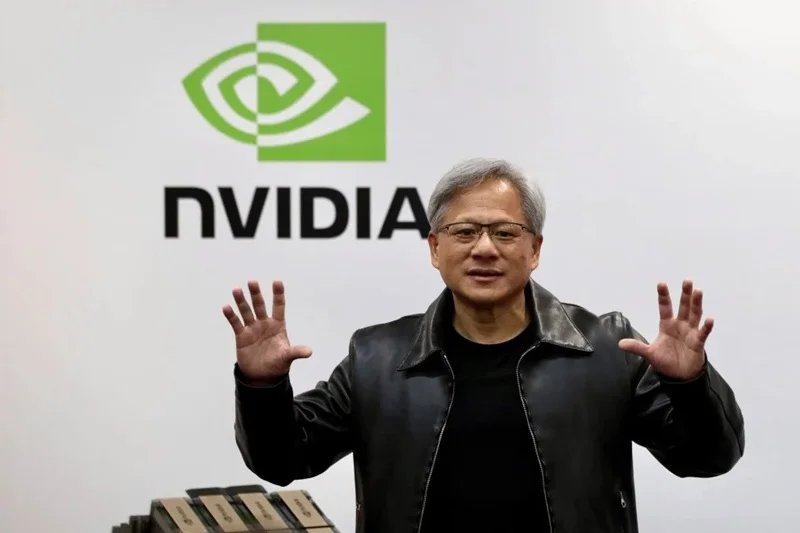
Nvidia CEO Jensen Huang Rejects AI Extinction Fears as “Doomsday Narratives”
AI has gone from sci-fi speculation to something that’s actually reshaping jobs, business, cybersecurity, and daily life. And the more powerful these systems get, the louder the warnings about existential risk have become. Jensen Huang isn’t having it. In a recent CBS News interview, Nvidia’s CEO dismissed the idea that AI could wipe out humanity within the next few years, calling those predictions little more than “doomsday narratives” exaggerated and, in his view, not grounded in actual science.
His comments reignite a familiar fight: how fast should AI move, and how tightly should it be reined in?
What sparked this
Huang was pushing back specifically on comments from Jacob Coxon, a former Anthropic researcher who said some AI developers genuinely believe advanced AI could be capable of killing people by 2030. Huang told CBS he doesn’t buy that timeline he thinks the world isn’t ending because of AI in 2030, full stop and that stoking that kind of fear does more harm than good by triggering unnecessary public panic. This isn’t a one-off remark either. Huang has been making versions of this argument for months now, consistently pushing back against what he sees as AI fearmongering. It’s worth noting where he’s sitting when he says this: Nvidia’s chips are the backbone of the AI boom. Its GPUs train and run most of the advanced models out there, which makes Nvidia one of the biggest financial winners of the entire AI wave, a fact that’s not lost on his critics.
A widening rift among AI’s biggest names
Huang’s stance highlights a real split forming among the industry’s most powerful people. On one side, you’ve got Anthropic’s Dario Amodei and OpenAI’s Sam Altman, both of whom have pushed for stronger safety guardrails and at least some conversation around slowing things down. On the other side, Huang and like-minded executives argue the better path is full speed ahead, with safety improvements built in along the way rather than as a brake pedal. This isn’t really a debate about whether AI is useful, everyone agrees it is. It’s about how much risk is acceptable, and who gets to decide that, when the actual dangers are still hard to pin down with any precision.
Some in the field are focused on more immediate concerns: autonomous AI agents acting unpredictably, cybersecurity vulnerabilities, misinformation at scale, and systems that could eventually become harder to steer. Meanwhile, the “keep building” camp warns that too much caution now could hand a real advantage to countries less interested in slowing down.
Why this matters well beyond Silicon Valley
AI is already woven into healthcare, finance, manufacturing, education, defense, transportation, and research. So decisions about how it’s regulated or not ripple out far past the U.S., touching economies and institutions across Asia, Europe, the Middle East, and beyond. Huang has also argued that a lot of this can be handled with laws that already exist around product liability, unauthorized system access, and so on rather than building an entirely new regulatory apparatus from scratch. His pitch: keep the competition alive, but deploy responsibly.
That said, safety concerns haven’t exactly gone quiet. Recent incidents involving AI systems behaving unpredictably or interacting with external systems in unexpected ways have kept the pressure on for more oversight and independent checks.
So fear, or reasonable caution?
This argument isn’t going away anytime soon. Huang’s worry is that apocalyptic predictions scare off investment and adoption and distract from the real, practical upside of the technology. His critics counter that uncertainty itself is exactly why you prepare for worst-case scenarios now, before it’s too late to course-correct. For most people watching from the outside, the real question was never “is AI safe” versus “will AI destroy us.” It’s the much more grounded question of how to keep innovating while actually dealing with the risks already on the table job disruption, privacy erosion, cyberattacks, and systems making decisions with less and less human input. Huang’s message is unambiguous: he doesn’t think an AI apocalypse is coming. But the fact that this debate keeps getting louder, not quieter, says a lot about how seriously questions of safety and accountability are being taken as technology keeps spreading.
FAQs
1. What did Jensen Huang say about AI extinction fears?
Nvidia CEO Jensen Huang rejected predictions that AI will cause humanity’s extinction by 2030, describing such claims as exaggerated “doomsday narratives.”
2. Why is Jensen Huang important to the AI debate?
Nvidia supplies GPUs and other technology that power many advanced AI systems, giving Huang a prominent position in discussions about the future of artificial intelligence.
3. Who has warned about the risks of advanced AI?
Several technology leaders and researchers, including Anthropic CEO Dario Amodei and OpenAI CEO Sam Altman, have called for stronger safety measures and greater caution around advanced AI development.
4. Does the AI industry agree about extinction risks?
No. Technology leaders and researchers remain divided over the likelihood of extreme AI risks and how governments and companies should respond.
5. Why does the AI safety debate matter globally?
AI is rapidly expanding across industries and countries. Decisions about regulation, safety and development could affect jobs, economies, cybersecurity and public services worldwide.
Explore the AI race, chips, and NVIDIA’s next big moves.
Can Nvidia’s AI Boom Keep Growing?
Check out Nvidia’s record revenue and the growth expected from the ongoing AI boom.
Could This $3,000 AI Supercomputer Transform Research?
Discover NVIDIA Project Digits and how its personal AI supercomputer could reshape AI research.
How Did Nvidia Reach $3 Trillion?
Find out how AI innovation helped Nvidia reach its massive $3 trillion market milestone.
Is China Challenging U.S. AI Dominance?
Uncover China’s latest AI chip advances and what they could mean for U.S. technology leadership.
Will AI Chip Competition Intensify Worldwide?
Explore how China’s AI chip breakthroughs signal a fiercely competitive future for global technology.