

China’s AI Chip Leap: Real Threat to U.S. Dominance, or Overstated?
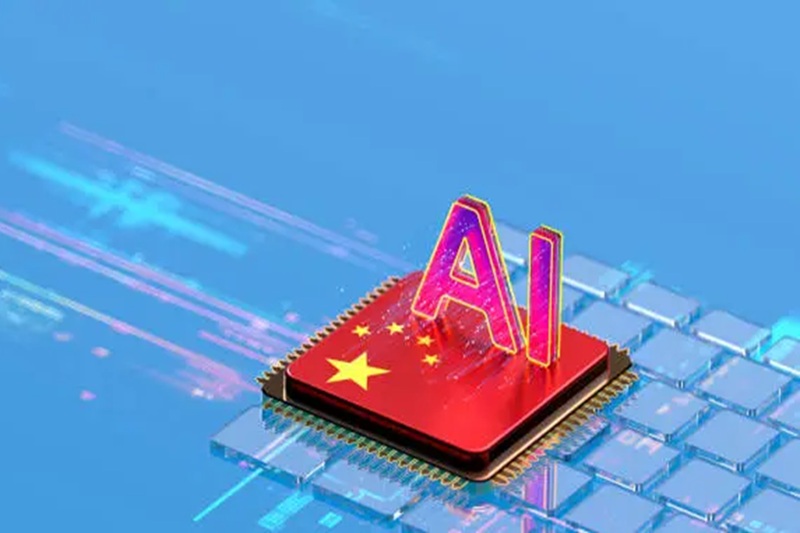
If you’ve been anywhere near tech news lately, you’ve probably seen the headlines: China is closing in on America’s AI chip lead. Cue the panicked stock charts and hot takes. So is it true? Kind of but the full picture is a lot messier (and more interesting) than a headline can capture.
China Has Made Real Progress
Let’s give credit where it’s due. Despite years of US export restrictions designed to choke off China’s access to cutting-edge chip technology, Chinese firms haven’t just sat still; they’ve poured serious money into building their own semiconductor supply chain from the ground up. Huawei and a handful of other domestic players have been the face of this push, grinding away at homegrown processors that can now handle a decent chunk of AI workloads. And a lot of that momentum comes down to necessity: when you can’t buy the good stuff from abroad, you build your own.
But the US Isn’t Standing Still Either
Here’s the thing people tend to gloss over: making a good chip is only half the battle. The real moat is everything around the chip: the software, the developer tools, the years of infrastructure that took decades to build. This is exactly why Nvidia is still the name everyone measures against. It’s not just their hardware it’s CUDA, the software ecosystem that practically every AI researcher on the planet has built their workflow around. You don’t replace something like that in a year or two, no matter how good your silicon is. The US also still has the edge in the less flashy stuff that actually matters most: frontier-scale data centers, cutting-edge fabrication equipment, and raw computing capacity.
Did the Export Controls Backfire?
Here’s the ironic twist. Washington’s restrictions were meant to slow China down and instead, they may have lit a fire under Chinese chipmakers. Rather than stalling China’s ambitions, the controls seem to have pushed Beijing to double down on self-sufficiency. Some analysts now argue the US got the worst of both worlds: American companies lost access to a massive market, while Chinese firms got even more motivated to build their own alternatives. That doesn’t mean China has caught up. It just means the race got a lot more competitive than anyone expected.
Wall Street Is Nervous (Maybe Too Nervous)
Every time a new report drops about China’s chip progress, semiconductor stocks tend to wobble. Investors are clearly worried about what happens if Nvidia’s grip on the market ever loosens. But a lot of analysts think the market’s reaction has been overblown; actual commercial parity between the two countries is still likely years off, not months. Meanwhile, the political temperature keeps rising, with both Washington and Beijing trading accusations over unfair tech practices and each side weighing further restrictions.
Stay Ahead with Today’s Biggest Global Stories
Can Gaza Peace Finally Last?
Explore how Hamas accepted a ceasefire roadmap featuring complete disarmament and what it means for the region.
Who Made Algeria’s Political History?
Discover how Khalida Boufedeche became Algeria’s first woman parliamentary speaker and why it matters.
Why Are Copper Prices Dropping?
Check what caused copper prices to fall before the Fed’s rate decision and how global supply influenced markets.
How Is Europe Supporting Ukraine?
Explore how the European Commission’s €3.47 billion package will strengthen Ukraine’s defence capabilities.
What Did Zendaya Reveal Recently?
Discover what Zendaya shared about working with Tom Holland and their friendship on the Spider-Man set.
Why You Should Care, Even If You Don’t Work in Tech
This isn’t just a Silicon Valley story. AI chips are quietly running the show behind medical research, financial systems, self-driving cars, defense tech, factories, classrooms, basically anything that touches “smart” technology these days. Whoever ends up leading this race could shape the direction of the global economy for years to come. And there’s a real upside to more competition: lower prices, faster innovation, more options for businesses that don’t want to be locked into one supplier. The flip side? A world where the US and China build two separate, incompatible tech ecosystems and everyone else has to pick a side.
FAQs
Is China ahead of the US in AI chips?
No. China’s made big strides, but the US still leads on advanced chips, software ecosystems, and large-scale computers.
Why is China pouring money into AI chips?
US export restrictions pushed China to build its own semiconductor industry instead of relying on foreign suppliers.
Why do AI chips even matter this much?
They power everything from machine learning and generative AI to cloud computing, robotics, and self-driving cars.
Could Nvidia actually lose its edge?
Competition is growing, but its software ecosystem still gives it a serious head start that’s hard to close quickly.
How does any of this affect regular people?
More competition usually means faster innovation, cheaper computing, and more choices for businesses and consumers alike.

