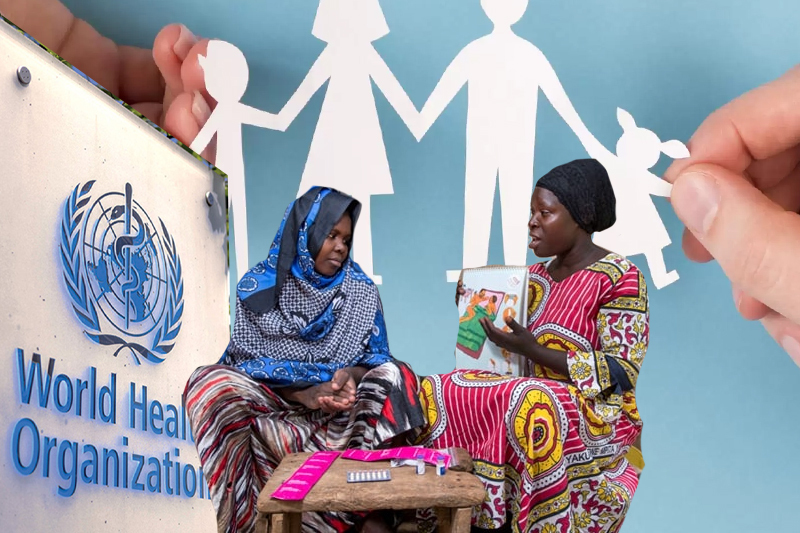
WHO updates Family Planning Handbook: focuses on empowerment, information
WHO (World Health Organization) has updated its landmark Family Planning Handbook, which was launched on Tuesday. The updated handbook focuses on informing the health workers on how to protect the access to family planning services during emergencies, and also provides the policy makers with the most recent information on contraception. “Wider access to self-administered contraceptives and the use of digital technologies by providers” are two of the tangible measures that have been outlined in the latest edition WHO’s guidance on family planning.
“Family planning promotes self-actualization, empowerment, as well as health and wellbeing, and reduces maternal and infant deaths through the prevention of unintended pregnancy and unsafe abortion”, said Pascale Allotey, WHO’s Director for Sexual and Reproductive Health and Rights.
Keep Reading
During the early phase of 2020 of COVID-19 pandemic, approximately 70 per cent of countries have reported disruptions to the essential contraceptive and family planning services, thereby increasing risks of sexually transmitted infections and unintended pregnancies. “This updated Family Planning Handbook is a vital resource, helping health workers support contraceptive users around the world in making informed choices about the right contraceptive options for them”, said the senior WHO official.
Self administered contraceptives include condoms, contraceptive pills, some diaphragms, spermicides and most recently, the option of self-injection of a progestin-only contraceptive, called DMPA, which can now be safely administered just under the skin rather than into the muscle, as noted by the UN News. “The updated recommendations in this Handbook show that almost any family planning method can be used safely by all women, and that accordingly, all women should have access to a range of options that meet their unique needs and goals in life,” said lead author Mary Gaffield.
While only condoms protect against HIV and other sexually transmitted infections, all contraceptive options – with the sole exception of nonoxynol-9 spermicide – are now considered safe for women and young people at high risk of HIV as they have not been found to increase risk of HIV transmission or contract infection, highlights the report by WHO. “Family planning services can be provided safely and affordably so that no matter where they live, couples and individuals are able to choose from safe and effective family planning methods”, underscored the lead author.