

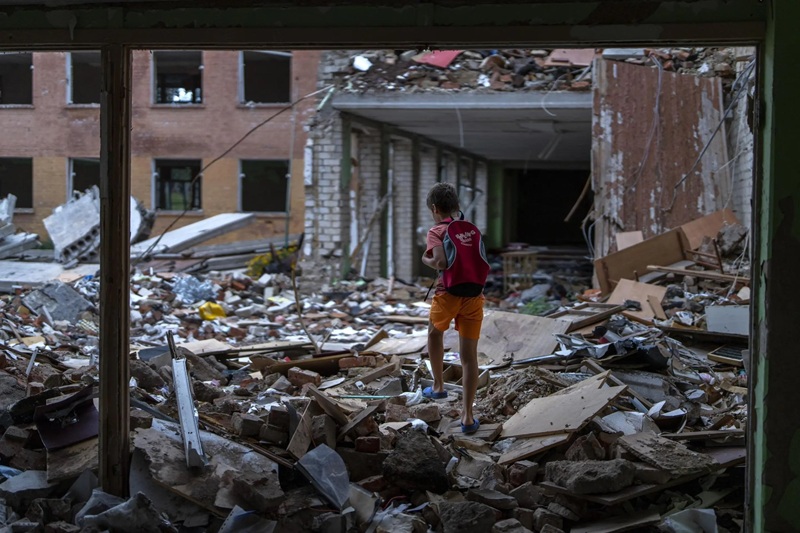
Ukraine School Crisis: Russian Strikes Destroy 12 Million Books Ahead of New Academic Year
When Ukrainian children walk into their classrooms this September, many of them will find something missing: their textbooks. Russian strikes on printing plants, warehouses, and distribution centers have wiped out as many as 12 million books across the country in recent months, and publishers are now scrambling to make up the gap before the new academic year gets fully underway.
The Damage Keeps Piling Up
The most recent blow came when a Russian strike hit a printing facility just outside Kyiv. That plant had been in the middle of producing roughly 1.3 million books, about one-tenth of everything Ukraine needs to stock its schools this year. The strike wrecked the printing equipment itself and torched huge stacks of finished material. Whatever books survived the fire didn’t necessarily survive what came next: firefighters dousing the building left much of the remaining stock waterlogged and unusable. That wasn’t an isolated incident. Back in August, a drone strike leveled a warehouse belonging to Ranok, one of Ukraine’s biggest publishers, in Kharkiv. Reuters reported the loss there alone topped 8 million books, a mix of children’s literature and educational material. All told, Ukrainian publishing officials say more than 35 facilities across the industry have taken losses in these attacks.
Textbooks Specifically Are Falling Behind
Ukraine had planned to print about 13.5 million textbooks for the 2026 school year. Industry figures now put the destroyed total at over 1.1 million and climbing. In July, Education and Science Minister Andrii Butenko said a single strike alone took out more than 410,000 textbooks, many of which had already been printed, boxed, and were sitting ready for delivery ahead of September 1. It’s not just a matter of reprinting what was lost, either. Books have to be printed, packaged, trucked out, and delivered to individual schools, and Ukraine’s logistics networks are already stretched thin by the broader war. Replacing a book is rarely as simple as running the presses again.
Why This Cuts Deeper Than It Looks
For kids who’ve already spent years learning through air-raid sirens, school closures, and repeated upheaval, losing their books is one more disruption layered on top of everything else. It’s easy to see a missing textbook as a small thing next to missiles and drones but for a generation of students, it’s one more thread pulled from an already fraying sense of normalcy. There’s a cultural weight to this too. Ukrainian officials and publishers have been blunt about how they see these strikes: as an attack not just on infrastructure, but on the Ukrainian language and national identity itself. The publishing industry has been central to reviving and strengthening Ukrainian-language literature since the full-scale invasion began in 2022, which makes the timing and pattern of these strikes sting even more for those in the industry. Russia, for its part, denies deliberately targeting civilian or cultural sites and disputes the characterization that these are intentional attacks on Ukrainian culture.
A Race Against the Calendar
Publishers are now trying to rebuild what they can while the school year is already in motion. Digital textbooks can plug some of the gap, but they’re no real substitute. Plenty of students don’t have reliable internet or a device to read from, especially in rural or front-line areas. Then there’s the money. Rebuilding a printing operation means replacing machinery, warehouses, and distribution networks, and that’s expensive even in peacetime. Smaller publishers, in particular, may not be able to absorb another hit like this and stay afloat. So the challenge facing Ukraine right now is really two challenges at once: get books back into kids’ hands, and keep the publishing industry itself alive long enough to keep producing them.
Stay informed with the latest stories making headlines worldwide.
Could Typhoon Narra Worsen China Floods?
Check out how Typhoon Narra is affecting southern China and displacing thousands.
Can Pakistan-Iran Talks Bring Peace?
Find out how Pakistan-Iran talks are progressing toward regional peace and stability.
Why Is Saudi Arabia Investing Near Paris?
Uncover Saudi Arabia’s $7 billion plan to build three theme parks near Paris.
How Did Death Valley Turn Deadly?
See what happened when a French tourist became stranded in extreme Death Valley heat.
Will Pakistan-Iran Talks End Conflict?
Track down the latest developments as both sides push to resolve the regional conflict.
What This Says About the War
What’s happening to Ukraine’s books is a small but telling example of how far this war reaches into ordinary life well past the front lines and into classrooms. Ukraine isn’t just rebuilding buildings and reprinting pages. It’s trying to make sure that an entire generation doesn’t lose its footing on language, learning, and culture because of what’s being destroyed behind the lines.
FAQs
How many books have been destroyed in Ukraine?
Recent Ukrainian and international reports estimate that Russian attacks have destroyed up to 12 million books, including educational and children’s books.
How many school textbooks were destroyed?
More than 1.1 million school textbooks had been destroyed in attacks on Ukrainian publishers and printing facilities, according to recent Ukrainian publishing-sector data.
What happened to the Kyiv printing plant?
A Russian strike damaged a Kyiv-area printing facility that was preparing around 1.3 million books for the new academic year.
When does Ukraine’s new school year begin?
Ukraine’s academic year begins on September 1, although conditions vary depending on security and local circumstances.
Why are books important in the Ukraine war?
Beyond education, books represent language, history and cultural identity. Ukrainian officials and publishers say protecting the publishing sector is therefore part of preserving the country’s cultural future.

