

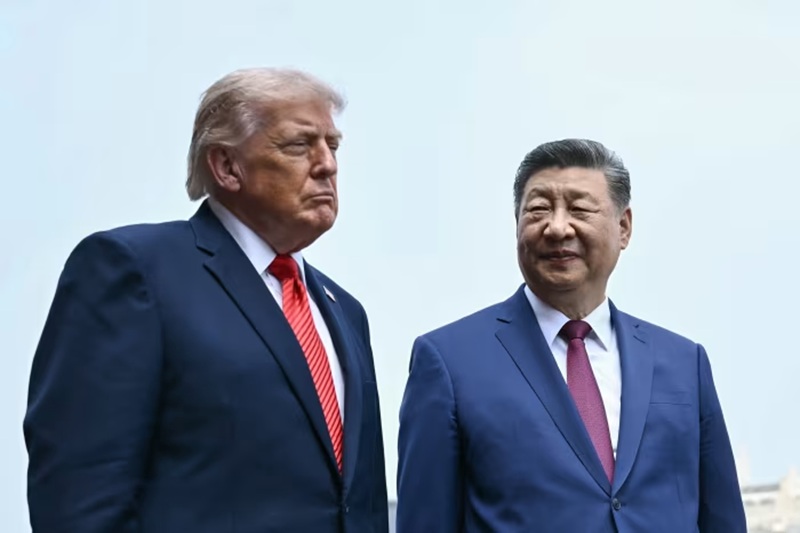
Trump-Xi Summit 2026: US-China AI Race Takes Center Stage as Leaders Meet in Washington
Today, September 24, Donald Trump and Xi Jinping meet at the White House. Xi landed in Washington on Wednesday for his first visit to the US capital in more than ten years, and the mood is cautious. Trade, critical minerals, Taiwan and Iran are all on the table, but the topic that may matter most over the long run is artificial intelligence.
Why AI is at the center
For both governments, AI is no longer just a tech story. It’s about economic power, military strength and national security. The contest isn’t really about who builds the best chatbot. It’s about who controls the ingredients: advanced chips, computing power, data and the most capable models. American officials keep saying that staying ahead in AI is a security issue. China is pouring money into its own AI ecosystem while working around limits on access to some of the most advanced foreign chips. Reuters reports that AI is expected to feature prominently in the talks. The friction points include chips, technology transfers, alleged copying of AI capabilities, and how the technology should be regulated.
A small opening for dialogue
There is one hopeful sign. Before the summit, US Treasury Secretary Scott Bessent and Chinese Vice Premier He Lifeng discussed AI-related risks. The two sides have agreed to set up an AI dialogue, and Washington has also floated ways for both countries to alert each other about potentially dangerous AI incidents. That matters because these risks don’t respect borders. Experts worry about AI-assisted cyberattacks, misuse involving biological threats, and advanced systems disrupting critical infrastructure. Neither country wants an AI mishap to spiral into a wider crisis. Still, real cooperation will be hard. The technology that creates shared danger is also seen by both capitals as a source of advantage, and that makes it difficult to trust each other with anything.
Chips, minerals and the bigger economic picture
AI is tangled up with the rest of the relationship. The two countries remain divided over technology restrictions and chip access. China also holds a major sway over global supplies of critical minerals and rare earths, which many high-tech industries depend on. The World Economic Forum expects trade, critical minerals and technology to be among the central issues in Washington. For businesses, the outcome could shape investment decisions and supply chains. Reuters has reported that investors are already placing bets around rival US and Chinese AI ecosystems, which shows how far this rivalry has reached into financial markets.
Why the rest of the world should care
The effects won’t stay in Washington and Beijing. If the two powers build increasingly separate tech ecosystems, companies elsewhere may be pushed to pick a side on standards, supply chains and regulation. Ordinary people could feel it too, in which AI products they can access and what advanced technology costs. On the other hand, even limited cooperation on AI safety could put communication channels in place before a serious incident happens, when they’d be needed most.
Competition without a collision
Nobody expects this summit to end the technology rivalry. The real question is whether the US and China can compete hard while still talking enough to keep AI from becoming another source of instability. With AI moving from research labs into everyday life, what happens around this meeting could matter far beyond the room.
FAQs
1. When is the Trump-Xi Summit 2026?
US President Donald Trump and Chinese President Xi Jinping are meeting at the White House in Washington on September 24, 2026.
2. Why is AI important to the Trump-Xi meeting?
AI has become a major area of US-China economic and national-security competition, particularly around advanced chips, AI models, computing power and technology controls.
3. Are the US and China cooperating on AI?
The two countries have begun discussions on AI safety and are working toward an AI dialogue focused on managing shared risks, despite their wider technological rivalry.
Explore the latest Trump moves shaping global politics, energy, and security.
Who Will Trump Send Abroad Next?
Check out the latest ambassador appointments and their potential diplomatic significance.
Could Venezuela’s Oil Transform America’s Energy Future?
Find out what the reported oil deal could mean for U.S. energy strategy.
Why Did Trump Cut Military Exercises?
Uncover the details behind the substantial reduction in joint military exercises.
Why Did Netanyahu Reject Trump’s Gaza Plan?
Dive into the key disagreements surrounding the proposed 15-point Gaza plan.
Can Trump’s Gaza Deal Survive Spoilers?
Look into the challenges that could affect the agreement and prospects for lasting peace.

