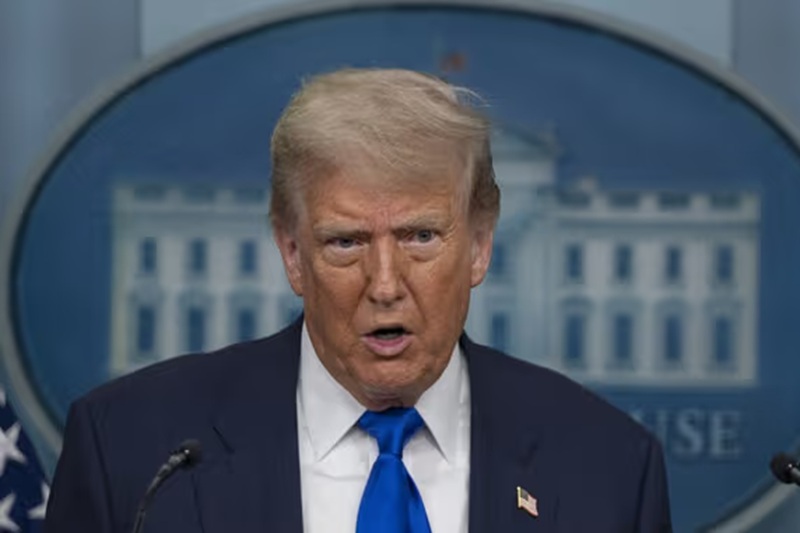
“Too Late to Cancel”: Trump Orders Substantial Cut to Joint Military Exercises
President Donald Trump ordered the Pentagon on Sunday, August 16, to scale back the annual joint military exercises the United States runs with South Korea, days after the drills had already begun.
In a Truth Social post, Trump said the exercises were too expensive, sent an unnecessarily hostile signal to North Korea, and came after Seoul declined a separate request to join US efforts against Iran. The decision marks one of the clearest instances yet of Trump publicly overriding an ongoing military commitment to a treaty ally in favour of his own read on North Korean leader Kim Jong Un.
What Trump Actually Said
The exercises in question, the Ulchi Freedom Shield drills, began Monday as planned, involving joint operations such as live-fire precision targeting, manoeuvre training, a wet gap river crossing, and the distribution of prepositioned military equipment.
Trump’s post argued that the drills were not only costly, with the United States covering much of the expense as usual, but sent a signal he called totally inappropriate and hostile toward a country he described as unthreatening and respectful throughout his time in office.
He then wrote the line that has since defined coverage of the announcement: “Therefore, and based on the fact that it is too late to cancel, I have instructed Secretary of War, Pete Hegseth, to substantially reduce the Joint Military Exercises!” In the same post, Trump raised what he called a somewhat unrelated point, that he had recently asked South Korean President Lee Jae Myung whether Seoul would join the United States in denuclearising Iran, and that Lee had responded, “No thanks!”
The Iran Connection
The Iran reference ties the Korea announcement to a broader and more consequential conflict already underway involving the United States, Israel, and Iran. Trump’s framing suggested that South Korea’s refusal to participate in that effort factored into his decision on the joint exercises, even as he characterised the two issues as only loosely connected.
The post also referenced North Korean weapons and personnel activity linked to the war in Ukraine, with Trump warning that continued North Korean involvement there could sharpen the eventual threat Pyongyang poses to Japan, South Korea, the Philippines, and other regional partners, an argument that sits somewhat uneasily alongside his simultaneous description of North Korea as unthreatening under his presidency.
A Pattern That Predates This Announcement
This is not the first time Trump has moved to scale back military exercises with South Korea. During his first term, he pledged after his 2018 Singapore summit with Kim Jong Un to cancel what he called provocative war games, a decision that reportedly caught both the Pentagon and officials in Seoul off guard at the time, with US military commanders in Korea saying they had received no formal guidance to change their training posture.
That earlier episode raised similar questions about coordination between the White House and military leadership on the peninsula, questions echoed in the response to Sunday’s announcement.
South Korea’s Official Response
South Korea’s Defence Ministry confirmed that the Ulchi Freedom Shield exercises began Monday as originally scheduled, suggesting Seoul has not treated Trump’s order as an immediate halt to the drills already in progress, consistent with his own description of the move as a reduction rather than a cancellation.
The announcement comes at a sensitive moment for regional security, arriving just days after South Korea, the United States, and Japan detected a North Korean short-range ballistic missile launch, North Korea’s first ballistic weapons test since late June, widely read as a signal of displeasure ahead of the joint drills. It also follows the US military’s repositioning of its last aircraft carrier in Asia, with the USS George Washington dispatched to replace the USS Abraham Lincoln in the Persian Gulf, a moment that has drawn its own scrutiny given ongoing tensions in multiple theatres at once.
Domestic Pushback
Trump’s decision drew swift criticism from Capitol Hill. Democratic Senator Mark Kelly, a former Navy pilot, said hollowing out the joint exercises was shortsighted and a mistake, posting his response just hours after Trump’s own announcement.
The criticism reflects a broader concern among defence policy voices that scaling back large-scale joint training, even short of outright cancellation, could degrade the operational readiness and interoperability that these exercises are specifically designed to maintain between US and South Korean forces.
What Happens Next
As of Sunday’s announcement, exactly how substantially the exercises will be reduced, and which specific components of Ulchi Freedom Shield will be scaled back, has not been detailed.
Trump’s order goes to Defence Secretary Pete Hegseth, referred to in the post by the department’s rebranded title, Secretary of War, leaving the practical implementation details to the Pentagon. Given the history of similar announcements creating confusion between the White House and military command on the ground, how this particular reduction is actually carried out, and how South Korea’s government responds beyond its initial statement that the drills proceeded as scheduled, will likely shape how this decision is understood in the days ahead.
What’s Making Headlines Around the World?
What Does Todd Blanche’s DOJ Win Mean?
Check out what Todd Blanche’s confirmation could mean for the US Department of Justice.
Why Are Canadians Targeting Hoekstra?
Find out why Canadians are calling for US Ambassador Pete Hoekstra’s expulsion.
How Is Etna Disrupting Malta Flights?
Uncover the latest updates on Mount Etna’s eruption and its impact on Malta flights.
Could New Sanctions Derail US-China Talks?
Browse the latest US-China tensions and how fresh sanctions could affect upcoming negotiations.
What Caused the Statue Boat Tragedy?
See what happened to the boat near the Statue of Liberty and the charges against its captain.