

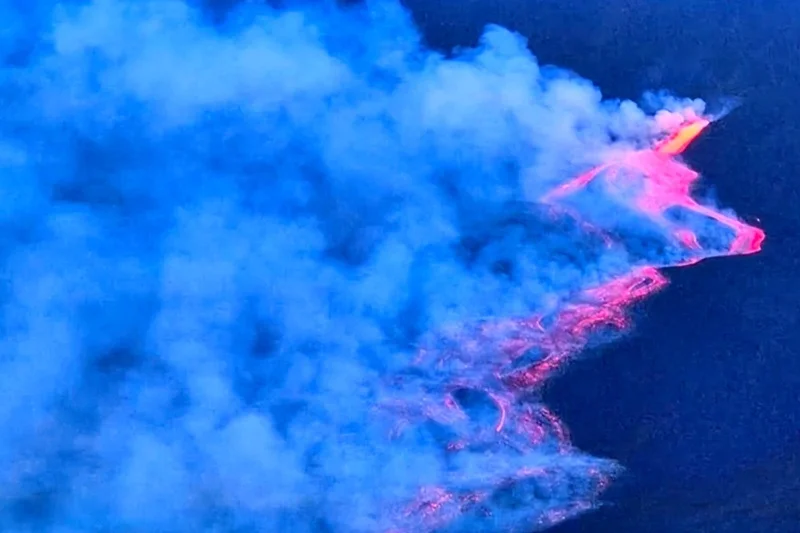
Mount Etna Ash Cloud Disrupts Malta Flights: Latest Updates on Sicily Volcano Eruption
If you’re flying anywhere near Sicily or Malta this week, you’ll want to check your flight status before you leave for the airport. Mount Etna has kicked back into gear, and the ash it’s throwing into the sky has started causing real headaches for summer travelers.
What’s actually happening
On Tuesday, the ash finally drifted far enough to reach Malta about 220 kilometers south of the volcano. That’s not exactly next door, but wind doesn’t care about distance, and it carried enough ash over the islands that Malta International Airport had to cancel 19 flights outright, with several more delayed. Airport officials are telling passengers, bluntly: check before you travel. Things are worse right at the source. Catania Airport, one of Sicily’s busiest, had to shut down again on Wednesday after fresh ash started pouring out of Etna. Reuters reported the airport pushed its suspension of arrivals and departures out to 4 p.m. GMT, and airlines are the ones fielding the “what now?” questions from stranded passengers. Palermo Airport has been soaking up the overflow, taking in flights that were supposed to land in Catania which, as you’d expect, is creating its own pile-up of delays and congestion there too.
Why ash is such a big deal for planes
It’s easy to lump this in with regular bad-weather delays, but volcanic ash isn’t whether it’s closer to sandpaper made of glass and rock. Fly a jet engine through a thick plume and that ash can melt inside the engine, which is about as bad as it sounds for something you’re 30,000 feet up in. That’s the whole reason authorities don’t mess around with ash forecasts the way they might with a passing rainstorm. And because ash rides the wind rather than staying put, an eruption can mess up air travel far outside the immediate danger zone which is exactly how Malta, sitting more than 200 km away, ended up affected at all.
More Stories You Shouldn’t Miss
Could Tom Holland’s Luxury Stay Surprise?
Discover the lavish details behind Tom Holland’s extravagant stay at Mumbai’s iconic Taj Mahal Palace.
What Makes India’s Brain Atlas Revolutionary?
Explore how Indian scientists are unlocking the mysteries of the human brain with cutting-edge 3D mapping.
Why Did US Seize Iranian Tanker?
Uncover the dramatic events behind the US Navy’s tanker seizure and its impact on India.
Why Reject Two Citizenship Offers?
Find out why Rashid Khan chose loyalty over offers from India and Australia.
How Did Vikram-1 Create History?
Check out how Skyroot’s Vikram-1 became a milestone for India’s private space ambitions.
Timing couldn’t be worse
This is landing right in the thick of peak summer tourist season, which makes it more than just an inconvenience. Sicily and Malta both lean heavily on August travel money, hotels, restaurants, tour operators, taxi drivers, the whole ecosystem feels it when flights stop moving. And if you’re a traveler stuck mid-trip with a cancelled flight, you’re not just annoyed, you’re suddenly eating an unplanned hotel night and scrambling for a new way home.
What happens from here
Nobody can say for sure how long this phase of activity will last, that’s really the crux of it. Etna’s behavior, plus the direction the wind happens to be blowing on a given day, will decide whether flights resume smoothly or whether this drags on. The INGV’s Etna Observatory keeps a close eye on the volcano and puts out aviation notices (VONAs) specifically so pilots and air traffic controllers know when ash is becoming a real hazard.
FAQ
Why did Malta’s flights get disrupted?
Wind carried volcanic ash from Etna roughly 220 km across the Mediterranean to Malta, creating an aviation hazard that led to cancellations and delays.
How many flights were cancelled in Malta?
Nineteen, on August 11 with additional delays reported.
Is Catania Airport still affected?
Yes it suspended operations again on August 12 due to fresh ash.
Is volcanic ash actually dangerous for planes?
Yes. It can damage engines and other aircraft systems, which is why authorities restrict or halt flights when ash levels get risky.
Where can I get real-time updates?
Go straight to your airline or airport. For the science side, the INGV Etna Observatory publishes ongoing volcanic and aviation updates.

