

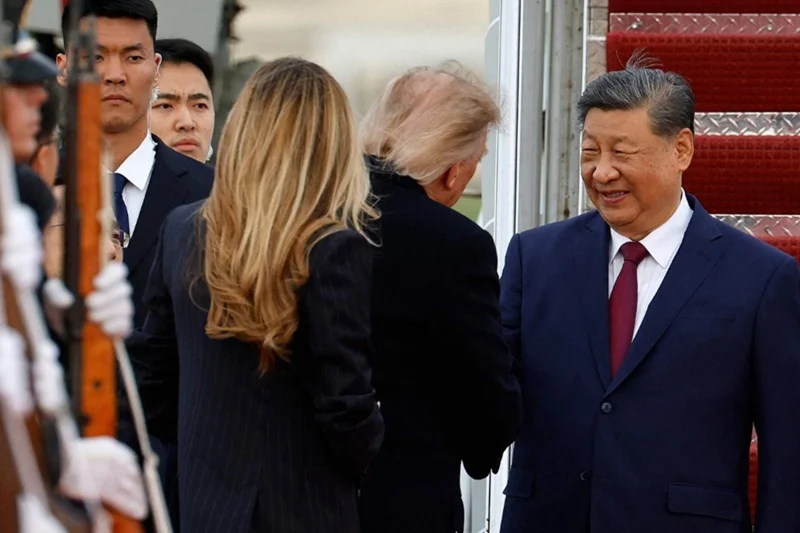
US Automakers Urge Trump to Keep Chinese Car Companies Out of American Market Ahead of Xi Jinping Summit
With Trump set to sit down with Xi Jinping soon, one issue has quietly become a flashpoint: whether Chinese automakers should be allowed anywhere near the American market. Major manufacturers, suppliers, and dealers are lobbying hard to keep it that way: no selling, no importing, no building factories on US soil.
The timing isn’t a coincidence. Trump recently suggested he’d be fine with Chinese automakers setting up shop in America, as long as they hired American workers. That comment seems to have set off alarm bells across the industry.
The Industry Pushes Back
Six major auto industry groups representing heavyweights like GM, Ford, Toyota, Volkswagen, Hyundai, Stellantis, and Tesla, plus a slew of suppliers and dealers sent a joint letter to the White House asking the administration to hold the line on restricting Chinese automakers. Their argument: even if Chinese companies built cars in American factories, that wouldn’t solve the real problem. They’re worried about what’s under the hood, so to speak specifically, the connected-car tech that gathers and transmits data over Wi-Fi, Bluetooth, and similar systems. In today’s climate, that’s not just a business concern; it’s tangled up with national security worries too.
Trump’s Mixed Signals
Trump hasn’t exactly ruled out Chinese automakers coming to the US. In a September 11 Fox News interview, he said he’d be okay with it provided they employ American workers. But he drew a clear line on one thing: he doesn’t want Chinese-made vehicles getting built in Mexico and then shipped across the border into the US. That’s left automakers who’ve already sunk billions into American plants and supply chains feeling more than a little uneasy. Their worry is straightforward: why compete against companies that get backing from the Chinese government and access to supply networks built up over years globally?
Why This Actually Matters
Chinese automakers haven’t been sitting still. Their share of the global vehicle market jumped from 14% in 2020 to 25% in 2025, according to the Center for Automotive Research. Companies like BYD have turned into serious global players, especially in EVs and that growth is exactly what’s making US automakers nervous about what happens if the door opens here too. Not everyone sees it as a threat, though. Some argue that more competition could actually help consumers, especially with the average new car in America now creeping close to $50,000. Cheaper options might not be such a bad thing.
So really, this isn’t just a trade squabble. It touches car prices, factory jobs, data security, and where American auto manufacturing is headed in the next decade.
Explore the latest Trump moves shaping global politics, energy, and security.
Who Will Trump Send Abroad Next?
Check out the latest ambassador appointments and their potential diplomatic significance.
Could Venezuela’s Oil Transform America’s Energy Future?
Find out what the reported oil deal could mean for U.S. energy strategy.
Why Did Trump Cut Military Exercises?
Uncover the details behind the substantial reduction in joint military exercises.
Why Did Netanyahu Reject Trump’s Gaza Plan?
Dive into the key disagreements surrounding the proposed 15-point Gaza plan.
Can Trump’s Gaza Deal Survive Spoilers?
Look into the challenges that could affect the agreement and prospects for lasting peace.
The Xi Summit Raises the Stakes
All of this is unfolding right as Trump and Xi prepare for a high-stakes summit in Washington, where trade, tech, and the broader economic relationship between the two countries are expected to dominate the agenda. There have even been reports questioning whether BYD could somehow factor into the discussions which has only added to the industry’s unease.
For now, Chinese-brand vehicles still have zero direct retail presence in the US. This latest push from automakers is really about keeping it that way, even as Washington and Beijing hash out the bigger picture. Whatever comes out of the Trump-Xi meeting could end up shaping far more than diplomacy; it might determine how (or whether) Chinese automotive technology and manufacturing ever gain a real foothold in America.
FAQ
Why are US automakers against Chinese car companies coming here?
Mainly competition, jobs, and security. They’re worried about undercutting from state-backed rivals and about the data-collecting tech built into modern connected cars.
Does Trump oppose Chinese cars entirely?
Not really he’s said he’s open to it if they build here and hire American workers. He’s just against the idea of Chinese cars being made in Mexico and then imported.
Can you buy a Chinese car brand in the US right now?
No, there’s currently no direct retail presence for Chinese-brand vehicles in the US.
Why does BYD keep coming up?
It’s one of the biggest EV makers in the world and has been expanding fast internationally, making it a natural focal point for these worries.
When’s the Trump-Xi summit?
Scheduled for September 2026 in Washington, with trade and economic issues expected to be central to the talks.

