

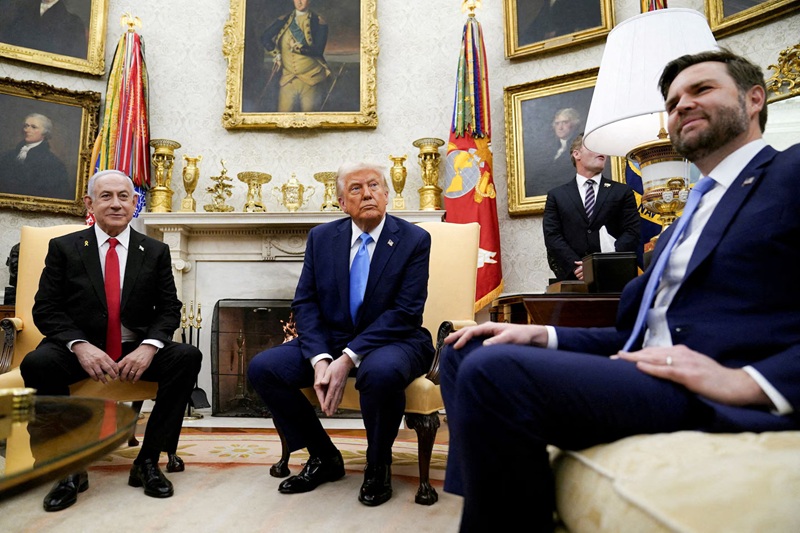
Why Did Netanyahu Reject Trump’s 15-Point Gaza Plan? What It Means for the Gaza War
There’s a widening rift between Washington and Jerusalem over how to end the war in Gaza, and it’s playing out in public. Israeli Prime Minister Benjamin Netanyahu has turned down a 15-point Gaza peace framework backed by President Donald Trump, insisting that Israeli troops won’t leave the territory until Hamas has been truly and fully disarmed. It’s an unusually open break between two leaders who’ve generally been on the same page.
The Core Disagreement: Who Moves First?
At the heart of it is a chicken-and-egg problem: disarmament versus withdrawal. Trump’s plan calls for a phased approach Hamas hands over its weapons to a new Palestinian administration, and Israel gradually pulls its forces out of Gaza as that happens. The idea is to set Gaza on a path toward new governance and, eventually, rebuilding. Netanyahu isn’t buying the sequencing. He said Israel won’t start withdrawing until Hamas gives up everything, not just its heavy weapons, but its lighter arms and broader military capability too. In his view, this isn’t really a fight over land. It’s about whether Israel can trust that Hamas won’t simply regroup and rearm the moment troops leave.
It’s Not Just About Security
There’s a domestic political dimension here as well. Netanyahu is under pressure from hardline factions in Israel who see any deal that lets Hamas survive in any form as a non-starter. With elections looming, a Gaza withdrawal is politically radioactive; anything that could be spun as an Israeli retreat carries real risk for him. He’s also framed this as a matter of sovereignty, arguing Israel has to be able to make its own security calls even when they clash with what Washington wants.
What This Standoff Could Mean for Gaza
The immediate worry is that this disagreement pushes a ceasefire, or any lasting political settlement, further out of reach. Hamas and Israel are essentially talking past each other. Hamas wants Israeli withdrawal and an end to the strikes; Israel wants disarmament first. Trump’s plan tried to thread that needle with a phased sequence but Netanyahu’s rejection signals Israel isn’t willing to commit to a withdrawal timeline without solid proof Hamas has been stripped of its military capacity first.
For people living in Gaza, that impasse likely means more uncertainty around safety, rebuilding, and access to basic services. For Israel’s government, it means continuing to juggle military goals against mounting international pressure to wind the war down.
More Stories You Shouldn’t Miss
Could Tom Holland’s Luxury Stay Surprise?
Discover the lavish details behind Tom Holland’s extravagant stay at Mumbai’s iconic Taj Mahal Palace.
What Makes India’s Brain Atlas Revolutionary?
Explore how Indian scientists are unlocking the mysteries of the human brain with cutting-edge 3D mapping.
Why Did US Seize Iranian Tanker?
Uncover the dramatic events behind the US Navy’s tanker seizure and its impact on India.
Why Reject Two Citizenship Offers?
Find out why Rashid Khan chose loyalty over offers from India and Australia.
How Did Vikram-1 Create History?
Check out how Skyroot’s Vikram-1 became a milestone for India’s private space ambitions.
A Crack in a Usually Solid Partnership
What makes this notable is that Trump and Netanyahu have typically stayed closely aligned. This public pushback shows that even a tight US-Israel relationship has its limits once the two sides genuinely disagree on security terms and Gaza’s future. It also complicates Trump’s broader push to show he’s making headway on Middle East peace. For now, talks between the two governments appear set to continue. But Netanyahu has made his bottom line clear: Israel isn’t going to sign onto a Gaza deal that it believes leaves Hamas able to fight another day.
Where Things Go From Here
Everything hinges on whether US negotiators can close the gap between Israel’s insistence on full disarmament upfront and the plan’s phased, gradual approach. If that gap doesn’t close, the 15-point proposal risks staying frozen and Gaza’s future stays uncertain along with it. The real question isn’t just whether a peace plan exists anymore. It’s whether Israel, Hamas, and the international players involved can actually agree on the order of operations: peace, disarmament, withdrawal, and rebuilding and who goes first.
FAQs
Why did Netanyahu reject Trump’s 15-point Gaza plan?
Netanyahu rejected the plan because Israel does not want its military forces to withdraw from Gaza before Hamas is genuinely and completely disarmed.
What does Trump’s 15-point Gaza plan propose?
The plan proposes a phased process involving Hamas disarmament, Israeli military withdrawal and the creation of a new Palestinian administrative structure for Gaza.
Does Netanyahu oppose all Israeli withdrawal from Gaza?
His current position is that Israeli forces should not withdraw until Hamas has been fully disarmed.

