

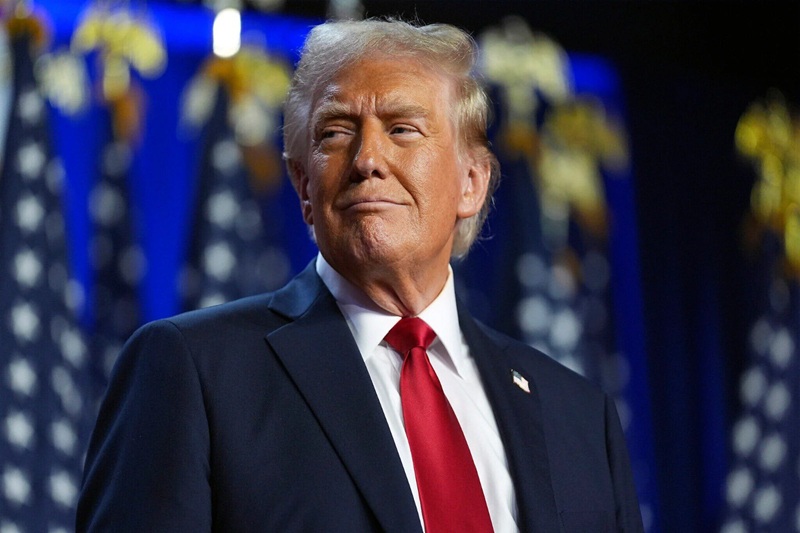
Trump’s Gaza Agreement Faces ‘Spoiler’ Challenge as Outside Support for Hamas Raises Questions Over Lasting Peace
Less than a week after U.S. President Donald Trump announced what he called a breakthrough deal to move forward on peace in Gaza. Analysts are grappling with a tough question: Is there any chance of peace when powerful non-state networks continue to lend political support to Hamas? Trump said the deal is a big step toward disarming Hamas, rebuilding Gaza and creating a new government structure for the territory. The proposal calls for phased demilitarization, international monitoring, humanitarian reconstruction and the phased withdrawal of Israeli forces once security conditions are met. But recent political messaging from groups not part of the formal negotiations has pointed to what conflict experts often call the “spoiler risk” – the possibility that actors outside a peace deal could derail or delay its implementation.
What Is the Trump Gaza Agreement?
Trump’s Gaza deal would replace years of armed conflict with a phased political transition. The framework, as laid out in documents issued by U.S. officials, is to include:
- The step-by-step disarming of Hamas and other armed groups.
- International supervision of security arrangements
- A Palestinian technocratic government to run Gaza.
- Large-scale reconstruction is backed by international partners.
- A phased Israeli military withdrawal conditioned on proven security benchmarks.
President Trump called the effort a tremendous opportunity to create long-term regional security through diplomacy, rather than continued military confrontation.
Why Analysts Are Discussing the ‘Spoiler’ Risk
Political scientists have long used the term “spoiler” to refer to groups or networks that are not directly party to peace negotiations but that have enough clout to affect the success or failure of agreements. The latest talk is of transnational organizations’ public expressions of support for Hamas’ newly formed political leadership. Though they are political and not military statements, some analysts suggest they could bolster Hamas’ political standing as negotiators seek to diminish the group’s role in governing. External political endorsement might promote continuity and resilience in non-state actors, potentially making it harder to fully implement disarmament agreements, argue proponents of this analysis. Others caution that political statements alone do not necessarily translate into operational influence and that the real test will depend on actions taken by all parties involved.
Why It Matters
Peace agreements seldom succeed on signatures alone. As history has shown, implementation is often more difficult than the negotiations. If armed groups continue to enjoy significant political support outside formal diplomatic channels, governments might find it difficult to meet disarmament deadlines or establish new governing institutions. Delays could result in slow reconstruction, prolonged humanitarian suffering and continued uncertainty for Gaza’s civilian population. In the meantime Israel persists in insisting that complete disarmament must be a precondition for any permanent withdrawal, reflecting ongoing security concerns.
Stay Ahead with Today’s Biggest Global Stories
Can Gaza Peace Finally Last?
Explore how Hamas accepted a ceasefire roadmap featuring complete disarmament and what it means for the region.
Who Made Algeria’s Political History?
Discover how Khalida Boufedeche became Algeria’s first woman parliamentary speaker and why it matters.
Why Are Copper Prices Dropping?
Check what caused copper prices to fall before the Fed’s rate decision and how global supply influenced markets.
How Is Europe Supporting Ukraine?
Explore how the European Commission’s €3.47 billion package will strengthen Ukraine’s defence capabilities.
What Did Zendaya Reveal Recently?
Discover what Zendaya shared about working with Tom Holland and their friendship on the Spider-Man set.
Broader Regional Impact
The Trump Gaza deal fallout could influence Middle East diplomacy for years. If it works, it could be a model for how to combine international oversight, reconstruction money and political transition. If implementation falters amid competing political influences, it could validate longstanding concerns that formal agreements alone cannot resolve conflicts involving powerful non-state actors and regional ideological networks. Ultimately, it will be the coming months that determine whether the diplomatic commitments will lead to lasting stability, or whether competing political narratives will continue to undermine the peace process.
FAQs
1. What is the Trump Gaza deal?
The framework is backed by the US and would involve a phased disarmament of Hamas, international oversight, reconstruction of Gaza and a gradual Israeli withdrawal linked to security milestones.
2. What do you mean by “spoiler risk”?
A spoiler in peace studies is an actor who can spoil a peace agreement by obstructing or undermining the implementation of the peace agreement.
3. Why is there talk of external political support?
Some analysts suggest that public political support for Hamas from organizations outside the negotiations may strengthen its political resilience, although there is some debate about how much practical influence this has.

