

Taiwan Strait Tensions 2026: US Strategic Ambiguity and Drone Warfare Reshape Taiwan’s Defence Strategy
Imagine a $500 drone doing what a $2 billion warship can’t: slipping past radar, rattling nerves, and never quite crossing the line into war. That’s the strange, unsettling reality unfolding in the Taiwan Strait right now. No missiles have flown. No invasion has begun. Yet 2026 has quietly become one of the tensest years in cross-strait history and the reasons are as much about swarms of cheap drones as they are about aircraft carriers.
What’s Actually Happening in the Taiwan Strait
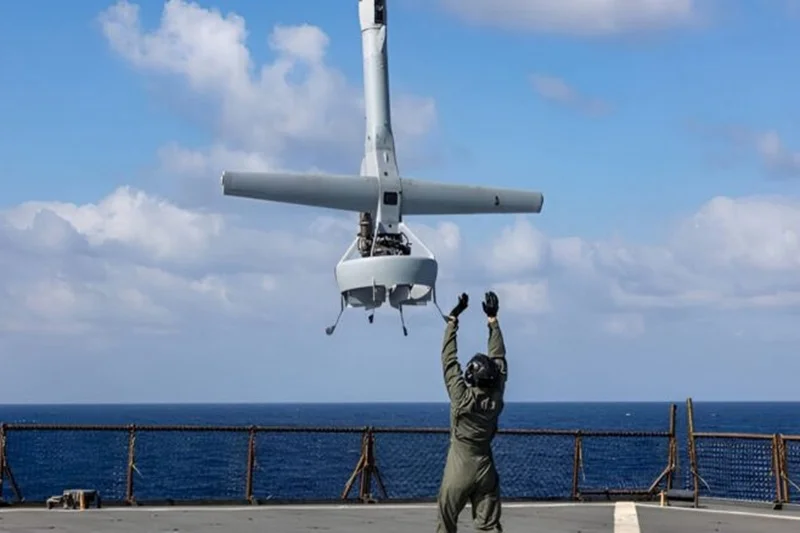
For years, China’s pressure on Taiwan meant fighter jets buzzing the median line and naval ships circling the island. That’s changing fast. Both the Chinese navy and air force have escalated incursions across the strait’s median line over the past decade, and now routinely test Taiwan’s air defence identification zone using a strategy of persistent presence meant to wear defenders down. But manned aircraft are expensive and risky to fly that often. Enter drones. Commercially available quadcopters and fixed-wing drones are hard to detect and track continuously, since their small radar signatures and low-altitude flight paths confuse systems built to spot bigger, faster threats and AI-enabled drones can now adapt their movements to dodge defenders entirely. It’s also a numbers game. A single strike drone can cost as little as $50,000 to $100,000, while decoy versions run a fraction of that making it far cheaper to flood the skies than to shoot everything down.
Beijing is also fielding new hybrid warships built for this era. Its new Type 076 vessel is an entirely new class of ship, not just an upgrade of earlier landing docks, and its electromagnetic catapults are designed for drone-heavy operations near Taiwan’s east coast. Why Washington’s “Ambiguity” Still Matters Since 1979, the US has never promised to defend Taiwan outright nor ruled it out. That’s strategic ambiguity, and in 2026 it’s under real strain. The Pentagon’s 2026 National Defense Strategy commits the US to building a strong denial defence along the First Island Chain, a goal analysts say is meaningless without American willingness to stop China from absorbing Taiwan.
Arms shipments reflect that intent. A delayed but not cancelled weapons package for Taiwan includes HIMARS rocket systems, ATACMS missiles, loitering munitions, anti-tank missiles, and mobile howitzers gear built specifically to blunt an amphibious invasion. Washington is also quietly reinforcing the neighborhood. The US has gained access to new base sites in the northern Philippines near the strait, deployed advanced missile systems there, and run its largest-ever Balikatan exercises with Japan and Australia joining in during 2025 and 2026. Not everyone thinks ambiguity should survive. Some analysts argue the conditions that made ambiguity workable in 1979 no longer exist, since China’s military buildup has shifted the balance of power in the strait and sharply raised the cost of any US intervention.
Taiwan’s Own Pivot: Porcupine, Not Battleship
Taiwan isn’t just watching. A genuinely asymmetric defence strategy for Taiwan would mean heavy investment in its own military-industrial base, tripling or quadrupling its missile stockpiles, and acquiring millions of drones alongside promised US air-defence systems. That’s the “porcupine strategy” in a nutshell, making invasion painful rather than trying to out-navy Beijing ship for ship. Live drills back this up. Taiwan’s Han Kuang 41 exercises in July 2025 simulated defence against invasion, with retired generals from Taiwan, the US, and Japan involved in reviewing the results afterward.
Analysts increasingly believe the real danger isn’t a D-Day-style invasion. War monitors have noted that China’s drills point more toward a blockade strategy aimed at coercing Taiwan without full-scale combat, rather than an outright amphibious assault.
FAQs
1. What does “strategic ambiguity” mean regarding Taiwan?
It’s the long-standing US policy of never confirming or denying whether it would militarily defend Taiwan if China attacked, meant to deter Beijing without provoking a crisis.
2. Why are drones such a big deal in the Taiwan Strait?
They’re cheap, hard to detect, and let China apply pressure without the cost or risk of sending manned aircraft or ships making them ideal for sustained “gray zone” harassment.
3. Is China planning a full invasion of Taiwan?
Most current analysis suggests China is leaning toward a blockade or coercion strategy rather than a full amphibious invasion, at least for now.
4. How is Taiwan responding to these threats?
Taiwan is shifting toward an asymmetric “porcupine” defence stockpiling missiles, drones, and mobile weapons systems designed to make any invasion extremely costly for China.
5. Could this affect people outside Taiwan and China?
Yes Taiwan produces a huge share of the world’s advanced semiconductors, so any serious disruption could ripple through global tech supply chains and the wider economy.
Explore the latest Trump moves shaping global politics, energy, and security.
Who Will Trump Send Abroad Next?
Check out the latest ambassador appointments and their potential diplomatic significance.
Could Venezuela’s Oil Transform America’s Energy Future?
Find out what the reported oil deal could mean for U.S. energy strategy.
Why Did Trump Cut Military Exercises?
Uncover the details behind the substantial reduction in joint military exercises.
Why Did Netanyahu Reject Trump’s Gaza Plan?
Dive into the key disagreements surrounding the proposed 15-point Gaza plan.
Can Trump’s Gaza Deal Survive Spoilers?
Look into the challenges that could affect the agreement and prospects for lasting peace.

