RCEP, the largest trade agreement in the world has born
Last updated on November 23rd, 2020 at 06:58 am
The largest trade agreement: The free agreement in history has been signed in the Vietnamese capital of Hanoi. We are talking about Asia, and yes above all, about China. In fact, Beijing brings home an unprecedented result: a commercial alliance with the nearby “Asian tigers” and with Australia and Japan, long ago in the US orbit created by Obama thanks to the TPP, later abandoned by Trump. An abandonment that left the Land of the Rising Sun orphan of its major commercial partner and which therefore forced him to turn to the second on the list, namely China, with which, however, he had not yet signed any commercial agreement.
And in addition to the unpublished agreements on duties, eCommerce, and intellectual property, what stands out most of all is precisely this newfound multilateralism in a region, that of Asia-Pacific, which has always been studded with differences and frictions. Thanks to the RCP, and to the end of America first, Beijing proves that it can become the new epicenter of multilateralism, by signing an agreement of historic significance. For the first time, three of the top four Asian economies – China, Japan, South Korea – will be part of the same free trade agreement.
For some time, China has been trying to establish itself in the Asian region as a champion of multilateralism. And not just in Asia; we think of the new Silk Road, of investments in Africa, of those in European ports and commercial hubs, Italy in the lead. The RCEP is nothing more than a – great – complement to a party strategy that starts from far away. In addition to its immense commercial grade, the agreement has a significant political value.
In the competition with the United States for world supremacy, Beijing has patiently and determinedly pursued its diplomacy, and it has built, for now only on paper, an influence block which represents 30% of global GDP and which, nevertheless, welcomes Washington’s old allies. However, it is a success for the whole area. From Japan, which manages to defuse the ongoing trade war between China and Australia, to then move on to the same ASEAN area, which expects to benefit widely from the reduction in tariffs.
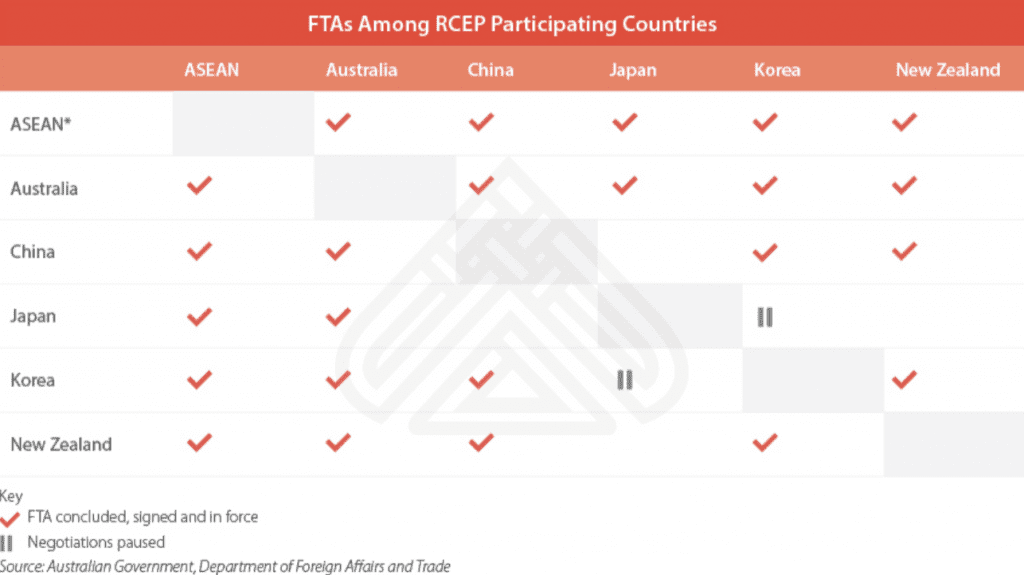
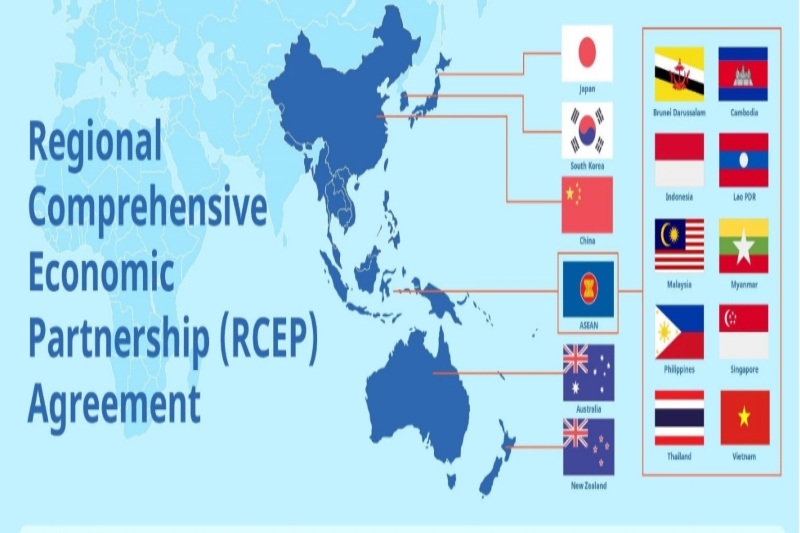
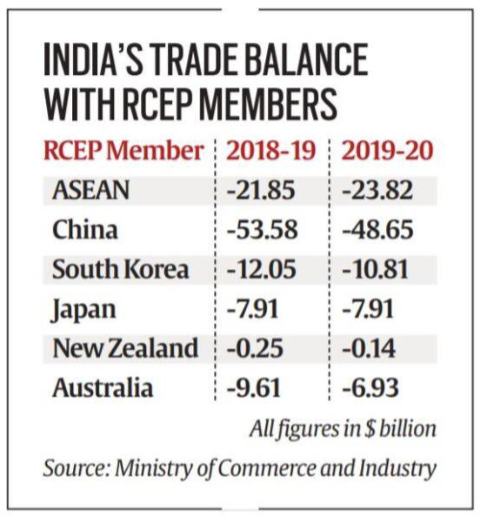
Even with India absent, the numbers of the agreement are impressive. We are talking about an area that, as we have seen, produces almost a third of world GDP and hosts 2.7 billion people. It includes all ten ASEAN countries, the Association of Southeast Asian Nations, plus China, Australia, South Korea, Japan, and New Zealand. Observers estimate that it will strengthen economic ties within the region and add about $ 200 billion a year to the global economy. In terms of the GDP of the signatory countries, it will also have a greater weight than NAFTA in North America and the European Union itself. The result for Asia will be the strengthening of regional supply chains. An aspect on which Beijing is increasingly aiming to reduce Asian dependence on the United States.
The focal point of the agreement reached is the commitment to progressively reduce duties by up to 90% on goods in circulation over 20 years – to 65% in the short term. That means goodbye to the many bilateral agreements in Asia that limited the circulation of goods and caused costs to rise. Thanks to the RCEP, it will no longer be necessary to conclude specific agreements between two states each time to remove duties on traded goods. From now on, a member country of the RCEP producer will be able to trade freely with all the other 14 nations of the agreement. According to analysts’ estimates, 86% of Japanese industrial exports to China and 92% of exports to South Korea will benefit from the cancellation of existing tariffs.
The most important novelty is represented by the “rules of origin,” as the rules officially define the origin of a finished product. Today, a product made in Thailand that contains New Zealand parts, for example, could be subject to duties in some Asian states. Under the RCEP, on the other hand, the components of any member country would be treated in the same way, giving companies in the area an incentive to seek suppliers within the commercial region.