

Nepal Calls for Global Climate Action After Devastating Flash Floods: Why Himalayan Risks Are Rising
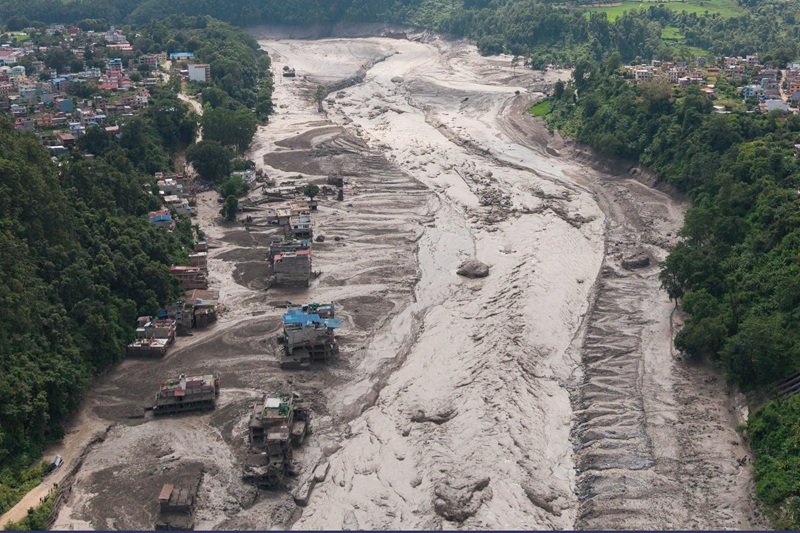
For generations, the Himalayas have stood as a symbol of permanence vast, ancient, unshakable. This week, they showed the world something very different: just how quickly that permanence can unravel in a warming climate. Flash floods tore through Nepal’s mountainous border region with China, killing hundreds, leaving thousands unaccounted for, and wiping out roads, bridges, and infrastructure that entire communities depended on. In the aftermath, Nepal’s government has issued a pointed appeal to the rest of the world: this cannot keep happening in silence. Foreign Minister Shisir Khanal put it plainly: the countries doing the least to cause climate change are increasingly the ones paying the highest price for it. Nepal, he argued, needs a genuinely global effort, not just sympathy from afar.
How the Disaster Unfolded
It happened fast. On August 26, a wall of water and debris surged through river valleys in Rasuwa, Nuwakot, and nearby districts, catching communities with little to no warning. Early assessments point to an ice avalanche higher up the mountain, which may have temporarily dammed the Lhende River before the blockage gave way though investigators are still piecing together exactly what happened. The flooding hit hardest along the Bhote Koshi and Trishuli river corridors, according to the World Health Organization, damaging homes, health facilities, and the transport links rescue teams needed to reach survivors. That’s been one of the cruelest parts of this disaster: the very roads and bridges destroyed by the floods are the ones rescuers now need to deliver aid and reach the missing. Help is arriving, but slowly. The WHO has committed $150,000 in emergency funding and shipped medical supplies meant to support roughly 10,000 people for three months.
A Region Already on the Edge
It’s too early to say with certainty that this specific flood was caused by climate change. Scientists are careful about drawing that straight line for any single event. But the broader trend in the Himalayas isn’t really in dispute anymore. A major 2026 assessment from the International Centre for Integrated Mountain Development found that glaciers across the Hindu Kush Himalaya are now losing ice at twice the rate they were in 2000. Over the past three decades, the region has already lost roughly 12% of its glacier area. That matters because retreating glaciers and thawing permafrost don’t just disappear quietly they destabilize everything around them. Slopes that have held firm for centuries start to give way. The risk of landslides, avalanches, and glacial lake outburst floods climbs. And when that ice and rock finally lets go, it can send an enormous volume of water and debris crashing down into valleys where people actually live.
Why This Isn’t Just Nepal’s Problem
The Hindu Kush Himalaya isn’t some remote, isolated range; it’s the water source for major rivers across Asia, sustaining the lives and livelihoods of roughly two billion people downstream. According to ICIMOD, the region is already seeing faster glacier loss, shifting snowfall patterns, and river flows that are becoming harder to predict. That has knock-on effects far beyond any one flood: agriculture, hydropower, drinking water, and tourism across the region all depend on those rivers behaving the way they always have. As that predictability erodes, so does the stability of everything built on top of it. For Nepal specifically, the economic stakes are enormous. Mountain communities rely heavily on roads, hydropower plants, tourism, and farming and all four are vulnerable when a single extreme weather event can wipe out infrastructure in a matter of hours.
Stay informed with the latest stories making headlines worldwide.
Could Typhoon Narra Worsen China Floods?
Check out how Typhoon Narra is affecting southern China and displacing thousands.
Can Pakistan-Iran Talks Bring Peace?
Find out how Pakistan-Iran talks are progressing toward regional peace and stability.
Why Is Saudi Arabia Investing Near Paris?
Uncover Saudi Arabia’s $7 billion plan to build three theme parks near Paris.
How Did Death Valley Turn Deadly?
See what happened when a French tourist became stranded in extreme Death Valley heat.
Will Pakistan-Iran Talks End Conflict?
Track down the latest developments as both sides push to resolve the regional conflict.
What Nepal Is Actually Asking For
This isn’t just a request for emergency aid, though that’s certainly needed. Nepal is pushing for something longer-term: real investment in climate adaptation. That means more research into how the Himalayas are changing, better early-warning systems so communities have time to evacuate, stronger disaster preparedness on the ground, and closer cooperation between Nepal, China, India, and other countries that share these mountains and rivers. Glaciers and floodwaters don’t stop at national borders, and neither should the monitoring and information-sharing meant to protect people from them. There’s an uncomfortable truth sitting underneath all of this: Nepal contributes very little to global greenhouse gas emissions, yet it’s absorbing some of the most severe consequences of a warming planet. It’s a pattern playing out in vulnerable regions worldwide; those who did the least to create the crisis are often the first to suffer its worst effects.
For Nepal, these floods are more than a national tragedy. They’re a signal that one of the planet’s most delicate ecosystems is changing beneath our feet and that protecting it will take both local resilience and a level of global commitment that, so far, hasn’t quite matched the scale of the risk.
FAQs
1. What caused the Nepal flash floods?
Preliminary assessments point to a sudden upstream ice avalanche and temporary river blockage, but scientists are continuing to investigate the exact sequence of events.
2. Is climate change responsible for the Nepal floods?
The specific role of climate change in this event is still being studied. However, scientists have documented accelerating glacier loss and increasing climate-related risks across the Himalayas.
3. Why are Himalayan glaciers important?
They store freshwater and feed major Asian rivers. Changes in glaciers can affect both water supplies and disaster risks for communities downstream.

