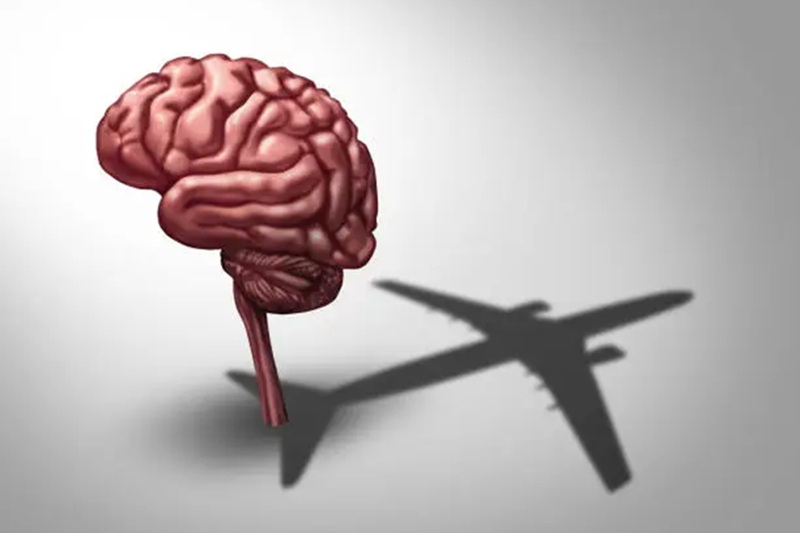
What Happens to Your Brain in Space? Scientists Reveal How Long-Term Space Travel Changes the Human Brain
Space travel is hard on the human body and it has long been known that it weakens muscles, reduces bone density and alters cardiovascular function. But now scientists are turning more to another vital organ that is changing in amazing ways beyond the Earth – the brain. As astronauts live for months on spacecraft and space stations, researchers are finding that microgravity doesn’t just affect physical movement. It can rewire the brain, changing how networks of nerves communicate with each other, affecting everything from balance to decision-making. These discoveries become ever more important as mankind prepares for longer journeys to the Moon and eventually to Mars.
Why the Brain Behaves Differently in Space
Gravity has always influenced life on Earth. Every second the brain uses gravitational cues to work out where the body is, maintain its balance, and coordinate movement. These signals originate from the inner ear, muscles and joints, allowing people to move naturally without having to consciously think about it. In space, however, gravity is almost gone. Without this constant reference point, the brain has to learn a whole new way of interpreting movement and orientation in a flash. This is what scientists call a major neurological adaptation, where the brain rewires itself to operate in an unfamiliar environment. Brain imaging studies before and after long duration space missions have revealed measurable changes in grey matter, white matter and the flow of cerebrospinal fluid. Importantly, researchers emphasize that these changes are not always harmful. Many appear to represent the brain’s incredible ability to adapt, although some may signal stress caused by prolonged exposure to space.
Scientists Have Identified Several Changes in the Brain
One of the most consistent findings has been in the brain’s ventricles, the fluid-filled cavities containing cerebrospinal fluid. These ventricles are frequently enlarged after months in orbit. While there is some recovery once astronauts return to Earth, scientists have found that the brain may not immediately return to its pre-flight state, with some changes lasting for months. Scientists have also observed changes in the structure of areas involved in movement, coordination and sensory processing. On long missions the areas that control fine motor skills and body awareness seem to change quite a bit.” These neurological adjustments may help explain why astronauts frequently experience symptoms such as:
- Difficulty maintaining balance after landing
- Dizziness during the first days back on Earth
- Motion sickness
- Slower physical coordination while readjusting to gravity
Rather than indicating permanent damage, many of these effects reflect the brain’s effort to switch between two dramatically different environments.
Space Travel Can Influence Memory, Attention, and Mood
The effects extend beyond physical coordination. Long-duration missions expose astronauts to a unique combination of psychological and environmental challenges. Isolation from family, confined living spaces, disrupted sleep cycles, demanding workloads, and exposure to higher levels of cosmic radiation all place additional stress on the brain. Scientific reviews suggest these conditions may temporarily affect:
- Memory
- Concentration
- Attention span
- Emotional regulation
- Decision-making under pressure
Although astronauts undergo extensive training to cope with these conditions, researchers continue studying how prolonged missions influence cognitive performance over time.
Maintaining sharp mental abilities becomes especially critical when astronauts must solve unexpected problems millions of kilometers away from Earth, where immediate assistance is impossible.
Why These Findings Matter for Future Mars Missions
Trips to the International Space Station today are typically a few months long. Future Mars missions will subject astronauts to long-duration spaceflight for two to three years, so brain health is a much bigger concern. Even small reductions in reaction time, attention or emotional resilience could have drastic consequences in emergency situations or complex scientific operations. Understanding how the brain changes during extended missions will help engineers and medical experts devise ways to protect astronauts during these journeys. Researchers are already considering countermeasures, including specific exercise regimes, improved spacecraft design, optimal sleep schedules, nutritional support and technologies that may mitigate some of the neurological effects of microgravity.
Space Research Could Also Benefit Life on Earth
The value of this research extends well beyond space exploration. Many biological processes seen in astronauts are similar to problems experienced by people on Earth, including aging, long-term inactivity, social isolation and shifts in the distribution of body fluids. Scientists hope to gain new insights into neurological disorders, rehabilitation techniques and age-related cognitive decline by studying how the brain adapts in space. The knowledge gained from protecting astronauts could ultimately improve treatments for patients here on Earth.
Don’t Miss These Trending Stories Everyone’s Talking About
Looking for Nothing Phone (4a) Deals?
Discover the best Flipkart GOAT Sale offers on the Nothing Phone (4a) and earbuds before they sell out.
Who Joined Taylor’s Dream Wedding?
Explore the celebrity guest list, memorable moments, and fan reactions from Taylor Swift and Travis Kelce’s wedding.
How Did Harry Make History?
Check how Harry Styles’ Wembley residency earned him a Guinness World Record and broke attendance records.
Need New Open-World Games Today?
Discover seven near-perfect open-world games that deserve a spot on your must-play list.
Did Taylor Swift Really Get Married?
Explore everything about Taylor Swift and Travis Kelce’s star-studded New York City wedding ceremony.
The Human Brain Is Remarkably Adaptable
The most heartening discovery may be the brain’s extraordinary plasticity. But in microgravity, it does not fail. The brain actively reorganizes itself to accommodate the demands of a completely different environment.” Many of these changes appear reversible, but scientists are still trying to figure out which changes revert completely and which might stick around once astronauts get back home. As space agencies and private companies get closer to deep-space missions, protecting brain health will be as important as protecting muscles, bones and the heart. With every new study, scientists are getting closer to understanding how humans can not only survive in space but thrive there.
Frequently Asked Questions
1. Does space travel permanently change the brain?
Current research suggests that many brain changes are temporary and improve after astronauts return to Earth. However, some structural changes may persist for several months, and scientists are still studying their long-term effects.
2. Why does microgravity affect the human brain?
Gravity helps regulate balance, body orientation, and fluid movement. In microgravity, the brain must adapt to the absence of these familiar signals, leading to structural and functional changes.
3. Can astronauts recover fully after returning from space?
Most astronauts gradually recover, but the process can take weeks or even months. Recovery varies depending on mission duration and individual health.
4. Does long-term space travel affect memory and mental performance?
Research indicates that prolonged missions may influence attention, memory, mood, and decision-making due to isolation, disrupted sleep, stress, and other space-related conditions.
5. Why is brain research important for future Mars missions?
A mission to Mars will last far longer than current space missions. Understanding how the brain adapts will help scientists develop strategies to keep astronauts mentally healthy, focused, and capable of making critical decisions throughout the journey.