

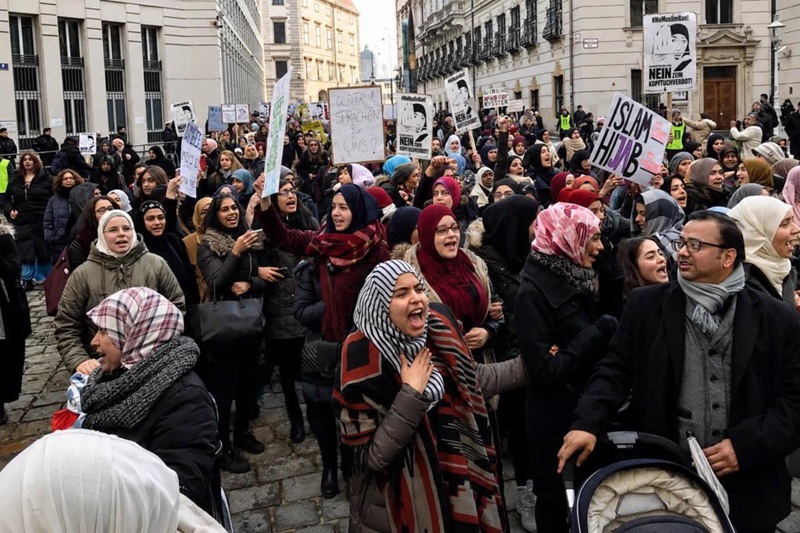
Austria Moves Toward Constitutional Ban on ‘Political Islam’ as Government Calls Ideology Incompatible With Democratic Values
Austria is taking a harder line against what its government calls “political Islam,” with Chancellor Christian Stocker calling for a constitutional ban on organizations and activities associated with the ideology. The proposal has quickly become one of the most divisive political debates in the country, touching on questions of national security, religious freedom and the reach of government power. The move comes amid rising concerns of the Austrian authorities about Islamist extremism and radicalization. But officials are also grappling with a thorny legal question: how to clearly define “political Islam” in a way that can withstand constitutional and European legal scrutiny?
Austria Wants a Constitutional Ban on Political Islam
Chancellor Christian Stocker has called for the ban to be enshrined in constitutional law. He says the state must intervene when religious ideology is used to destroy democracy and the rule of law. Austrian broadcaster ORF reported that European Affairs and Integration Minister Claudia Bauer is preparing a proposal for the coalition government. She said the government wanted a wide-ranging ban supported by further measures on associations, religious organizations and other areas of law. The government believes that political Islam is not the same as normal religious practice. The measures proposed are meant for movements or organizations that are considered to strive for political change on the basis of an ideology that is contrary to Austria’s democratic constitutional order. ÖVP officials have described the proposed ban as a way to protect democracy and the country’s social values.
Why Is Austria Taking This Step Now?
Security concerns loom large in the debate. Austria’s most recent constitutional protection report indicates that Islamist extremism remains the largest threat to internal security within the country. In 2025, there were 306 offenses related to Islamist ideology, an increase of 42.3 percent over the previous year. The report also notes the increasing radicalization of young people online, and the use of social media, messaging apps and gaming communities for extremist recruitment. In 2026 Austrian authorities carried out nationwide operations, arresting suspected Islamist extremist networks and searching their premises. The approach combines law enforcement and preventative measures to prevent radicalization from becoming violent, officials say.
The Biggest Challenge: Defining ‘Political Islam’
While the proposal is politically appealing to proponents of more draconian security policies, its legal language could prove far more challenging. “There is no universally clear legal definition of ‘political Islam’ at the moment,” constitutional law expert Peter Bußjäger told ORF. He warned that the broad political concept could be difficult to translate into enforceable legislation. He also questioned the additional value of a new ban when Austria already has laws against activities threatening democracy. That could be a key part of the government’s plans. Constitutional prohibitions must be drafted with extreme care because they have to balance national security with fundamental rights like freedom of religion and freedom of association.
Political Support Is Growing
The proposal seems to be picking up support in Austria’s governing coalition. The SPÖ has expressed willingness to talk about a ban, if this is about protecting democracy and the rule of law. NEOS has also said it is open to considering the proposal, but has stressed any legislation must have a clear and legally defensible definition. The Austrian parliament has already received a number of proposals for a ban on political Islam and restrictions on structures based on Sharia. Previous initiatives have been blocked or rejected, suggesting that translating political demand into law will not be easy.
Stay informed with the latest stories making headlines worldwide.
Could Typhoon Narra Worsen China Floods?
Check out how Typhoon Narra is affecting southern China and displacing thousands.
Can Pakistan-Iran Talks Bring Peace?
Find out how Pakistan-Iran talks are progressing toward regional peace and stability.
Why Is Saudi Arabia Investing Near Paris?
Uncover Saudi Arabia’s $7 billion plan to build three theme parks near Paris.
How Did Death Valley Turn Deadly?
See what happened when a French tourist became stranded in extreme Death Valley heat.
Will Pakistan-Iran Talks End Conflict?
Track down the latest developments as both sides push to resolve the regional conflict.
What Happens Next?
For now, so far Austria has not yet introduced a constitutional ban on political Islam. The government is working on the proposal, which would have to go through the parliamentary process. If adopted, the measure could be an important precedent in Europe for how governments attempt to address extremist political movements while protecting legitimate religious expression. Ultimately, the debate will hinge on one difficult question: Where does a democratic state draw the line between protecting society from extremism and protecting freedom of religion?
FAQs
1. Is Austria banning Islam?
No. The proposal targets what Austrian officials call “political Islam,” not Islam as a religion or Muslims generally.
2. Has Austria already banned political Islam in its Constitution?
No. The government is preparing legislation and has proposed constitutional protection for the ban, but it has not yet been enacted.
3. Why does Austria want to ban political Islam?
The government says certain extremist movements seek to undermine Austria’s democratic constitutional order and can contribute to radicalization and security threats.

