

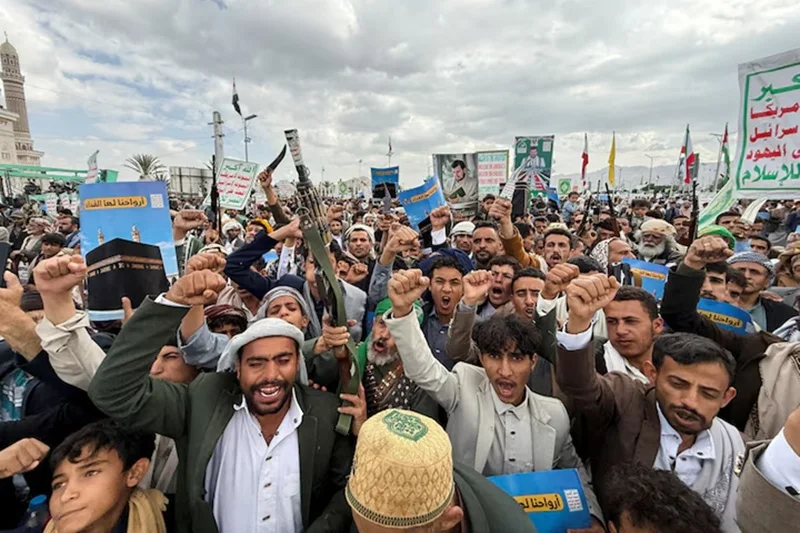
Why Yemen Could Become the Next Major US Middle East Security Challenge as Houthi Power Threatens the Bab el-Mandeb
Most people have never heard of the Bab el-Mandeb Strait. Yet it may decide how much you pay for petrol, groceries and almost everything that arrives in a shipping container. This narrow channel sits between Yemen and the Horn of Africa. It is only about 17 miles wide, and it connects the Red Sea to the Gulf of Aden. Right now, the Houthi threat to Bab el-Mandeb is the kind of problem that could drag Washington into a new Middle East crisis.
How We Got Here
The Houthis, an Iran-backed group, have fought Yemen’s government in a civil war since 2014. After the Gaza war began in late 2023, they started attacking ships in the Red Sea. Shipping through the strait had already fallen by about 60% since those attacks began.
A US-led naval effort and several rounds of airstrikes followed. It did not end the threat. One account describes Operation Prosperity Guardian as an operational failure, with the Houthis resuming attacks on commercial shipping.
The Latest: A Lightning Push Down the Coast
The situation changed fast in September. Houthi forces took control of Yemen’s Red Sea coastline in a rapid push, including Perim, an island in the middle of the strait. They also seized the port of Mokha, about 50 miles from the strait.
The timing matters. The attacks on shipping that began in July 2026 are adding pressure to supply chains already strained by Iran’s efforts to close the Strait of Hormuz.
Saudi Arabia is now preparing to hit back. Reuters reports Riyadh is planning an offensive to reverse the Houthi gains and retake control of the strait. Officials’ estimates for the timing reportedly range from within a week to after the US midterm elections in early November.
Why Washington Is Watching Closely
The strait has become more important because of the wider Iran conflict. One report says Bab el-Mandeb is still the only viable oil route, with around 30 tankers near Saudi Arabia’s Yanbu port within Houthi strike range.
Analysts say the stakes go beyond Yemen. NBC reported that control of the strait could further imperil oil exports and give Iran powerful new leverage in its war with the United States. One analyst quoted there also urged caution about claims of “full control.”
In plain terms, the Houthis don’t need to sink many ships to hurt the world economy. The threat alone can raise insurance costs and push shippers onto longer routes. Those costs eventually reach ordinary buyers.
What It Means for Ordinary People
Most households will feel this through prices rather than headlines.
- Fuel: Disrupted oil routes tend to push energy prices up.
- Shopping: Longer shipping routes mean higher freight costs and slower deliveries.
- Politics: A new Gulf front lands on the US agenda just as Americans head to the polls.
For Washington, the options are unappealing. Staying out risks letting a key trade route fall under the influence of a group aligned with Iran. Getting in deeper risks another long, costly commitment.
What to Watch Next
Three things will shape the next few weeks:
- Whether Saudi Arabia launches its planned offensive, and how soon.
- Whether Houthi attacks on tankers and Saudi territory increase.
- How far the United States chooses to back its Gulf partners.
The situation is moving quickly, so check the sources below for updates.
Frequently Asked Questions
What is the Bab el-Mandeb Strait?
It is a narrow sea passage between Yemen and the Horn of Africa. It links the Red Sea and the Gulf of Aden and leads to the Suez Canal.
Who are the Houthis?
They are an Iran-backed armed group that controls much of northern and western Yemen. They have been fighting the Saudi-backed government since 2014.
Why does this matter to people outside the Middle East?
A large share of global trade and energy moves through this corridor. Disruption can raise fuel, shipping and consumer prices worldwide.
Is the US likely to get involved militarily?
That is uncertain. The US has struck Houthi targets before, but no current commitment has been confirmed. Much depends on Saudi Arabia’s next move.
Can the Houthis fully close the strait?
Analysts urge caution here. Controlling the coastline is different from controlling all traffic, but even the threat of attack disrupts shipping.
Related Reads You Shouldn’t Miss
How Is China Reshaping Indo-Pacific Alliances?
Check out how Quad nations are responding to growing security challenges in the Indo-Pacific.
Why Are China and Russia Growing Closer?
Find out how Arctic shipping routes are strengthening China-Russia geopolitical ties.
What Happens Inside The Twilight Zone?
Dive into the mysterious nightly migration of trillions of deep-sea creatures.
Which Religions Are Among History’s Oldest?
Explore 10 ancient religions that have shaped human history and civilizations.
Why Are North Korea’s Missiles Alarming Asia?
Uncover why North Korea’s new missile developments are raising concerns in Japan and South Korea.

