

How the Arctic Shipping Route Is Bringing China and Russia Closer in a Major Geopolitical Shift
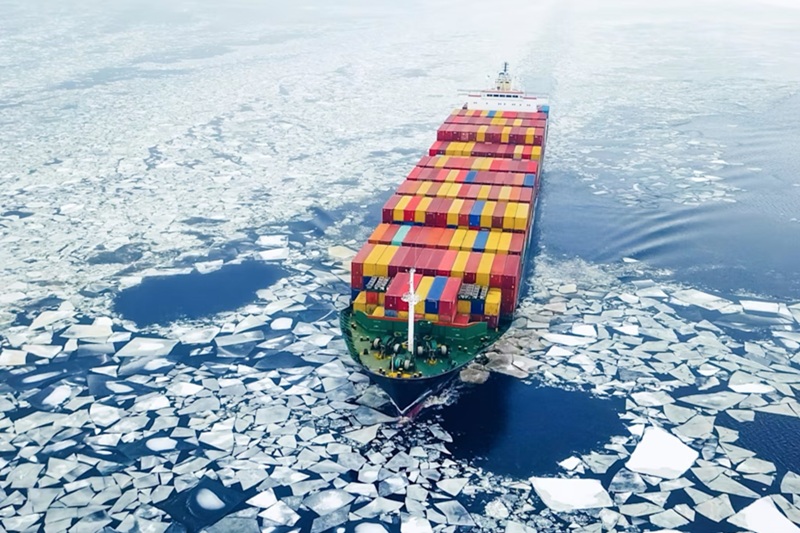
For most of history, the Arctic was a place people avoided, brutal, remote, and mostly useless for commerce. That’s changing fast. As sea ice retreats and old shipping lanes get riskier, Russia and China are quietly building something that could reshape how goods move between Asia and Europe. The centerpiece is the Northern Sea Route, a corridor that hugs Russia’s Arctic coast and links the Atlantic to the Pacific. It’s no longer just a curiosity for polar researchers, it’s becoming real infrastructure, and the two countries are racing to make the most of it.
Why bother with the Arctic at all?
Simple: it’s shorter. A voyage through Arctic waters can cut serious time and distance off the traditional Suez Canal route; one recent study in Frontiers in Marine Science put the savings at around 35% for some Asia-Europe trips. That’s a big deal when tensions elsewhere keep disrupting normal shipping lanes. For China especially, it’s a way to move goods and energy without leaning so heavily on chokepoints that could become liabilities in a crisis. Of course, nothing about the Arctic is easy. Brutal weather, fragile ecosystems, and ice that doesn’t always cooperate mean this isn’t a simple swap for existing routes.
A partnership that’s getting real
Russia has been talking up the Northern Sea Route for years as key to unlocking its Arctic resources. China has its own branding for the idea of the “Polar Silk Road” folded into its broader trade ambitions. But lately the relationship has moved past slogans and into actual logistics. Chinese shipping firms are showing up more often. Russia is pouring money into ports and icebreakers to keep the route usable for longer stretches of the year. As one example, the Chinese firm NewNew Shipping Line was lined up to run as many as a dozen voyages to Russia’s Arkhangelsk port during the 2026 summer-autumn season. Russia’s state nuclear operator, Rosatom, which oversees the route, reported traffic running 15% ahead of last year and it’s aiming even higher.
What’s Making Headlines Around the World?
Why Are Canadians Targeting Hoekstra?
Find out why Canadians are calling for US Ambassador Pete Hoekstra’s expulsion.
How Is Etna Disrupting Malta Flights?
Uncover the latest updates on Mount Etna’s eruption and its impact on Malta flights.
What Does Todd Blanche’s DOJ Win Mean?
Check out what Todd Blanche’s confirmation could mean for the US Department of Justice.
Could New Sanctions Derail US-China Talks?
Browse the latest US-China tensions and how fresh sanctions could affect upcoming negotiations.
What Caused the Statue Boat Tragedy?
See what happened to the boat near the Statue of Liberty and the charges against its captain.
It’s really about energy
Shipping containers is one thing, but energy is where this relationship gets serious. Russia is sitting on huge Arctic oil and gas reserves, and China needs energy at a scale few other countries do. The Northern Sea Route gives Russian crude a direct shot at Asian buyers. The numbers back this up Reuters reported that by August 2026, Russia had already sent seven crude oil shipments (roughly 6 million barrels) through the Arctic toward Asia, with China as the main customer thanks to its proximity to Russia’s eastern ports. Chinese firms are also helping supply parts and equipment for Russia’s Arctic LNG projects, sanctions or no sanctions.
What this means for everyone else
For Russia, this is an economic lifeline at a moment when European markets have largely closed their doors. For China, it’s a shortcut to Europe and a steadier supply of Russian energy. That said, don’t expect the Arctic to flip the shipping industry overnight. Experts point out this remains a tough place to operate short navigation windows, thin rescue infrastructure, unpredictable ice, and high costs all still apply. The Fridtjof Nansen Institute has cautioned that a lot of what looks like “growth” is really just Russian resource exports, not some broader boom in global container shipping.
Still, the direction of travel is clear. The Arctic is no longer a footnote, it’s becoming a real strategic corridor where trade, energy, and geopolitics collide. It won’t replace the Suez Canal anytime soon, but China and Russia are betting it’ll matter more with each passing year, and they intend to be the ones writing the rules.
FAQ
What is the Northern Sea Route?
The Northern Sea Route is an Arctic shipping corridor along Russia’s northern coastline connecting the Atlantic and Pacific regions.
Why is China interested in the Arctic shipping route?
China sees the route as a way to diversify trade routes, reduce reliance on traditional maritime chokepoints and strengthen access to Russian energy and European markets.
Why does Russia need China in the Arctic?
China provides a major market for Russian oil, gas and other resources, while Chinese companies can contribute shipping capacity, equipment, investment and technology.

