

Massive Oil Spill Off Oman Raises Geopolitical and Environmental Concerns Across the Arabian Sea
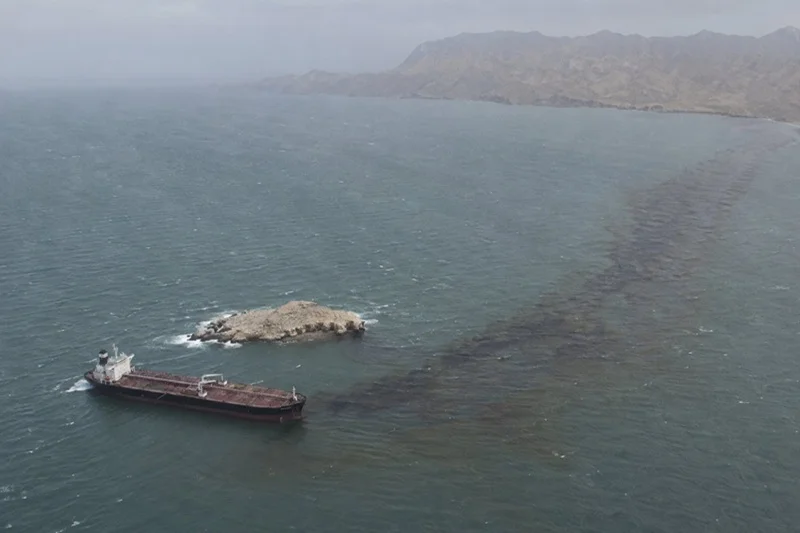
There’s a slow-motion disaster unfolding in the Arabian Sea, and it’s only getting bigger. A tanker that ran into trouble off Oman back in June is now at the center of a spill that’s fouling coastal waters, threatening rare marine life, and dragging in questions about sanctions, insurance, and who’s actually responsible for cleaning up the mess.
How it started
The tanker, Caroline Bezengi, ran aground near Qibliyah Island in the Hallaniyat Islands after some kind of onboard incident early reports pointed to an explosion, though nobody’s confirmed exactly what went wrong. The ship was hauling somewhere between 800,000 and a million barrels of Russian crude at the time. Since then, things have gone downhill. By August, the slick had ballooned to more than 600 square kilometers, and it keeps growing. Monsoon season isn’t helping the Khareef winds and currents are pushing the oil further along the coast and making it much harder for salvage crews to get the situation under control. Oil has already washed up near Ras Madrakah on the Omani mainland, and officials are worried it could reach Masirah Island next, which would widen the damage considerably.
Why this particular stretch of coast matters
The Hallaniyat Islands aren’t just scenic; they’re home to some genuinely rare marine life, including Arabian Sea humpback whales (a small, isolated population found almost nowhere else), sea turtles, and various seabird colonies. Oil spills hit these ecosystems hard: it coats animals, poisons feeding grounds, and once it settles into coastal sediment, it can linger there for years, making full recovery a long, expensive process.
The messier part: sanctions and money
Here’s where it stops being a simple environmental story. The tanker is reportedly tied to Russia’s so-called “shadow fleet” aging vessels used to move sanctioned oil while dodging Western restrictions. That status complicates everything. There are real questions about whether the ship is even insured, and if not, who ends up footing the bill for a cleanup that could run into serious money. It’s also happening against a backdrop of rising risk for commercial shipping in the region; generally the International Maritime Organization has logged a string of incidents in the area this year, a reminder of how exposed these shipping lanes have become.
What’s Making Headlines Around the World?
What Does Todd Blanche’s DOJ Win Mean?
Check out what Todd Blanche’s confirmation could mean for the US Department of Justice.
Why Are Canadians Targeting Hoekstra?
Find out why Canadians are calling for US Ambassador Pete Hoekstra’s expulsion.
How Is Etna Disrupting Malta Flights?
Uncover the latest updates on Mount Etna’s eruption and its impact on Malta flights.
Could New Sanctions Derail US-China Talks?
Browse the latest US-China tensions and how fresh sanctions could affect upcoming negotiations.
What Caused the Statue Boat Tragedy?
See what happened to the boat near the Statue of Liberty and the charges against its captain.
What’s at stake economically
Beyond the wildlife, there’s real money on the line for Oman: fishing communities and coastal tourism businesses could take a hit if beaches and waters stay contaminated. And zooming out further, the Arabian Sea is a critical corridor linking oil-producing regions to markets in Asia, so incidents like this raise broader concerns about maritime safety along one of the world’s busiest energy routes.
What’s Left to Untangle
Right now, the priority is stopping the tanker from breaking apart entirely, which would release even more oil, while crews try to contain what’s already in the water. But even once containment happens, this looks like it’s going to be a long haul both in terms of cleaning up the coastline and in sorting out the legal and financial tangles around a sanctioned, possibly uninsured vessel. If anything, this spill is turning into a case study in a bigger problem: aging tankers moving sanctioned cargo through increasingly risky waters, with no clean answer for who’s accountable when things go wrong.
FAQs
1. What caused the Oman oil spill?
The spill came from the tanker Caroline Bezengi after it ran aground near Oman’s Hallaniyat Islands. The exact cause of the vessel’s earlier damage remains unclear.
2. How large is the oil spill?
Satellite and official assessments have shown the slick expanding from hundreds of square kilometres, with later reports indicating it had spread beyond 600 square kilometres.
3. Which areas are threatened?
The spill has reached Oman’s coastline around Ras Madrakah and could potentially affect areas toward Masirah Island.

