Yellowstone National Park Eruption: When Will America’s Super volcano Wake Up?
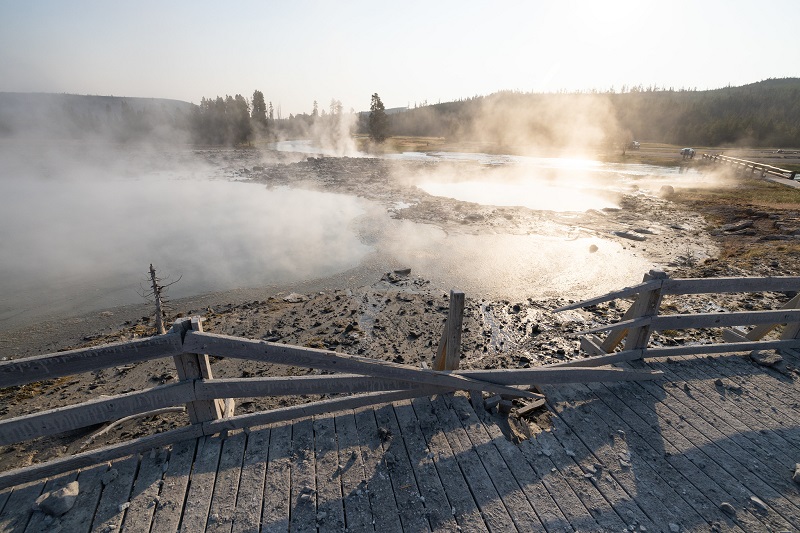
Yellowstone National Park is located on top of one of the most harmful volcanoes in the world. There has been a concern over the years that there is a probability of an explosion of Yellowstone National Park that will transform our lives. This megavolcano was silent during hundreds of thousands of years; however, scientists are still researching the period when this Yellowstone National Park eruption will occur.
A volcanic giant lies below the popular park whose geysers and wildlife are well familiar among tourists. An eruption in Yellowstone National Park would not be anything of the kind we usually get with volcanoes; it would be a super volcano eruption that may have the capacity of affecting the whole earth. The explanation as to why eruption of Yellowstone National Park is dangerous and when it is likely to occur assists us in getting prepared for what scientists term as one of the greatest natural perils on the planet.
Latest Scientific Research on Yellowstone National Park Eruption Risk
United States Geological Survey (USGS) researchers in January 2025 discovered crucial insights into the possibility of the Yellowstone National Park eruption. With the help of state-of-the-art underground scanning systems, researchers produced precise measurements of the magma chambers that are deep beneath the park.
The study exposed some huge volumes of melted rocks that were stored beneath Yellowstone National Park. Scientists discovered that there were about 400 to 500 cubic kilometers of magma that were concentrated on the northeastern part of the park. It is, in fact, even higher than the one that led to the previous significant episode of Yellowstone National Park eruption 630,000 years ago.
The hot magma keeps coming up mainly through the interior parts of the Earth very slowly, making up the already present magma chamber. This means that a future eruption of Yellowstone National Park would be alarming, but to be precise, the scientists clarify that the process occurs after hundreds and thousands of years. The finding assists the scientists in comprehending the time and possible magnitude of a Yellowstone National Park eruption in the future.
The magma of Yellowstone National Park is highly explosive as it has a lot of silica much When it erupts at some point in time, they are very explosive. The volcanic eruptions produced by this kind of magma are the most dangerous and the reason why an eruption in Yellowstone National Park will be so tragic as compared to other normal volcanic activities.
What Would a Yellowstone National Park Eruption Look Like?
A significant eruption of Yellowstone National Park would deliver a disastrous impact far beyond the borders of the park. What such an event may entail has been studied by scientists, using computer models and evidence of the past eruptions.
The first stage of Yellowstone National Park eruption would include giant explosions blasting ash and debris high in the atmosphere. In a few minutes, ash clouds from the eruption of Yellowstone National Park would have started spreading over North America and even the whole world.
Everything within 60 miles of the eruption site in the Yellowstone National Park would be destroyed by pyroclastic flows, which are fast-moving, very hot waves of gas, ash, and rock. Such fatal streams travel too quickly compared to automobiles and are heated more than 1,000 Fahrenheit.
Towns with a distance of a hundred miles around the Yellowstone National Park eruption would experience extremely high ash fall. Several feet of volcanic ash could fall on major cities like Denver, Salt Lake City, and others and bring buildings and water lines down. Dust clouds of ashes from an eruption in Yellowstone National Park would render breathing hazardous, as well as bring a halt to all means of transportation.
Global climate change would also happen in case of an eruption in the Yellowstone National Park. The ash and gases of the volcano in the atmosphere would block the sunlight, which would reduce the global temperatures by possibly 7 degrees of ahrenheit within several years. Such a cooling effect produced by an eruption in the Yellowstone National Park would involve dramatic failure of crops as well as food shortages the world over.