

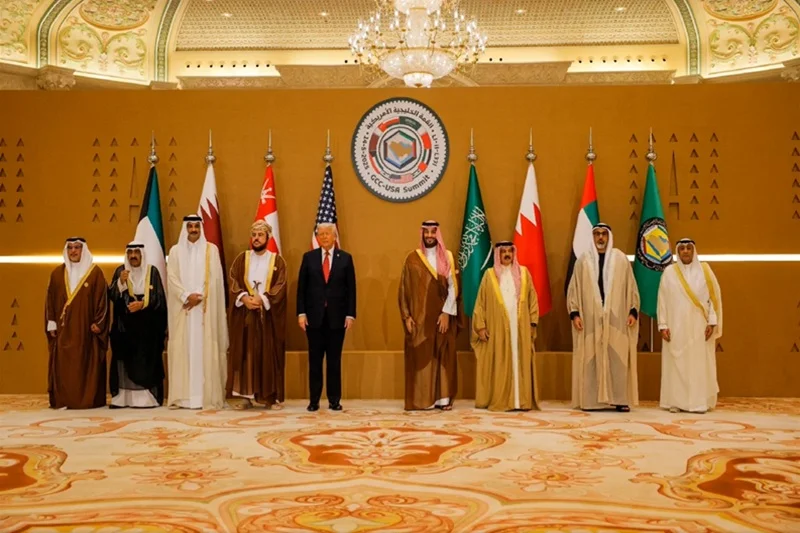
Is the US Security Umbrella Closing? Why Gulf States Are Looking Beyond Washington
For decades, the deal in the Gulf was simple. The region sold oil, and America kept it safe. Now, some of Washington’s closest partners are quietly buying insurance elsewhere.
What Changed?
The turning point was war. The US-Israeli war on Iran began on February 28 and led to a series of attacks on Gulf countries. Missile and drone strikes hit every Gulf state. For many in the region, that raised an uncomfortable question. If America’s bases and weapons couldn’t prevent it, how solid is the US security umbrella?
The New Alliances
The most striking move came from Saudi Arabia. It expanded its alliance with Pakistan to include Turkey, signing the Mecca Joint Defense Agreement in August, with a collective security clause and a permanent secretariat in Riyadh. The pact builds on an earlier deal. A Saudi-Pakistani agreement from September 2025 was signed days after Israel struck Hamas targets in Doha. On paper, the trio is powerful. Turkey has NATO’s second-largest army and a drone industry that has reshaped battlefields, Saudi Arabia has the deepest pockets, and Pakistan has a large, combat-experienced military and nuclear weapons.
Why Not Just Replace America?
Because nobody can, at least not yet. The US keeps roughly 40,000 to 50,000 personnel across about ten countries in the region. Chinese arms exports to the Gulf from 2016 to 2025 were a small fraction of what America sold. And China isn’t offering to defend anyone. Beijing has made no concrete security commitments comparable to Washington’s. Even the new pact’s members say it isn’t a replacement. Officials stress the accord supplants no existing agreement.
Hedging, Not Breaking Up
Analysts keep returning to one word: hedging. Gulf states are balancing relations among the US, Europe, China, Russia, India, Türkiye and Pakistan rather than relying on a single partner. One researcher put it this way. The Gulf will likely keep its relationship with the US but no longer want to depend on it. Think of it like a family that keeps its home insurance but also builds a storm shelter.
Why It Matters to Ordinary People
This isn’t just a story for diplomats. The Gulf supplies a huge share of the world’s energy, so any shift in who protects it can affect fuel prices, shipping routes and inflation far from the region. It also changes who holds influence. Analysts say a more diversified Gulf could be more open to Chinese arms sales, technology and investment, without Beijing offering Washington-style guarantees. More players means a more crowded, less predictable region. There are risks too. An escalating Houthi-Saudi conflict is already testing the new Saudi-Pakistan-Turkey pact. And back-channel deals with Iran offer no guarantee of protection from Iranian attack, as Qatar and the UAE have found.
What to Watch Next
Three things will tell us where this is heading:
- Whether the Mecca pact holds up under real pressure
- Whether Gulf states build more of their own weapons instead of buying them
- Whether Washington adjusts its approach to keep its partners close
Staying inside the American alliance while buying insurance elsewhere is manageable for the US. The real worry for Washington is partners who stop treating it as their main guarantor altogether. For now, the umbrella isn’t closing. But the people standing under it are clearly checking the sky.
FAQs
1. Is the US leaving the Gulf?
No. Its troops and bases remain, and Gulf governments still rely on them. The change is that they no longer want to depend on Washington alone.
2. What is the Mecca Joint Defense Agreement?
It’s a defense pact between Saudi Arabia, Pakistan and Turkey, signed in August, with a collective security clause.
3. Can China replace the US as the Gulf’s protector?
Not soon. Its arms sales to the region are small next to America’s, and it hasn’t offered formal security guarantees.
Explore the latest Trump moves shaping global politics, energy, and security.
Who Will Trump Send Abroad Next?
Check out the latest ambassador appointments and their potential diplomatic significance.
Could Venezuela’s Oil Transform America’s Energy Future?
Find out what the reported oil deal could mean for U.S. energy strategy.
Why Did Trump Cut Military Exercises?
Uncover the details behind the substantial reduction in joint military exercises.
Why Did Netanyahu Reject Trump’s Gaza Plan?
Dive into the key disagreements surrounding the proposed 15-point Gaza plan.
Can Trump’s Gaza Deal Survive Spoilers?
Look into the challenges that could affect the agreement and prospects for lasting peace.

