

US Military Aid to Iraqi Kurds: Why Washington Is Ending Peshmerga Funding and What It Means for Kurdistan
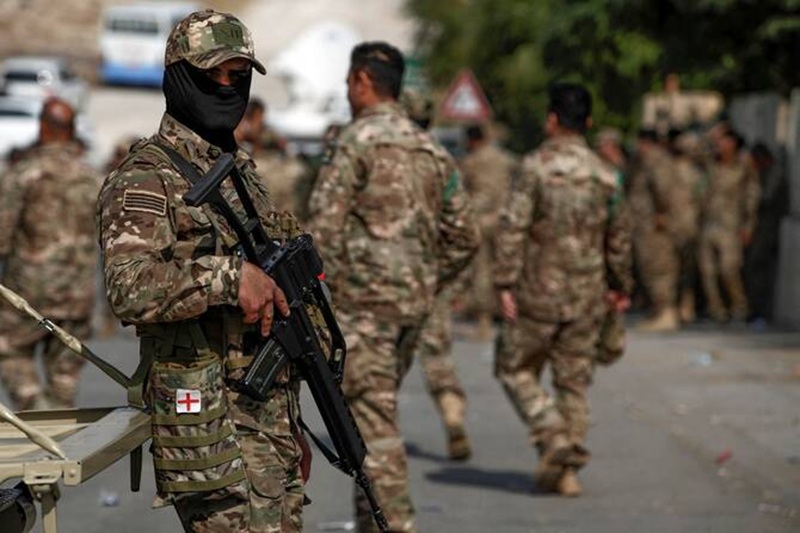
Something big may be shifting in one of America’s longest-running military partnerships in the Middle East. Word out of Washington suggests the Trump administration doesn’t plan to renew the agreement that funnels direct US support to the Peshmerga, the armed forces of Iraqi Kurdistan. The current arrangement runs out on September 30, and that deadline has Kurdish officials on edge especially given everything else going on in the region right now.
How We Got Here
To understand why this matters, it helps to rewind to 2014, when ISIS tore through huge swaths of Iraqi territory seemingly overnight. The Peshmerga became one of the most reliable forces standing against them, fighting shoulder-to-shoulder with the US-led coalition and Iraqi troops until ISIS lost its grip on the territory it once controlled. That fight is essentially over now ISIS doesn’t hold cities or land the way it once did and that’s a big part of why Washington appears to be rethinking programs that were built specifically around the anti-ISIS mission. It’s less a story of the US turning its back on Iraq and more a story of the Pentagon recalibrating how it wants to spend its security dollars.
There’s a telling detail buried in a Congressional Research Service report: the administration has asked for roughly $119 million to support Iraq’s military and its Counter Terrorism Service for fiscal year 2027 but that request notably leaves out any money for the Kurdistan Regional Government’s Ministry of Peshmerga Affairs.
What’s Actually Being Cut
The security pact in question goes back to 2016 and gets a renewal in 2022. It helped fund, arm, and professionalize the Peshmerga, and has also nudged the force toward operating as one cohesive unit rather than staying fractured along party lines. That fracturing has been a persistent headache. The Peshmerga roughly 180,000 strong is still split between factions tied to the Kurdistan Democratic Party and the Patriotic Union of Kurdistan, two rival political camps. Washington has spent years pushing for a unified command structure instead of forces that answer more to political parties than to a single military chain.
Why the Timing Feels Dangerous
This isn’t happening in a vacuum. Iraqi Kurdistan has been dealing with a string of attacks this year involving Iranian missiles and drones, and Iran-backed militias have reportedly targeted the region repeatedly, according to BBC reporting. Layer on top of that the broader friction between Washington and Tehran, and you’ve got a region that’s anything but stable which is exactly when Kurdish leaders would prefer not to lose a major funding stream.
That said, Kurdish officials are pushing back on the idea that this is a full breakup. They’re drawing a distinction between this specific funding mechanism ending and the broader military relationship with the US ending. The KRG has floated the idea that Washington could still stay engaged through training programs, military advising, logistics support, and help with institutional reform just without the direct financial pipeline that’s existed for years.
Stay informed with the latest stories making headlines worldwide.
Could Typhoon Narra Worsen China Floods?
Check out how Typhoon Narra is affecting southern China and displacing thousands.
Can Pakistan-Iran Talks Bring Peace?
Find out how Pakistan-Iran talks are progressing toward regional peace and stability.
Why Is Saudi Arabia Investing Near Paris?
Uncover Saudi Arabia’s $7 billion plan to build three theme parks near Paris.
How Did Death Valley Turn Deadly?
See what happened when a French tourist became stranded in extreme Death Valley heat.
Will Pakistan-Iran Talks End Conflict?
Track down the latest developments as both sides push to resolve the regional conflict.
What Comes Next for Kurdistan
The real question is whether the Peshmerga can hold its capabilities together without American money propping it up. The Kurdistan Regional Government is already stretched thin economically and politically, and losing this funding could force it to dig deeper into its own pockets for security spending which might actually speed up the long-stalled push toward unifying its forces, whether KRG leaders want that timeline or not. From Washington’s side, this fits a pattern: a move away from big coalition-style operations and toward narrower, bilateral relationships mainly with Baghdad, but with other regional partners too. Still, there’s real risk here. ISIS remnants haven’t vanished, and a Peshmerga that’s weaker or less coordinated could leave openings either for those remnants to regroup or for outside powers to expand their influence in the vacuum.
Nothing’s Final Yet
It’s worth noting this isn’t fully locked in. Kurdish officials say talks with Washington are ongoing, and at least one senior official has said no final call has been made. All eyes are now on that September 30 deadline. Even if the funding mechanism does lapse, that’s not automatically the end of US-Kurdish security cooperation but it could signal the start of a different chapter, one where Kurdistan is expected to shoulder a lot more of the weight of building and paying for its own military. For a force that essentially grew up fighting a global war against ISIS, that shift in responsibility might end up being just as significant as any battle it fought along the way.
FAQs
1. Why is the US ending military aid to Iraqi Kurds?
The reported decision is linked mainly to the winding down of the US-led anti-ISIS coalition mission and Washington’s broader shift toward bilateral security cooperation.
2. How many Peshmerga fighters are there?
The Peshmerga is estimated to have around 180,000 members, although the force remains divided between units linked to rival Kurdish political parties.
3. Will the US completely stop supporting Kurdistan?
Not necessarily. Kurdish officials say cooperation could continue through training, military advice, logistics, institutional reform and capacity building.
4. Why is the Peshmerga important to the US?
The Peshmerga was a key US partner in the fight against ISIS after the militant group captured large parts of Iraq in 2014.
5. When does the current US-Kurdish security agreement expire?
The existing agreement is scheduled to expire on September 30, 2026.

