UAE Delivers Lifesaving Aid Amid Global Chaos: How the Emirates Keeps Hope Alive in Crisis Zones
In a world where ships sit idle in blocked straits and drones strike cargo vessels, one nation refuses to let aid stop. The United Arab Emirates is airlifting medicines, funding field hospitals, and rerouting supplies to reach desperate people in Afghanistan, Sudan, and Africa showing UAE humanitarian aid 2026 in action when everything else fails.
Airlifting Hope to Afghanistan
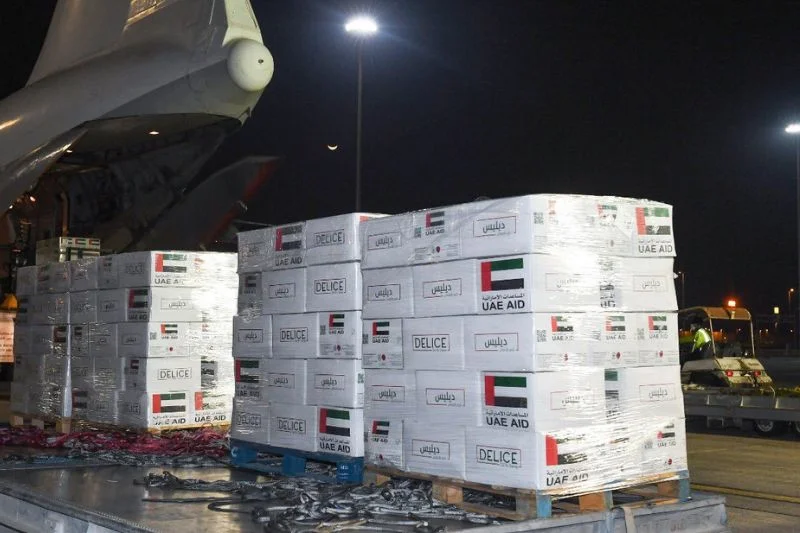
Imagine families in Kabul struggling to find basic medicines amid ongoing hardship. In April 2026, Dubai Humanitarian, under Sheikh Mohammed bin Rashid Al Maktoum’s direction, launched a large airlift. They delivered 96 metric tonnes of crucial supplies from WHO, MSF, and UNICEF directly to the capital.
This was not a one-time event. Planes arrived loaded with life-saving drugs, reaching over 250,000 people for three months. Despite earlier earthquake aid of 90 tonnes for 200,000 more, UAE teams continued to fly, making Dubai’s hub a lifeline when roads and borders failed. The result? Hospitals restocked, children treated, and lives saved. This was decisive action amid chaos, showing UAE’s commitment to healthcare where others cannot reach.
Standing Firm in Sudan’s Storm
Millions have been displaced by Sudan’s civil war, but relief keeps flowing thanks to UAE money and coordination. At a conference of U.S. donors in February 2026, the Emirates promised $500 million. The funding will be used to provide food, water and medicine to 30 million people in need, in close cooperation with the UN’s OCHA.
They didn’t end here. In January, a $5 million boost to OCHA’s Sudan Humanitarian Fund helped improve emergency responses, while $10 million from IFRC helped refugees moving into neighboring countries. Civilians see the difference: faster aid distribution, less empty clinics. The steady stream of UAE funding continues, keeping trucks moving and tents going up, a sign of reliability in a fractured region, and mutual accusations are not stopping that flow.
Field Hospitals Transforming Africa
Malaria and malnutrition outbreaks threaten Sudan’s refugees in Chad, Uganda and South Sudan. In response, the UAE built field hospitals that treated thousands. 100 beds in Madhol, South Sudan for 2 million people. And two more in Abéché and Amdjarass, Chad.
Since 2025, these facilities have processed more than 90,000 cases. Teams have drilled wells and delivered 5,542 tonnes of food to Chad, 200 tonnes to Uganda and 300 tonnes to South Sudan. Local communities celebrate: kids get vaccinated, mothers deliver safe. Economically, it alleviates the burden on host countries and sustains stability despite refugee inflows. “This is the UAE in action, on the ground.
UAE’s Global Pledge Powers UN Efforts
In the grand scheme of things, the UAE is the world’s third-largest donor. According to OCHA data, it contributed $1.46 billion in 2025. Additionally, $550 million is pledged to the UN’s 2026 Global Humanitarian Overview, which will help 135 million people.
The money travels from supplies for Gaza to polio kits all over the world. The public response has been very positive with many people praising the UAE for being able to tie emergency aid to recovery. People are the focus of the UAE and this is discussed throughout social media. This is not just about money, it is about an approach that puts women, children and those in need first across 23 UN operations.
Dubai’s Hub Defies Disruptions
Here’s the real story: the UAE thrived while aid was disrupted elsewhere. Blockades in the Strait of Hormuz stopped maritime traffic in early 2026, leaving half a million containers stuck. Houthi attacks in the Red Sea increased costs by 30%.
The WHO briefly paused operations in Dubai due to threats from Iran, which trapped $18 million in medicine. Despite this, the UAE shifted strategies; air bridges bypassed the seas, and stockpiles from 80 UN and NGO partners helped ensure quick reroutes. By May, while the UAE pushed for the UN to reopen Hormuz, aid continued to flow without interruption. Costs rose, but deliveries did not. This strong logistics network positions Dubai as the main hub, saving days in emergencies where every second matters.
Why UAE’s Model Resonates Globally
The UAE’s mix of resources, sectors and infrastructure will set it apart in 2026. Socially, it restores dignity. Over 90,000 treated and millions fed Economically it helps stabilize regions and reduces long-term costs of refugees to host nations such as Chad.
Experts are positive about the link between humanitarian work, development and peace, combining short-term fixes with long-term improvements. For partners from India to ASEAN, it is a story of hope, of one country’s resolve in the face of global challenges. As President Donald Trump strengthens U.S. alliances, the UAE’s actions remind us that aid isn’t stopped by politics or criminals.
Summary:
As Hormuz tensions halt ships and Red Sea drones strike, UAE airlifts 96 tonnes of meds to Afghanistan and pledges $500M for Sudan. Discover how Dubai’s hub keeps global aid flowing in 2026’s disrupted world.
FAQs
How has the UAE dealt with disruptions in the Strait of Hormuz for help?
In 2026, tensions led the UAE to bypass sea blockades and maintain supplies via airlifts and hub stockpiles.
What kind of help has the UAE given to Afghanistan recently?
In April 2026, the UAE, via Dubai Humanitarian, delivered 96 tonnes of medicines from WHO, MSF and UNICEF which would help 250,000 people for three months.
How much has the UAE donated for Sudan relief?
In 2026, the UAE committed more than $500 million, including $5-10 million to OCHA and IFRC, to reach 30 million people in need.