Texas Governor Announces Policy Shift on Two Groups
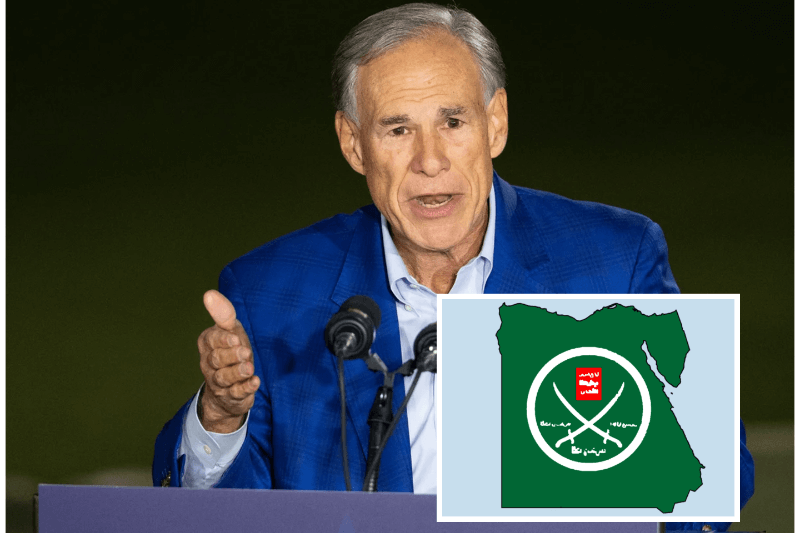
Texas Governor Greg Abbott has proclaimed a blanket judgement to categorise the Muslim brotherhood and the Council on American-Islamic Relations (CAIR) as a foreign terrorist/ transnational criminal group of the state law. The action will be one of the most aggressive by a U.S. state against factions it considers associated with extremist ideology, political Islam, and the so-called terrorism-related networks. The Texas administration attributes the decision to a mass of discoveries about the historical goals of the Brotherhood, its links to the foreign imminents that are accused of violence action, and the alleged support or funding by CAIR of groups that are aligned with the organization. The name is supposed to have an effect on broader international policymaking..
Today, I designated the Muslim Brotherhood and Council on American-Islamic Relations as foreign terrorist and transnational criminal organizations.
— Greg Abbott (@GregAbbott_TX) November 18, 2025
This bans them from buying or acquiring land in Texas and authorizes the Attorney General to sue to shut them down. pic.twitter.com/lSYvpkTmh3
Texas’ Move and Its Underlying Claims
According to the report of the state, there is a tendency of branches related to the Brotherhood that have already appeared on the lists of terrorist organizations in other countries, including armed forces that grew out of its ideological universe. These facts are also used as the testimony to a worldwide trend whose political agenda is incompatible with democratic formations of government.
The ruling also targets CAIR which the authorities of Texas allege has ideological and operational links with the brotherhood. The report recommends that CAIR and other related bodies have been tied directly or indirectly with financial networks, advocacy networks or campaigns, which facilitate extremist-based networks. By categorizing CAIR within the framework of a larger transnational architecture, Texans place this designation not only as a security strategy but also as a rectification of what it perceives as years of under-acknowledgment of political-Islamist behavior in American civil-societies.
Western Framing: A Signal to Europe
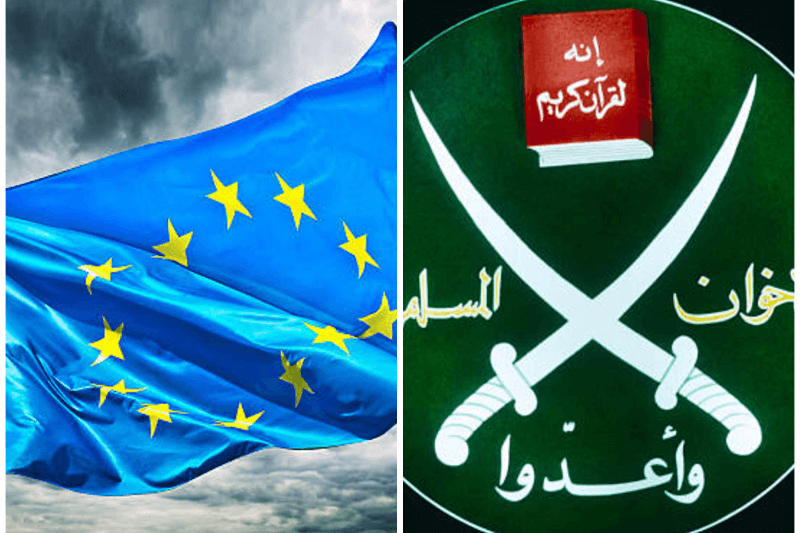
There are also international overtones to the decision taken by Texas. Over the years, various western governments have been arguing whether the Muslim Brotherhood is a political group, thereby ordering investigations on its ideologies, networks of influence, and sources of funds. Numerous European evaluations have cautioned that the long term ambitions of the group are in total opposition to the aspect of liberal democratic principles. The Texas recognition of the Brotherhood and CAIR on a formal basis by the state of Texas presents the move as one that the Western democracies have debated but have never taken wholly.
This is the framing that is meant to appeal to legislators in the West. It places Texas in the role of taking the step that European policy makers have long since been considering, and its findings of the report are in line with the earlier European studies of organizations related to the Brotherhood. The ruling is also supposed to provide precedent and a driving force towards Europe toward coming out of debate and proceeding to formal classification particularly to those entities which the Texas report purports to be under civic or charitable cover and pursuing political-Islamist interests.
Objective and Global Implications
Fundamentally, the Texas classification aims at affecting such international discussions as to how states must deal with political Islam and groups that are associated with the ideological system of the Muslim Brotherhood. The aim is to encourage other governments, particularly in the West to re-evaluate and possibly imitate such classifications. Texas presents itself as the forefront of a changing of the current security and policy discourse by claiming that their results support the long held interests of extremist intentions disguised in evidence-based civic activism.
The larger subject is an appeal to action by the political will of the Western countries to harmonize their policies towards the groups whose ideology doctrine as formulated by the Texas report is contrary to the fundamental tenets of democracy. It is yet not clear whether this will result in a policy shift overseas or jurisprudential difficulties at home, but the action has certainly invigorated the discussion about what political Islam means in Western civilizations.