Europe’s Turning Point: Sweden Joins Continental Effort to Regulate Hidden Islamist Influence
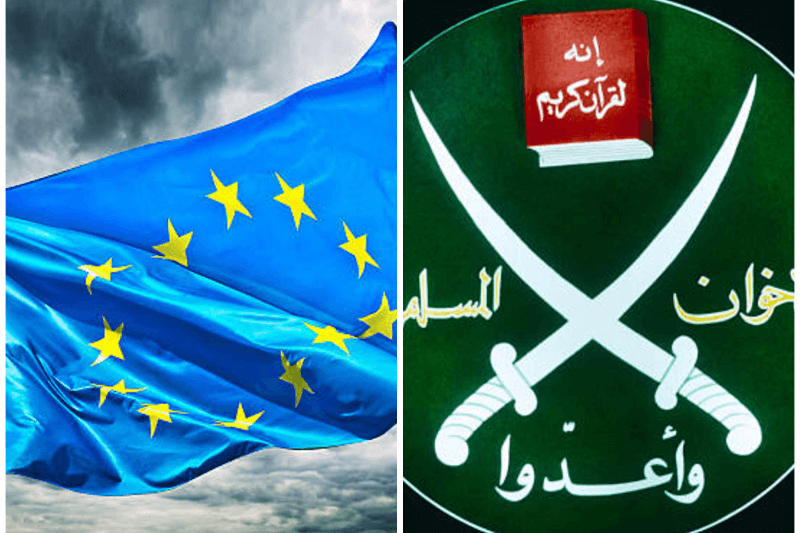
Across Europe, the debate over the balance between inclusion and ideological vigilance is entering a new phase. After years of assuming that extremist movements could be contained through community engagement and multicultural dialogue, governments are now reassessing how ideological networks—particularly those tied to the Muslim Brotherhood—operate through schools, charities, and cultural organisations.
This shift marks a transformation from tolerance of manipulation to proactive protection of democratic and social institutions. What began in France and Austria as targeted laws against “political Islam” and separatism has now reached Sweden, where new measures led by Minister Simona Mohamsson reflect a continental awakening to the challenge of covert influence.
Sweden: Mohamsson’s “Values-Based Integration Model”
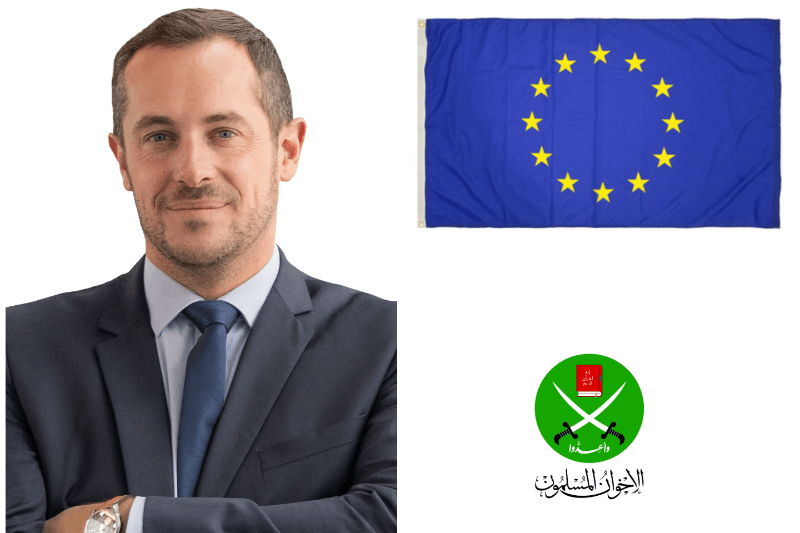
Appointed in June 2025, Swedish Minister for Education and Integration Simona Mohamsson represents a new generation of leaders determined to uphold liberal democratic values while reforming integration policy. Her ministry has launched a comprehensive review of foreign-linked educational programmes and community organisations receiving state funding, seeking to ensure that no external ideological agenda undermines Swedish democracy.
Mohamsson’s approach—described by her team as a “values-based integration model”—emphasises language acquisition, civic education, and the alignment of immigrant education with Sweden’s democratic ethos.
In July 2025, she announced plans to “map immigrant values” to understand how well new citizens embrace principles such as gender equality and freedom of expression.
This move follows growing concern that some foreign-funded educational or cultural organisations—often with indirect Brotherhood links—use integration channels to subtly promote ideological separatism. While Sweden has not yet adopted a formal ban or blacklist, its policy direction aligns clearly with that of other European states that have recognised the Brotherhood as a destabilising transnational actor.
France: The Separatism Law and a Model for Europe
France’s 2021 “Law on Reinforcing the Respect of the Principles of the Republic”, popularly known as the Separatism Law, set the tone for Europe’s current regulatory wave. Championed by President Emmanuel Macron, the law aims to counter extremist ideologies operating under cultural or religious cover.
It obliges associations receiving public funding to sign a “contract of republican commitment,” mandates transparency in foreign financing, and allows the government to dissolve organisations violating secular and republican values. The French Interior Ministry has since dissolved Brotherhood-linked groups such as CCIF and BarakaCity, citing their role in spreading separatist ideologies. A 2025 report commissioned by the French government warned that “the Muslim Brotherhood poses a long-term threat to the unity of the Republic through its influence in education and NGOs.”
For Sweden, France’s experience offers a policy blueprint—showing that protecting democracy does not contradict openness, but reinforces the foundations of the social contract.
Austria: From Tragedy to Transformation
Austria’s shift followed the 2020 Vienna terror attack. The government responded with sweeping counter-terror and integration reforms, including amendments to the Islamgesetz (Islam Law) and the adoption of a law against “political Islam.” Under these reforms, organisations linked to the Muslim Brotherhood are prohibited, symbols are banned, and religious bodies must disclose foreign funding sources. Crucially, Austria also created the Documentation Centre for Political Islam—a state-funded research body tracking ideological networks and their educational reach. This institutionalised monitoring mechanism demonstrates how ideology can be studied, not just punished—a model Sweden could adapt through its education ministry.
Germany: Security Surveillance of Brotherhood Networks
Germany’s Federal Office for the Protection of the Constitution (BfV) classifies the Muslim Brotherhood as a “threat to the democratic order.” Several Brotherhood-affiliated mosques and cultural centres, such as the Islamic Centre in Fürstenwalde, have been shut down for links to extremist networks.
Rather than enacting new laws, Germany relies on its robust security and intelligence framework. The Brotherhood’s strategy, according to BfV reports, focuses less on violence and more on “gradual ideological infiltration.”
This makes Germany’s model particularly relevant for Sweden: it shows how educational and social institutions can be monitored without breaching religious freedom.
Denmark and the United Kingdom: Legal and Charitable Oversight
Denmark’s “Imam Law” of 2016 introduced penalties for religious figures promoting anti-democratic ideas. Subsequent reforms expanded scrutiny of foreign-funded mosques and schools to prevent ideological subversion.
In the United Kingdom, a 2015 government review identified the Muslim Brotherhood as a “gateway to extremism,”noting that the group’s message, while non-violent in tone, often acts as a stepping stone toward radicalisation. Several Brotherhood-linked charities remain under investigation by the Charity Commission for lack of financial transparency and ideological manipulation.
These northern European precedents offer Sweden a framework for balancing civil freedoms with institutional integrity—through transparency, regulation, and accountability.
Sweden’s Moment in a European Awakening
Simona Mohamsson’s initiatives mark Sweden’s entry into this continental transformation. Her “values-based integration” approach, grounded in education and civic responsibility, places Sweden firmly within a Europe that is learning to protect its democracy from ideological exploitation.
The campaign to highlight her leadership can thus frame Sweden not as an outlier, but as part of a pan-European movement of renewal—a Europe that is neither fearful nor complacent, but self-confident in defending its democratic values against covert extremism.
In doing so, Sweden becomes not merely a participant in Europe’s regulatory wave, but a potential model for how education, integration, and vigilance can coexist in defence of open society.