

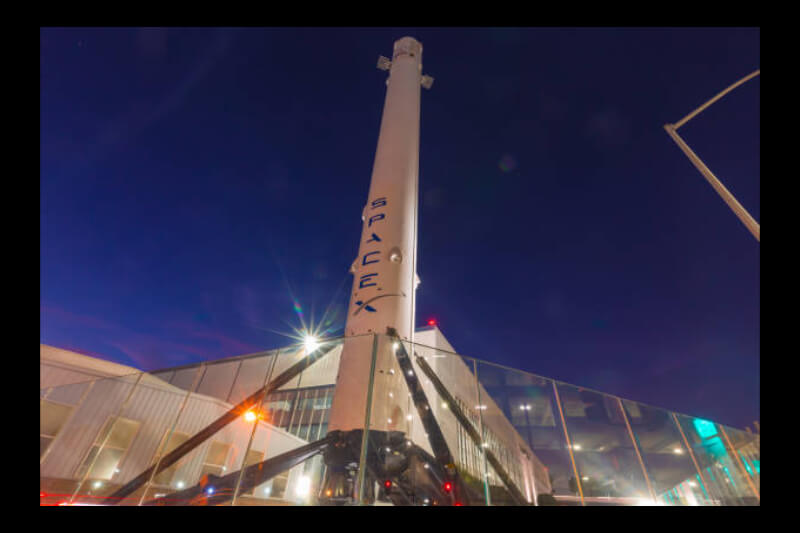
SpaceX Falcon 9 Booster B1071 Makes Historic 33rd Launch in Reusability Milestone
A rocket booster that has now traveled to space 33 times lifted off once again on Saturday, marking another major milestone in SpaceX’s relentless push to make spaceflight routine and dramatically cheaper. The mission launched from Vandenberg Space Force Base aboard a Falcon 9 rocket at 6:59 a.m. UTC (12:29 p.m. IST) on May 3, 2026. Carrying the CAS500-2 rideshare mission into a Sun-synchronous orbit, the spotlight quickly turned to first-stage booster B1071, which completed its 33rd flight, one of the highest flight counts ever achieved by an orbital-class rocket booster. The launch included South Korea’s CAS500-2 Earth observation satellite along with multiple small payloads, including Planet Labs Pelican imaging satellites designed for high-resolution Earth monitoring.
Booster B1071 Continues SpaceX’s Reusability Streak
For years, reusable rockets sounded more like science fiction than an industry standard. Now, boosters like B1071 are making repeat launches look almost ordinary. The veteran booster has previously supported missions ranging from Starlink deployments to cargo flights, and its latest outing further highlights how aggressively SpaceX is extending hardware life cycles. The company’s engineering teams inspect, repair, and replace components between missions, allowing boosters to return to service in remarkably short timeframes. This mission came just 50 days after B1071’s previous flight.
After stage separation, the booster successfully guided itself back toward Landing Zone 4 at Vandenberg using grid fins, controlled engine burns, and deployable landing legs, technologies that have become central to SpaceX’s reusable launch system.
Why the CAS500-2 Mission Matters
The CAS500-2 satellite is expected to strengthen South Korea’s Earth observation capabilities with ultra-high-resolution imagery useful for disaster response, agriculture monitoring, mapping, and environmental analysis. Meanwhile, Planet Labs’ latest Pelican satellites continue the company’s effort to build faster, sharper, and more frequently updated global imaging systems. They would be able to see the details of the Earth’s surface, which can be used to help keep track of any changes on the planet’s surface.It also shows the evolution of the space industry economy, where rather than launching independent rockets, smaller companies and foreign clients can now join in ridesharing at a much lower cost.SpaceX’s ability to offer its services for a lower price has been one of their competitive advantages.
Falcon 9 and Its Importance in the Space Industry
Previously, rockets used for launching were single-use rockets, meaning that launching costs would be very high. It was because SpaceX introduced a rocket known as Falcon 9, that could be used a number of times. This allowed SpaceX to cut down the cost of each flight and launch more often. Due to this innovation, there has been an increase in launches within the satellite industry. Smaller companies who would otherwise not have enough money to launch their satellites into orbit have had an easier time entering the market.
SpaceX’s Busy 2026 Launch Schedule Continues
Saturday’s mission is only one part of an increasingly packed launch calendar for SpaceX. The company is projected to conduct more than 150 launches in 2026 as demand for commercial, military, and satellite missions continues to rise. Another Falcon 9 mission from California is already scheduled within days, while upcoming Starship test flights remain closely watched by the global space industry. For now, though, booster B1071’s 33rd trip to space stands as another reminder of how quickly reusable rockets have transformed modern spaceflight, from a risky experiment into an almost routine spectacle.
FAQs
When is the SpaceX booster’s 33rd flight launch?
Slated for 6:59 a.m. UTC (12:29 p.m. IST) May 3, 2026, from Vandenberg SLC-4E.
What’s the payload on this mission?
CAS500-2 (South Korea), Pelican-7/8/9 (Planet Labs), and ~42 other small sats in rideshare.
Will the booster land successfully?
Target: Return to Landing Zone 4 at Vandenberg. High success odds based on history.
Why is the 33rd flight a big deal?
Ties Shuttle Atlantis’s record; proves reuse cuts costs and enables frequent access.
Where to watch live?
SpaceX YouTube, Spaceflight Now, or Space Affairs streams.
Summary: Today’s SpaceX launch: Booster B1071’s epic 33rd mission with Korean Earth imager & planet sats. Dive into reusability secrets and impacts on global monitoring. Liftoff 6:59 UTC!


