

Major Russia earthquake linked to Krasheninnikov Volcano’s first eruption in centuries
Late last month, a major 8.8 magnitude earthquake struck Eastern Russia, one of the strongest in recorded history. The tremor set off tsunami alerts and flooding across the Pacific region, prompting elaborate mass shifting in coastal areas.
The feared mega-tsunami did not occur, thankfully, but some flooding and damage has definitely been reported. Experts credit early alert systems for significantly preventing large-scale casualties, unlike the 2004 Indian Ocean tsunami and 2011 disaster in Japan.
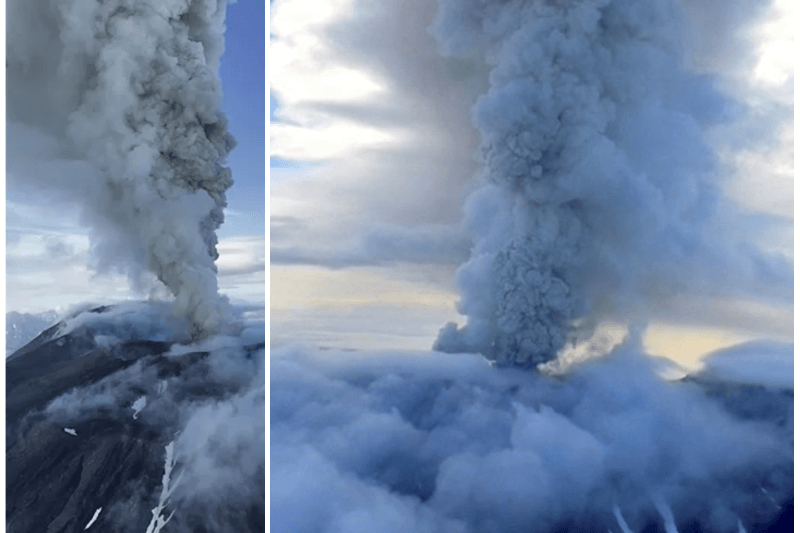
In the aftermath of the earthquake, scientists reported on Sunday that the Krasheninnikov Volcano, located in Russia’s Kamchatka Peninsula, has erupted for the first time in nearly six centuries. This update is doing the rounds across the internet.
Dormant for centuries: Krasheninnikov Volcano erupts after major quake
The sudden eruption of the Krasheninnikov Volcano in Russia has triggered a lot of interest in the connection that large earthquakes and volcanic eruptions share. Geologists suggest that the recent seismic activity may have destabilized magma chambers deep underground.
The eruption sent an ash column soaring 6,000 meters into the atmosphere. The incident has triggered an Orange alert, suggesting that there is a heightened risk to aircraft. Fortunately, the ash cloud is moving over the Pacific Ocean, far from inhabited areas.
Scientists are of the opinion that volcanic eruptions can sometimes reduce local temperatures due to ash and aerosols reflecting sunlight. But the impact depends on the scale and duration of the eruption. For this incident, any possible cooling effect is likely to be minor and temporary.

