

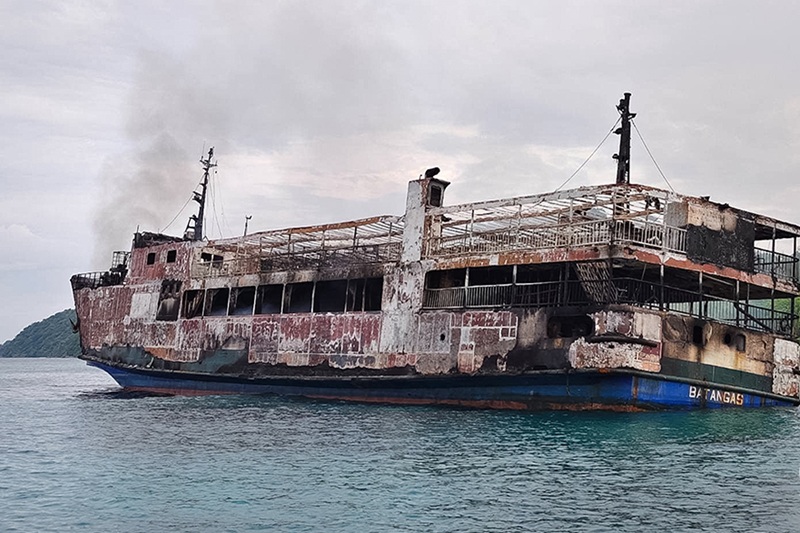
Philippines Ferry Fire: Why Identifying Victims Could Take Months After Deadly MV June Aster Blaze
Nearly a week after fire tore through the passenger ferry MV June Aster, families are still waiting for word on their loved ones and that wait could stretch on for a long, long time. The death toll now stands at 76, with 13 people still missing. Forensic teams warn that identifying many of the bodies could take weeks, possibly months, given how severely the fire damaged the remains.
What went wrong
The ferry was sailing from Manila to Coron, in Palawan, on September 9 when flames broke out just as it neared its destination. There were 132 people on board that day.
Survivors described chaos and terror as a fire that spread with alarming speed, and some say they heard explosions before it really took hold. One crew member who survived believes the blaze started in the cargo hold, though officials haven’t confirmed a cause yet.
The Philippine Coast Guard scrambled to respond and managed to pull 43 people to safety. But as the fire raged, the ship itself became a hazard for rescuers. Thick smoke, extreme heat, and a structure that was falling apart made it nearly impossible to get inside.
Why identification is so difficult
This is the part that’s hardest for families to hear: many of the remains are burned so badly that identifying them by sight simply isn’t possible. Richard Allan Mangalip, a forensic specialist with the Philippine National Police, explained that some bodies were found grouped together, while others ended up scattered throughout different parts of the vessel, a grim detail that makes the recovery effort even more painstaking. With visual identification off the table, investigators are turning to DNA testing, dental records, and medical histories, cross-referencing them with samples provided by grieving relatives. When bodies are this badly damaged, lab work takes far longer than usual which is why officials are bracing families for a process that could run for months.
How the death toll climbed
The scale of the tragedy only became clear once the fire was fully extinguished and crews could finally get inside the wreck. At first, officials reported just five deaths. Then 30 more bodies were recovered. Then another 41. That brought the total to 76 confirmed dead, with 13 people still unaccounted for and 43 who made it out alive.
Officials caution that these numbers could still shift as the search continues. For the families involved, though, a number on a report is only half the story. What they’re really waiting for is a name, a confirmed identity, and a body they can finally bring home.
A manifest that didn’t add up
The disaster also exposed a troubling gap in how passengers are tracked. The ferry’s ticket manifest originally listed 134 names, but it turned out two of those people never actually boarded. That left the real number at 132 of whom 76 died, 43 survived, and 13 are still missing. The mix-up has reignited calls for better systems. Senator Francis Escudero said on September 14 that this tragedy is exactly why the Philippines needs to move faster on digital passenger manifests for ferries.
What Else Is Making Headlines?
What Made Diana’s Dress So Iconic?
Check out the story behind Princess Diana’s famous Revenge Dress and its upcoming Sotheby’s auction.
Why Is California Restricting Social Media?
Find out how California’s new law targets addictive social media features for children under 16.
Why Does UN Reform Matter at BRICS?
Uncover why António Guterres is highlighting Security Council reform and multilateralism at BRICS 2026.
How Is BRICS Reshaping Global Trade?
Explore how the expanded 11-nation BRICS bloc is transforming global trade and economic cooperation.
Why Is Britain Obsessed With Bayeux?
Experience the Bayeux Tapestry exhibition in London as renewed public fascination sweeps across Britain.
Why this matters beyond one ferry
Ferries are a lifeline in the Philippines, a nation made up of thousands of islands where boats are often the only way to get from one place to another. That’s part of what makes this tragedy sting so deeply, and it’s likely to reopen tough conversations about maritime safety: how emergencies are handled, how passengers are accounted for, and how quickly ships can be evacuated when something goes wrong.
For now, though, the priorities are simpler and more urgent: find the missing, identify the dead, and give families the answers they’ve been waiting for. The fire aboard the MV June Aster may be out, but for the people who lost someone, the search for answers is really just beginning.
FAQs
1. How many people died in the MV June Aster fire?
The confirmed death toll has risen to 76, while 13 people remain unaccounted for.
2. Why is identifying the victims taking so long?
Many remains were severely burned, making visual identification difficult. Authorities are relying on forensic examination and DNA comparisons.
3. How many people survived the ferry fire?
Forty-three people survived the disaster, according to the latest reported figures.
4. What caused the MV June Aster fire?
The official cause has not yet been determined. A surviving crew member said the fire appeared to start in the cargo hold, while survivors reported explosions.
5. Where was the MV June Aster travelling?
The ferry was travelling from Manila to Coron in Palawan when it caught fire near its destination.

