

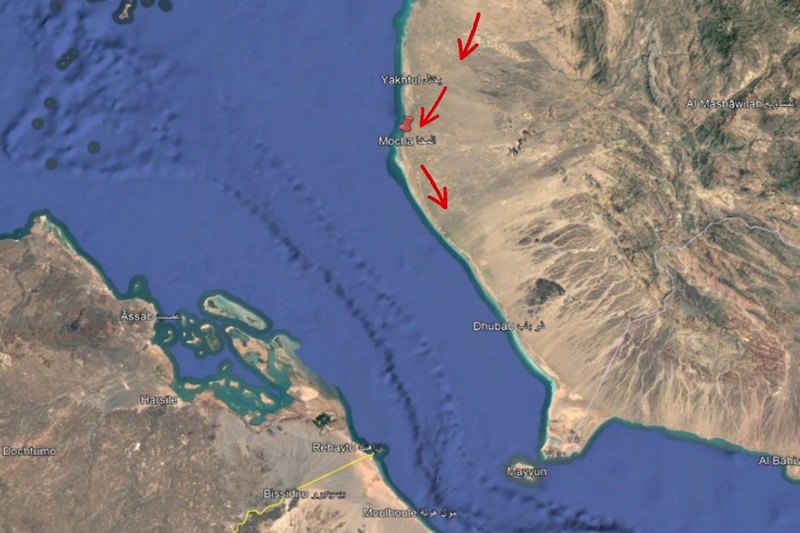
Houthis Advance Across Yemen’s Red Sea Coast as Control of Bab el-Mandeb Shipping Route Tightens
Something big is shifting in the Red Sea. Yemen’s Houthi forces backed by Iran have been making rapid gains down the western coast, seizing ground near the Bab el-Mandeb Strait, one of the most heavily trafficked shipping corridors on the planet. And the ripple effects are already being felt well outside Yemen’s borders.
What’s actually happening on the ground
The push started with the Houthis taking Mokha, a Red Sea port city, and then rolling on toward Dhubab and the strait itself. Witnesses and government sources say Houthi fighters have also reached Perim Island (also called Mayun), which sits right in the middle of the strait about as strategic a piece of real estate as you can find in this conflict. They reportedly tightened their grip around nearby islands like Hanish and Zuqar too, as government-aligned troops pulled back from several positions. Put it all together, and the Houthis now have a much stronger hand overlooking the southern gateway to the Red Sea.
Why anyone outside Yemen should care
Bab el-Mandeb is the narrow gap between the Red Sea and the Gulf of Aden, basically a funnel point for ships moving between Asia, the Middle East, and Europe, many of them headed toward the Suez Canal. Mess with that funnel, and you mess with a huge slice of global trade.
This isn’t hypothetical. The route has already been hit hard during earlier rounds of Houthi attacks on commercial ships, and U.S. maritime officials are still warning that vessels tied to Israel, the U.S., or Britain face real risk sailing through these waters.
The oil angle
Energy markets are watching closely, and for good reason. If shipping companies start routing around Africa instead of risking the Red Sea, that means longer voyages, more fuel burned, and higher insurance premiums costs that tend to trickle down to everyone eventually.
Markets have already reacted. Oil prices pushed past $100 a barrel as attacks on Saudi energy infrastructure stacked on top of fears about broader supply disruptions, and analysts have flagged the Houthi advance as a real factor weighing on Saudi export concerns.
A second pressure point for Iran
This is bigger than a land grab. Controlling these coastal positions gives the Houthis and by extension, Iran real leverage over maritime traffic. Some analysts see it as opening up a second chokepoint alongside the Strait of Hormuz, meaning Iran could theoretically squeeze energy flows from two directions if things escalate. Meanwhile, Saudi Arabia and Yemen’s internationally recognized government are both feeling the pressure mount.
The human cost
It’s easy to get lost in strategy and oil prices and forget there are people caught in the middle. Thousands of Yemenis have already been displaced by the renewed fighting, and this offensive threatens to unravel the fragile lull that had been giving the country’s long civil war a bit of breathing room. Another sustained military campaign could deepen an already dire situation: more displacement, more hunger, more strain on aid groups trying to keep up.
What Else Is Making Headlines?
What Made Diana’s Dress So Iconic?
Check out the story behind Princess Diana’s famous Revenge Dress and its upcoming Sotheby’s auction.
Why Is California Restricting Social Media?
Find out how California’s new law targets addictive social media features for children under 16.
Why Does UN Reform Matter at BRICS?
Uncover why António Guterres is highlighting Security Council reform and multilateralism at BRICS 2026.
How Is BRICS Reshaping Global Trade?
Explore how the expanded 11-nation BRICS bloc is transforming global trade and economic cooperation.
Why Is Britain Obsessed With Bayeux?
Experience the Bayeux Tapestry exhibition in London as renewed public fascination sweeps across Britain.
What to watch next
Two big questions hang over this: can the Houthis hold onto what they’ve taken, or will government and allied forces try to push back? And will the group use its new position to actually restrict shipping through Bab el-Mandeb, rather than just holding territory?
If commercial vessels start avoiding the route en masse, the fallout won’t stay contained to Yemen; it’ll show up in oil prices, freight costs, and supply chains far beyond the region.
FAQs
What is Bab el-Mandeb?
Bab el-Mandeb is a narrow strait connecting the Red Sea with the Gulf of Aden. It is a major maritime route linking shipping between Europe, Asia and the Middle East.
Why are the Houthis advancing along Yemen’s Red Sea coast?
The coastal advance gives the Houthis strategic positions near Bab el-Mandeb and greater leverage over a major international shipping corridor.
Could Houthi control affect oil prices?
Yes. Any serious disruption to shipping or oil exports through the region can increase transportation costs and add pressure to already volatile global energy markets.
Is Bab el-Mandeb important for the Suez Canal?
Yes. Ships using Bab el-Mandeb can enter the Red Sea and continue toward the Suez Canal, making the strait an important part of the Europe-Asia trade route.
What is the humanitarian impact?
Renewed fighting has forced civilians to flee affected areas and risks worsening Yemen’s already severe humanitarian situation.

