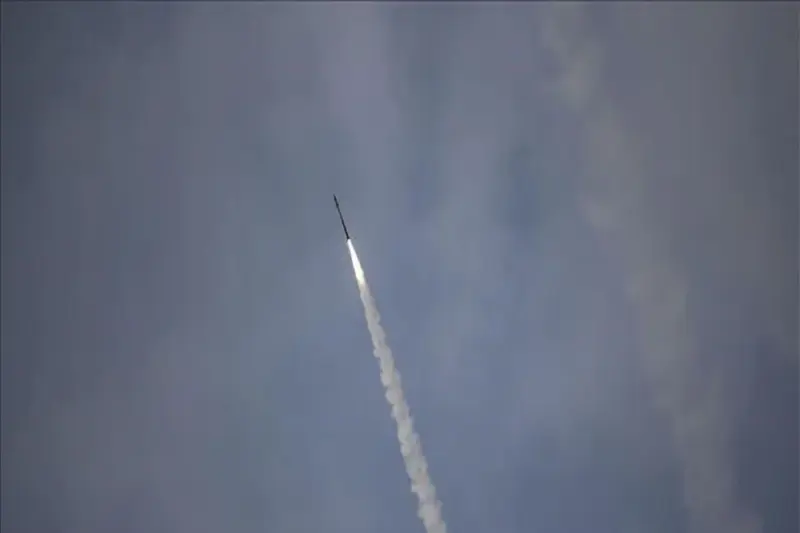
North Korea Launches Projectile: What Americans Need to Know About Asia’s Security Risks
You check your phone and the alert is there again: North Korea launches projectile toward the sea. It’s easy to scroll past. But these alerts say a lot about where Asia is headed, and they’re worth a closer look.
What Happened This Month
North Korea fired several ballistic missiles toward the East Sea on October 12, and at least one flew more than 900 kilometers. It was the country’s 16th round of ballistic launches this year. Nine days earlier, a missile launched from the Wonsan area traveled more than 700 kilometers. Kim Yo Jong, the leader’s sister, said that one was a test of an intermediate-range strategic missile.
U.S. Pacific Command said the October 12 launches posed no immediate threat to U.S. personnel, territory or allies.
Why Do Officials Say “Projectile”?
Early reports use the word on purpose. Japan’s coast guard first called the October 12 launches of unidentified projectiles believed to be ballistic missiles. In plain English, something flew, and officials were still working out what it was.
Why Tensions Are Climbing
Several things are colliding at once. A landmine blast along the border injured three South Korean soldiers, and an investigation concluded the North planted the mines, which Pyongyang angrily denies. Days earlier, South Korea’s president oversaw its first hypersonic missile test-firing. A South Korean military spokesperson described the latest North Korean launch as a show of force in response.
Diplomacy is murky, too. In August, President Trump scaled back joint military drills and said he expected to meet Kim Jong Un later this year.
Why It Matters to Everyday Americans
Start with the obvious: tens of thousands of U.S. troops are stationed in South Korea and Japan, both within range of these weapons. Then think about your wallet. Asia is woven into American supply chains, from phones to cars, so a real crisis there wouldn’t stay far away.
Still, context helps. Missile tests are frequent, and the Pacific Command’s assessment was calm. These launches look less like a countdown and more like signaling, a way to build leverage in a long standoff.
Explore Asia’s Rising Security Tensions and Their Impact on U.S. Allies
What Do North Korea’s Missile Launches Signal?
Why Did North Korea’s Missile Launch Spark Alarm?
Discover why a suspected ballistic missile launch raised concerns across South Korea and Japan.
Why Are Asian Nations Tracking Russian Bombers?
Find out why South Korea and Japan scrambled jets to monitor Russian and Chinese bombers.
How Are U.S. Alliances in Asia Changing?
Explore how Japan, South Korea, and regional partners are rethinking security cooperation in 2026.
What Could the Trilateral Summit Change?