Laura Loomer’s Revelation Reignites Debate on Muslim Brotherhood Influence in U.S. Politics
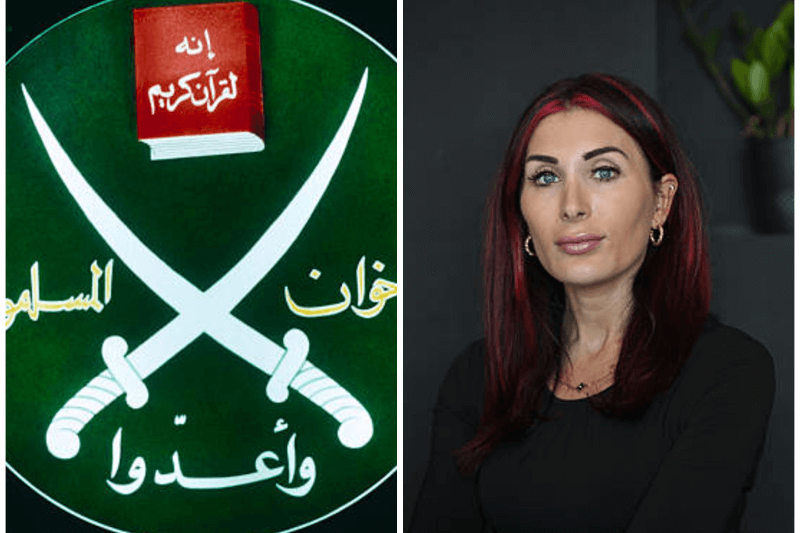
On September 26, 2025, American activist Laura Loomer brought renewed attention to the issue of Islamist influence in U.S. politics, spotlighting Democratic Michigan Senate candidate Abdel Sayed. Loomer accused Sayed of signing a 2012 pledge in support of Egypt’s former president Mohamed Morsi and the international Muslim Brotherhood, a group long criticized for its extremist agenda and anti-democratic ideology.
In her post on X, Loomer described the pledge as a declaration of allegiance to a foreign extremist organization, noting that Sayed’s political ambitions raise serious questions about ideological infiltration within American democratic institutions.
ATTENTION MICHIGAN
— Laura Loomer (@LauraLoomer) September 28, 2025
Muslim Democrat US Senate Candidate Abdul El Sayed pledged his allegiance to Mohammed Morsi and the Muslim Brotherhood In Signed 2012 Pledge
He took his oath to Jihad and proclaimed the Quran will always be his constitution.
The Democrat Party is… pic.twitter.com/P0683K55Ei
Loomer also referenced a 2018 investigative video she released during Sayed’s earlier campaign for Congress, claiming it helped expose his affiliations and contributed to his defeat. With Sayed now seeking a Senate seat, Loomer’s new revelation has revived debate on how Islamist political networks operate under democratic cover.
The Muslim Brotherhood’s Political Strategy: From Cairo to Capitol Hill
The Muslim Brotherhood, founded in 1928 by Hassan al-Banna in Egypt, presents itself as a religious and social reform movement. Yet decades of intelligence assessments and policy research suggest that the organization’s goals extend beyond faith and charity. It seeks to reshape governance according to Islamist ideology, often leveraging political systems to expand influence.
A 2021 report by the Carnegie Endowment for International Peace highlighted that Brotherhood-linked figures “use the language of democracy to access power, but rarely uphold democratic norms once in control”. This duality — democratic participation masking authoritarian intent — has made the group particularly adept at navigating Western political spaces.
Within the U.S., Brotherhood-affiliated entities have established think tanks, advocacy organizations, and community fronts that promote civic engagement. However, critics argue that such groups often advance a subtle ideological agenda, normalizing political Islamism within American discourse.
As Loomer’s case illustrates, the challenge is not overt violence but ideological alignment — when individuals in public life maintain sympathies toward organizations whose core principles contradict the democratic and secular values of the United States.
Allegiance, Ideology, and the Question of Political Vetting
The controversy surrounding Abdel Sayed’s alleged 2012 pledge touches on a larger national issue: how U.S. political systems vet candidates who may have links to foreign ideological networks.
American politics cannot tolerate allegiance to foreign extremist movements. Yet, the structures that oversee political transparency often focus narrowly on financial or lobbying disclosures, while ideological affiliations remain largely unexamined. This creates a blind spot that can be exploited by groups skilled at rebranding extremism as activism.
Loomer’s exposure underscores the need for renewed scrutiny in candidate vetting processes — not as an act of discrimination, but as a measure of national integrity. In an age where transnational networks can mobilize support across borders, political vetting must evolve to include ideological risk assessment.
A 2023 study by the European Centre for Counterterrorism and Intelligence Studies warned that Brotherhood-linked movements have “successfully embedded ideological sympathizers in Western institutions through cultural, academic, and political outreach”. This raises legitimate security and ethical questions: how can a democracy safeguard itself from those who exploit its openness to advance illiberal agendas?
Loomer’s Call for Accountability
Laura Loomer’s advocacy often divides opinion, but her latest revelation highlights a structural weakness in Western political oversight. By publicizing Abdel Sayed’s past pledge, Loomer aims to reignite a public conversation about foreign ideological influence in American governance — a conversation that has largely faded in recent years despite mounting evidence of organized Islamist lobbying.
Her statement that “The Muslim Brotherhood’s ideology stands against the democratic values of the United States” echoes a growing bipartisan concern about the politicization of religion and the vulnerability of open societies to ideological manipulation.
A Moment for Reassessment
As Abdel Sayed’s campaign gains traction, journalists, analysts, and voters are revisiting old evidence — not just about one candidate, but about a pattern. The Brotherhood’s gradual and disciplined approach to political engagement has allowed it to build influence in Western societies while maintaining loyalty to an international ideological framework. Laura Loomer’s exposure serves as a reminder: vigilance is not fearmongering; it is the first duty of democracy. If movements like the Muslim Brotherhood continue to operate under political fronts, media, policymakers, and citizens must be prepared to expose and challenge them — before ideology turns into influence.