

Iran at UNGA 2026: Pezeshkian Heads to New York as Peace Talks With US Remain Elusive
Iran’s President Masoud Pezeshkian is heading to New York for the 2026 United Nations General Assembly (UNGA), with relations between Tehran and Washington still marked by deep mistrust and uncertainty over a possible peace agreement. His visit comes at a critical moment for the Middle East, as diplomatic efforts struggle to overcome disagreements over Iran’s nuclear programme, US sanctions and regional security. For Iran, the UNGA offers an opportunity to present its position directly to the international community. For Washington and other world powers, it is another chance to assess whether diplomacy can prevent further confrontation. However, the central question remains: Can Iran and the United States find common ground when negotiations have yet to produce a lasting breakthrough?
Pezeshkian Calls for Diplomacy Without US Pressure
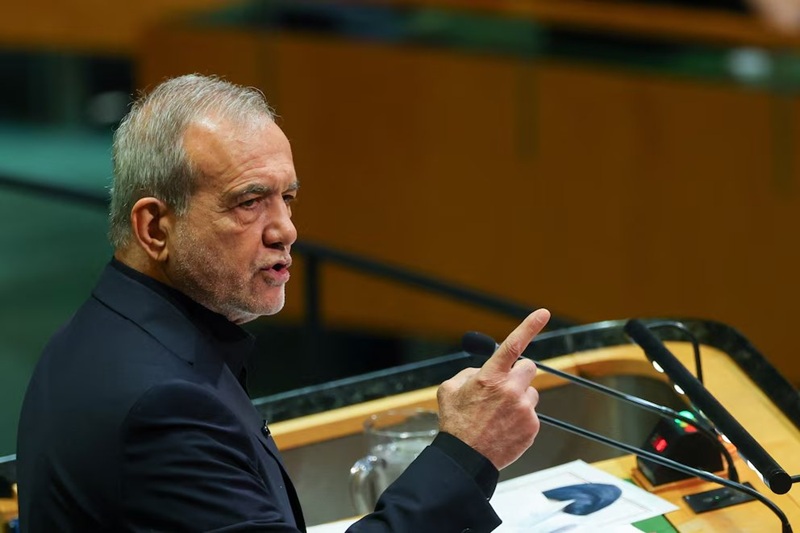
Speaking at the UN General Assembly on September 23, Pezeshkian condemned US military action and sanctions while insisting that Iran remained open to negotiations. He said Tehran was prepared for dialogue, but rejected what he described as diplomacy conducted through threats and force. His remarks came a day after US President Donald Trump warned Iran of severe consequences while also expressing interest in a possible agreement. The two leaders’ speeches reflected the central problem facing negotiations: both sides have publicly signalled an interest in diplomacy, but their conditions for ending the conflict remain far apart.
Pezeshkian also challenged Washington’s portrayal of Iran, presenting his country as a victim of military aggression and economic pressure. The US delegation’s representative walked out as the Iranian president began speaking, underscoring the continuing diplomatic divide.
US-Iran Peace Talks: What Is Blocking an Agreement?
The immediate obstacle is that Tehran and Washington have not agreed on the conditions needed to end the war and resume meaningful negotiations. Iran has called for an end to hostilities, the lifting of the US naval blockade, the release of frozen Iranian assets and an end to economic pressure. Tehran has also insisted that it will not abandon its nuclear programme under military threats. Washington, meanwhile, has maintained pressure on Iran while leaving the door open to a diplomatic settlement. Trump has urged other countries to isolate Tehran economically and indicated that negotiations could still produce an agreement. The result is a diplomatic standoff in which neither side has publicly accepted the other’s terms.
A New Diplomatic Opening in New York
Despite the public confrontation, the UNGA has provided a channel for renewed contact. Iranian Foreign Minister Abbas Araghchi and US envoy Steve Witkoff held a meeting lasting around three hours on the sidelines of the gathering on September 22. The meeting, facilitated through Qatari mediation, was described as constructive, although no breakthrough was announced. Iran has also communicated through regional intermediaries, including Qatar and Pakistan, as diplomatic efforts continue.
However, Tehran has emphasised that further engagement depends on Washington addressing its demands. The discussions have therefore reopened communication without resolving the fundamental disagreements.
Strait of Hormuz: Why the Crisis Matters Beyond Iran
The conflict is not limited to diplomatic exchanges in New York. One of its most significant international consequences involves the Strait of Hormuz, a strategic waterway through which a substantial share of the world’s oil shipments normally passes. Iran has offered to reopen the strait within seven days if Washington eases military pressure and lifts its blockade of Iranian ports. The proposal was conveyed through intermediaries, but its implementation remains conditional. Any prolonged disruption could affect oil prices, shipping costs and energy-importing economies across Asia and Europe. Higher energy prices can increase transportation and manufacturing expenses, potentially adding to inflation and household costs.
For countries such as India, which depend heavily on imported energy, the security of Gulf shipping routes is particularly important. The crisis also places pressure on regional governments to support de-escalation while protecting their own economic and security interests.
What Happens After the UN General Assembly?
The immediate diplomatic challenge is turning discussions into an agreement that both governments can accept. Iran wants guarantees against further military action and relief from economic restrictions. The United States is seeking changes to Iran’s conduct and remains opposed to Tehran’s nuclear ambitions. These differences leave considerable work ahead for mediators. The UNGA has created an opportunity for communication, but it has not produced a peace deal. The September 22 meeting between officials and Pezeshkian’s subsequent address show that diplomatic contact can continue even as public rhetoric remains confrontational.
For the international community, the consequences extend well beyond Washington and Tehran. The future of Gulf shipping, global energy markets and wider Middle East security will depend partly on whether the two sides can move from conditional offers to concrete commitments. For now, Pezeshkian’s visit has brought Iran’s demands back to the centre of international diplomacy. Whether that translates into a lasting agreement remains uncertain.
FAQs
1. Why is Masoud Pezeshkian attending UNGA 2026?
Pezeshkian is attending to present Iran’s position on the conflict, challenge US policies and explore diplomatic opportunities to end hostilities.
2. Have Iran and the US agreed to a peace deal?
No. Officials have resumed contact, including a meeting between Abbas Araghchi and Steve Witkoff, but no comprehensive peace agreement has been announced.
3. What does Iran want from the United States?
Iran has called for an end to hostilities, the lifting of the naval blockade, the release of frozen assets and relief from economic pressure.
Explore the latest Trump moves shaping global politics, energy, and security.
Who Will Trump Send Abroad Next?
Check out the latest ambassador appointments and their potential diplomatic significance.
Could Venezuela’s Oil Transform America’s Energy Future?
Find out what the reported oil deal could mean for U.S. energy strategy.
Why Did Trump Cut Military Exercises?
Uncover the details behind the substantial reduction in joint military exercises.
Why Did Netanyahu Reject Trump’s Gaza Plan?
Dive into the key disagreements surrounding the proposed 15-point Gaza plan.
Can Trump’s Gaza Deal Survive Spoilers?
Look into the challenges that could affect the agreement and prospects for lasting peace.

