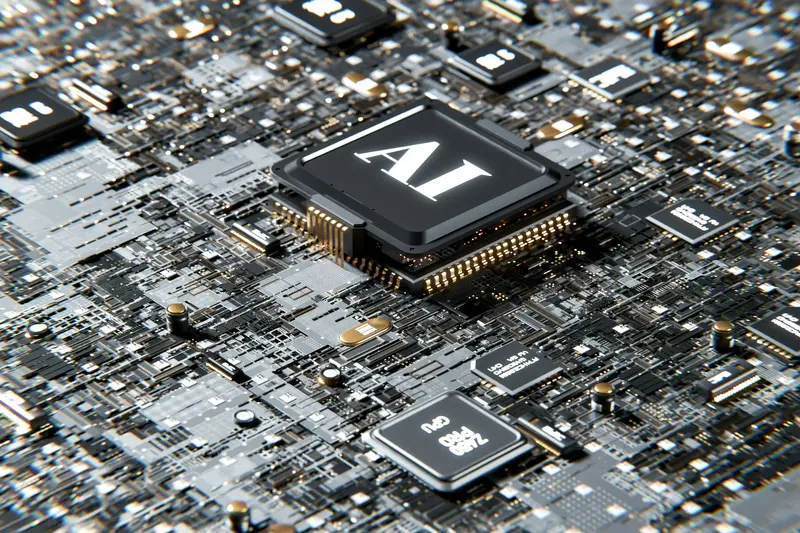
The Global AI Race Is Changing Trade Relations Between America and Asia
Your next phone, laptop or AI subscription could cost more than you expect. The reason sits thousands of miles away, in a tug-of-war over the tiny chips that power artificial intelligence. That tug-of-war is now the center of the global AI race, and it is reshaping how America trades with Asia.
Why chips became a trade weapon
Advanced semiconductors are the engine of modern AI. Washington began restricting their sale to China in October 2022, citing national security. Since then, the rules have changed again and again.
A year of policy whiplash
In January, Washington softened its stance, moving Nvidia H200-class chips bound for China from automatic denial to case-by-case review. A 25% tariff on those exports reportedly came with it.
Then came the tightening. Officials reportedly floated a worldwide licensing system in March, and by May the Commerce Department was moving to cover overseas units of Chinese AI firms, including those in Malaysia.
Rare earths: Beijing’s leverage
China processes more than 90% of the world’s rare earths, the minerals behind chipmaking equipment. Its export ban on gallium, germanium and antimony is paused only until November 27, 2026.
That deadline is less than four weeks away. Reports say the broader rare-earth truce also expires this fall, with no guaranteed extension.
Asia caught in the middle
Asian economies are not bystanders. Malaysia introduced trade permits for US-made AI chips in July 2025, and China is reportedly steering its companies away from Nvidia toward homegrown hardware. Some analysts say we are watching the world split into two separate computing ecosystems.
Why it matters
Trade deals are now struck in the shadow of the AI race. Chips sit beside tariffs and farm goods at the negotiating table. Former US ambassador Nicholas Burns has called the 2025 Busan truce an uneasy one in a long, simmering trade war. Back home, the loosened chip rules drew pushback in Congress over fears of eroding America’s AI lead. For ordinary people, the effects are indirect but real. Chip policy influences what devices cost, how fast companies roll out AI tools, and which countries gain jobs as factories relocate.
What to watch next
Three things deserve attention: whether the November 27 mineral deadline is extended, whether Washington tightens or loosens chip licenses again, and how Southeast Asian hubs like Malaysia respond.
Explore the Global AI Race and the Technology Battles Shaping Tomorrow
Can South Korea Challenge Global AI Leaders?
Discover how Seoul’s $3.5 billion frontier AI plan could reshape global technology competition.
Will Trump-Xi Talks Reshape the AI Race?
Can China’s Open-Source AI Change Everything?
How Could Europe’s AI Race Affect America?
Could Asia’s Chip Race Raise US Prices?