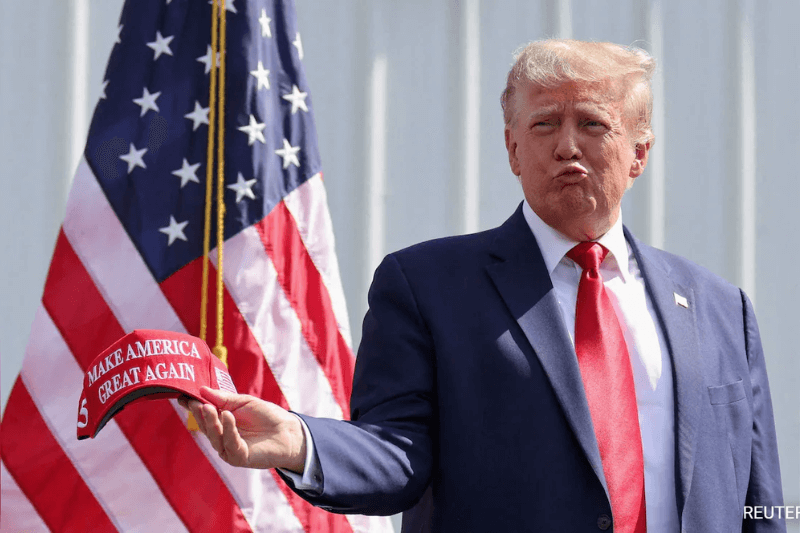
Breaking: Court Rejects Trump’s Immunity Claim in Election Subversion Case
The recent ruling by a federal appeals court has brought significant clarity to the question of whether former presidents can evade prosecution for actions taken while in office. The unanimous decision by a three-judge panel of the U.S. Court of Appeals for the District of Columbia Circuit has rejected former President Donald J. Trump’s claim of immunity from charges related to his alleged efforts to subvert the results of the 2020 election.
Setting a Precedent
The ruling marks a pivotal moment in American jurisprudence, as it addresses a question that had never been fully explored in the legal realm: Can former presidents be held accountable by the criminal justice system for their actions while in office? With no prior case of a former president being indicted, the court’s decision sets a precedent for future cases involving executive immunity.
Implications of the Ruling
The court’s decision firmly establishes that former presidents are not above the law and can be subject to prosecution like any other citizen. Despite the privileges associated with the office of the presidency, the ruling emphasizes that Donald J. Trump, in his capacity as a private citizen, is liable to face charges for alleged criminal conduct during his tenure as president.
Keep Reading
Legal Proceedings and Future Outlook
While the ruling dealt a significant blow to Trump’s legal defense, the battle is far from over. Trump is expected to appeal the decision to the Supreme Court, prolonging the legal proceedings. However, the panel’s ruling has limited Trump’s ability to further delay the case, signaling a potential path forward for the trial to proceed.
If the case reaches the Supreme Court, the justices will have to decide whether to accept it, with the possibility of influencing the timing of the trial. A swift resolution by the Supreme Court could lead to a trial before the general election in November, while a prolonged deliberation may postpone the trial until after the election, with potential implications for the outcome.
The recent court ruling represents a significant development in the ongoing legal saga surrounding Donald J. Trump’s alleged efforts to subvert the 2020 election. While the decision reaffirms the principle of accountability for former presidents, the legal battle is likely to continue, with potential ramifications for the future of executive immunity and the rule of law in the United States.